
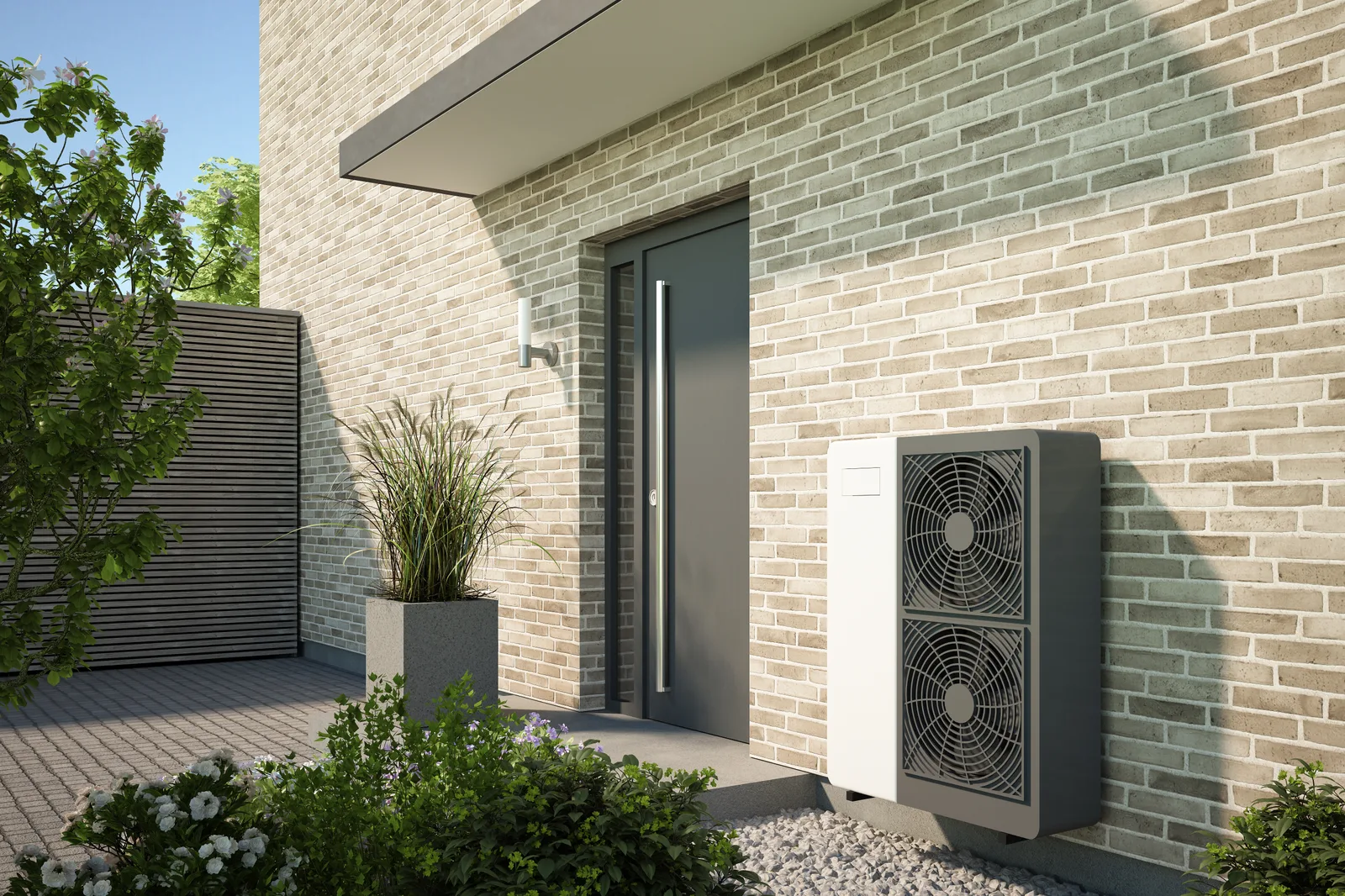
Heat pump vs air conditioner: which should you buy? Mechanically they are the same machine — a heat pump is an air conditioner with a reversing valve that lets it run backwards and bring heat into the house in winter — so the real question is whether you want your cooling equipment to heat as well. If the air conditioner has died, you own the house and you heat with gas, a cold-climate heat pump costs more up front, qualifies for rebates an air conditioner cannot touch, and takes over most of the shoulder season. If the budget is fixed or the property is a short-term hold, replacing the air conditioner is still an honest answer.
The Only Real Hardware Difference
Inside the cabinets, an air conditioner and a heat pump share a compressor, an outdoor coil, a fan, an indoor coil and a line set. The heat pump adds three things: a reversing valve that swaps the roles of the two coils, a defrost control and sensor that periodically clears frost from the outdoor coil, and low-ambient hardware such as a crankcase heater and a base pan heater so the machine can keep working in the cold.
That is why a heat pump replaces an air conditioner in the same spot, on the same duct system, and usually on a similar electrical circuit. It is also why a heat pump cools exactly as well as an air conditioner of the same capacity and efficiency rating. Cooling is the default mode; heating is the reversing valve doing its job.
The Decision Only Comes Up Once
You get one moment to make this choice: when the outdoor unit needs replacing. Spending the difference then costs you the gap between two prices. Buying an air conditioner now and adding a heat pump in four years means paying for an outdoor unit twice, and scrapping equipment with a decade of life left in it.
That is worth remembering when the air conditioner quits during a July heat wave and every instinct says replace what was there. One extra day to get both options priced is cheap. If the furnace is also aging, the replace them together question folds into the same conversation, because a heat pump paired with a gas furnace as backup is where most Halton and Hamilton houses end up.
What Changes on Install Day
- Thermostat. A heat pump needs a control that understands compressor heating, auxiliary heat and a changeover temperature. A basic air conditioner thermostat will not do it, and a heat pump wired to one tends to run backup heat when it should not.
- Electrical. A similarly sized heat pump usually reuses the air conditioner's circuit, but electric backup heat does not. 2000s+ builds in Alton Village or Joshua Creek typically came with a 200-amp service and room to spare, while a 1950s Aldershot bungalow may still be on 100 amps — see do you need a panel upgrade for a heat pump.
- Mounting. An air conditioner sits on a pad and sleeps all winter. A heat pump works through the snow, so it goes up on a stand clear of drifts, away from roof drip lines, with somewhere for defrost meltwater to drain.
- Ductwork. A heat pump moves more air at a lower supply temperature than a furnace does, so an undersized return shows itself quickly. Static pressure gets measured before we quote, not after the complaint.
- Changeover strategy. Above the balance point the heat pump heats; below it the furnace or the backup element takes over. Where that switch is set is the single biggest lever on your winter bill.
The Money, Honestly
Free quotes, written pricing.
An air conditioner replacement in the GTA runs $3,500–$7,500 installed when the ductwork is already in place. A ducted cold-climate heat pump runs $6,000–$16,000 before rebates depending on capacity and electrical work, and a typical 3-ton cold-climate system lands at $9,500–$15,000.
The figure that changes the comparison is the incentive. Ontario programs currently return $500–$7,500 depending on the system, and an air conditioner is not eligible for the heat pump amounts. After a full incentive the distance between a mid-tier air conditioner and a qualifying cold-climate heat pump is much smaller than the sticker prices suggest — but run the arithmetic on your own quote rather than assuming, because eligibility hangs on the model. The rules live on the Home Renovation Savings Program page and we file the paperwork on installs we do.
Running cost is a separate question that depends on your electricity plan. Ontario households can sit on time-of-use pricing or the ultra-low overnight plan, and which one you are on changes what the heat pump costs to run each month. Our page on what a heat pump costs to run in Ontario works through it with local utilities in mind.
When an Air Conditioner Is Still the Right Buy
- A short hold. If the house is on the market within a couple of years, the payback window is not there and the next owner banks the benefit.
- A condo or fan-coil system fed by a building plant. That equipment is not yours to swap.
- No electrical headroom and no appetite for a panel upgrade this year.
- A furnace replaced last season with fifteen good years left. Hybrid still works, but the urgency is lower and the money can wait.
- A cottage or a house that sits empty through the winter, where the heating half of the machine earns nothing.
Verdict: Who Should Choose Which
If the air conditioner is finished, you own the home, the ducts are sound and you plan to stay more than a few years, buy the heat pump. It cools identically, it heats through most of the shoulder season, it is the one of the two that current Ontario programs reach, and this is the one moment the upgrade is cheap.
- Buy a heat pump if you are replacing an aging air conditioner, you heat with gas and want to cut that bill without giving up the furnace, you are on oil or electric baseboards, or you want one system doing both jobs.
- Buy an air conditioner if the budget is fixed at replacement cost, the property is a rental or a short-term hold, the panel has no room, or the house is unoccupied in winter.
- Buy the hybrid if you are undecided. Keeping the gas furnace as backup gives you the heat pump's savings above the changeover point and the furnace's output on the coldest nights, which is the configuration most local homes settle into.
We will price both against each other for your house — same capacity, same ductwork, with the rebate we expect the heat pump to qualify for shown as a line item — so the difference is a number rather than a pitch. See our heat pump installation service for how we size and commission them, or book a free quote.
Frequently asked questions
Does a heat pump cool as well as an air conditioner?
Yes, identically. At the same capacity and efficiency rating the two machines run the same refrigeration cycle in cooling mode, and many heat pumps use inverter compressors that hold a steadier indoor temperature and pull out more humidity than a single-stage air conditioner. Nothing about adding heating capability compromises the cooling side.
Do I have to remove my furnace to install a heat pump?
No, and in most gas-heated homes here you should not. The common setup keeps the furnace as backup: the heat pump handles heating above its changeover point, and the furnace takes over on the coldest nights. You get the lower running cost through fall and spring plus full gas output in a deep freeze, and no anxiety about a January cold snap.
Will a heat pump actually work in a Burlington winter?
A cold-climate model will, and it is the only kind we quote for heating here. Those units publish real heating capacity at -15 °C and operate well below that. Backup heat covers the small number of hours below the balance point your installer designs to. A standard-efficiency heat pump is a different story and leans on backup far more often.
Is a heat pump noisier than an air conditioner?
Outdoor sound levels are comparable, and inverter-driven models often run quieter than a single-stage air conditioner because they spend most of their time at low speed. The difference you notice is seasonal: the unit runs all winter instead of sitting idle, and defrost cycles produce a brief change in sound and a plume of steam that is normal.