
Quick answer
Most of the time a furnace humidifier stops working because the water panel is crusted with minerals, the solenoid valve is not opening, or the bypass damper was left in the summer position. Set the humidistat to maximum with the furnace running: if you hear no click and see no water at the drain, the valve or its 24-volt signal is the problem.
When a homeowner asks why is my furnace humidifier not working, the answer is usually mechanical and small: a crusted pad, a valve that is not opening, or a damper someone flipped in May and forgot. The unit itself is simple — a water valve, a pad, a damper and a humidistat — so it can be checked in 10 minutes with the furnace running.
A five-minute test before you call anyone
- Turn the humidistat to its highest setting and set the thermostat to call for heat, so the blower is running.
- Listen at the humidifier for a click — that is the 24-volt solenoid valve opening. No click means no signal or a dead valve.
- Look at the clear drain tube at the bottom: a bypass humidifier should show a steady trickle within a minute.
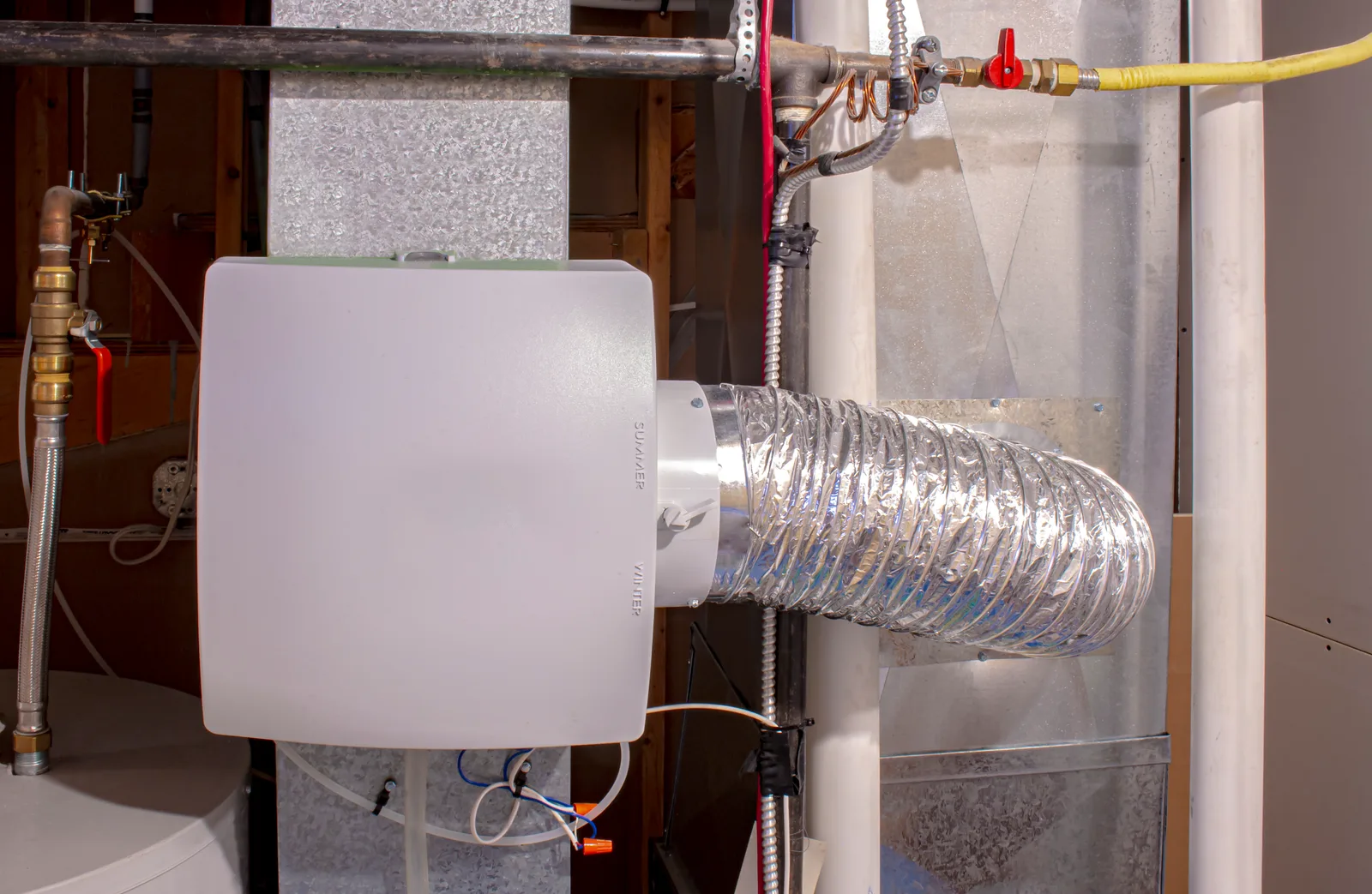
- Check the bypass damper on the side of the unit. It must be in the Winter position; in Summer it blocks airflow across the pad.
- Confirm the small water shut-off on the copper line is open. Saddle valves in particular clog and seize.
The pad is the most common failure
The evaporator pad (Aprilaire calls it a water panel; their #35 panel fits the common 600 series) is an aluminum honeycomb with a mineral-absorbing coating that wicks water while furnace air passes through it. Halton's lake-sourced water is moderately hard, and the well-fed north of the region is harder still, so the pad slowly turns into a block of scale. Once it is white and stiff, water runs off instead of wicking and output drops toward zero even though everything else works.
A new pad costs $20–$40 and goes in each fall. If the pad is grey and rigid in November, it was not changed last year — and a house in Millcroft or Glen Abbey that still has its original builder humidifier from the 1990s has usually gone several winters without one.
Valve, water supply and drain problems
- Solenoid valve stuck or burnt out: it hums but never opens, or opens and never closes, which floods the drain. A common small-part repair.
- Clogged orifice: the tiny metering orifice in the solenoid valve, and the inlet strainer ahead of it, pack with scale. Cleaning or replacing them restores flow.
- Saddle valve: the self-piercing tap on the cold-water line clogs at its pinhole; many plumbers now replace it with a proper tee and shut-off.
- Kinked or frozen drain: water backs up in the pan and drips down the furnace cabinet — one of the causes in why a furnace leaks water.
- No 24-volt signal: the humidistat, a broken low-voltage wire, or a furnace board that no longer powers the HUM terminal.
It works, but the house is still dry
A bypass humidifier only adds moisture while the furnace blower runs, and only as much as the airflow across the pad allows. A two-stage or modulating furnace spends most of its time on low fire, with a slower blower and cooler supply air, so the pad evaporates less; a heat pump in heating mode delivers cooler air still. In a large or leaky house — a 1970s Tyandaga two-storey with original windows, for example — a bypass unit may be too small at -15°C.
Options at that point are a fan-powered unit ($700–$1,200 installed), which pushes its own air across the pad, or a steam humidifier ($1,500–$3,000 installed) that works regardless of furnace runtime. Our guide to bypass, fan-powered and steam humidifiers compares them.
Related questions, answered briefly
- Why is there white dust on the furniture? That is mineral dust from an ultrasonic portable unit, not a furnace humidifier — bypass and fan units leave their minerals on the pad.
- Can I run the humidifier without the furnace on? Not a bypass unit; it needs the blower running, and setting the fan to On instead of Auto helps a little on mild days.
- Should the humidifier be turned off in summer? Yes — flip the damper and close the water valve so the pad does not sit wet all summer and grow mould.
- What should the humidistat be set to? About 35% when it is around -10°C outside, lower in a cold snap — see whether you need a humidifier in winter.
If the pad swap and the five-minute test do not bring it back, ZK Mechanical repairs and replaces furnace humidifiers as part of our humidifier installation and service in Burlington, Oakville and Hamilton; most repairs are a small part within the $150–$450 band. Book a visit and tell us the make on the cover.