
Quick answer
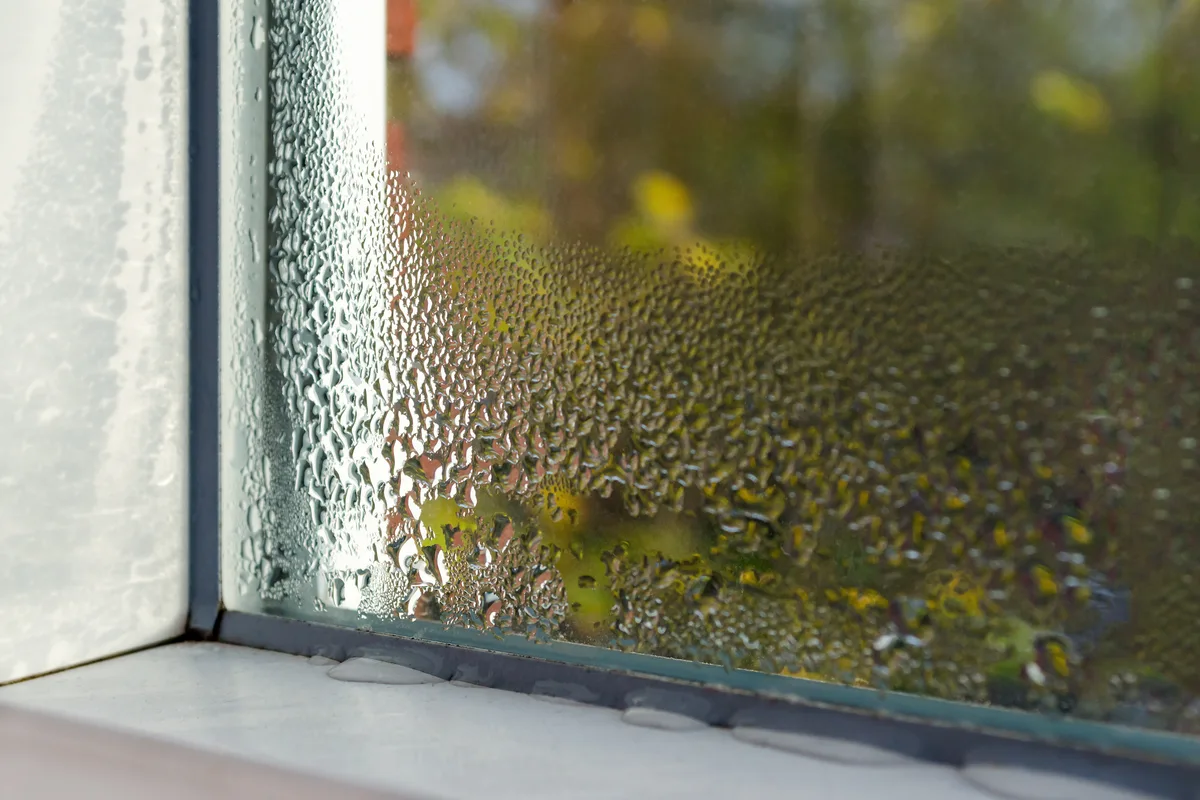
Condensation forms on windows in winter when indoor air holds more moisture than the cold glass can keep as vapour, so it condenses on the coldest surface in the room. The cause is usually indoor humidity set too high for the outdoor temperature, a humidifier left at 45%, or too little ventilation after showers and cooking. Lower the humidity as it gets colder outside, and run the fans.
Why is there condensation on my windows in winter? Because the inside surface of the glass is the coldest thing in the room, and when it drops below the dew point of the indoor air, water vapour turns back into water on it. It is not a sign the window is broken (with one exception below); it is a humidity-and-ventilation reading, and in Burlington it shows up on the first -10°C morning after a mild, damp stretch off the lake.
Match indoor humidity to the outdoor temperature
The number that matters is not whether 40% is healthy — it is what the glass can tolerate at tonight's temperature. As the outdoor temperature falls, the maximum indoor humidity that avoids condensation on a standard double-pane window falls with it.
- Around 0°C outside: up to about 40% indoors is usually fine.
- Around -10°C: aim for 30–35%.
- Around -20°C: about 25%.
- -25°C and colder: 20% or less, at least until it warms up.
A whole-home humidifier with an outdoor temperature sensor adjusts itself along this curve; a plain dial humidistat does not, which is why it fogs the windows in every cold snap. If you are running one, this guide to ideal winter humidity gives settings by month.
Where the moisture is coming from
A family of four adds litres of water vapour a day to a house through breathing, showers, cooking, laundry and houseplants. In a leaky 1960s house that moisture escapes through the walls; in a tight house it stays. Streets full of newer construction — the Orchard, Alton Village, Joshua Creek, Binbrook — see window condensation far more often than the older neighbourhoods nearby, because the envelope holds the moisture in.
- Bathroom fans not run, or run for two minutes: run them 20–30 minutes after every shower, or put them on a timer.
- A range hood that recirculates instead of venting outdoors.
- Laundry dried on racks indoors, an unvented dryer, or a leaking dryer duct.
- An HRV switched off — common in new builds; see whether you need an HRV.
- A humidifier set in October and never turned down.
- Firewood stacked indoors, aquariums, or a damp basement or crawl space.
Blinds, drapes and the window itself
Closed blinds and heavy drapes trap a pocket of still, cold air against the glass and drop its surface temperature several degrees, so the rooms with the nicest window treatments fog first. Open them in the morning and let warm room air reach the glass. Aluminum-framed sliders from the 1970s and 1980s, common in Tyandaga and Glen Abbey, conduct cold straight through the frame and will sweat at the bottom corners at a humidity a modern vinyl window would shrug off.
The exception: fog or droplets between the two panes means the sealed unit has failed and the window needs a new glass unit — no humidity change will fix it. Condensation on the outside of the glass on cool fall mornings is the opposite of a problem; it means the window is insulating well.
What to do this week
- Buy a hygrometer and put it in the room that fogs; readings above 40% in a cold snap explain everything.
- Turn the humidifier down or off for a few days and see whether the glass clears.
- Run bath and kitchen fans longer, and check that they actually vent outdoors, not into the attic.
- Wipe the sills daily while you fix the cause — standing water on wood sills feeds mould within days.
- If humidity stays high with the humidifier off and the fans running, the house needs ventilation, not more wiping.
Related questions, answered briefly
- Is window condensation dangerous? The water itself is not, but persistent condensation rots sills, stains drywall and grows mould behind blinds.
- Why does only one window fog? It is the coldest one — a north-facing bedroom, a bay window, or the one behind the heaviest drapes.
- Will a dehumidifier help in winter? Rarely; a dehumidifier struggles in cool rooms. Ventilation and turning down the humidifier are the winter tools.
- Does a new furnace cause window condensation? Indirectly, sometimes. A sealed-combustion furnace no longer pulls house air up the chimney the way the old natural-draft unit did, so the house is effectively tighter and holds more moisture — and a new humidifier left at a high default setting makes it worse.
ZK Mechanical sets up humidifier controls, bathroom fan timing and HRVs as part of our indoor air quality service for Burlington, Oakville and Hamilton homes. If your windows are streaming every cold morning, get in touch — a humidity check is a quick visit.