
Quick answer
UV lights in HVAC systems work for one job: a UV-C lamp aimed at the evaporator coil and drain pan stops mould and biofilm from growing there, which prevents the musty smell and coil fouling of humid summers. They do not remove dust, pollen or dander from moving air, and in-duct air-purifying lamps have far less effect than coil lamps. Buy one for the coil, not for allergies.
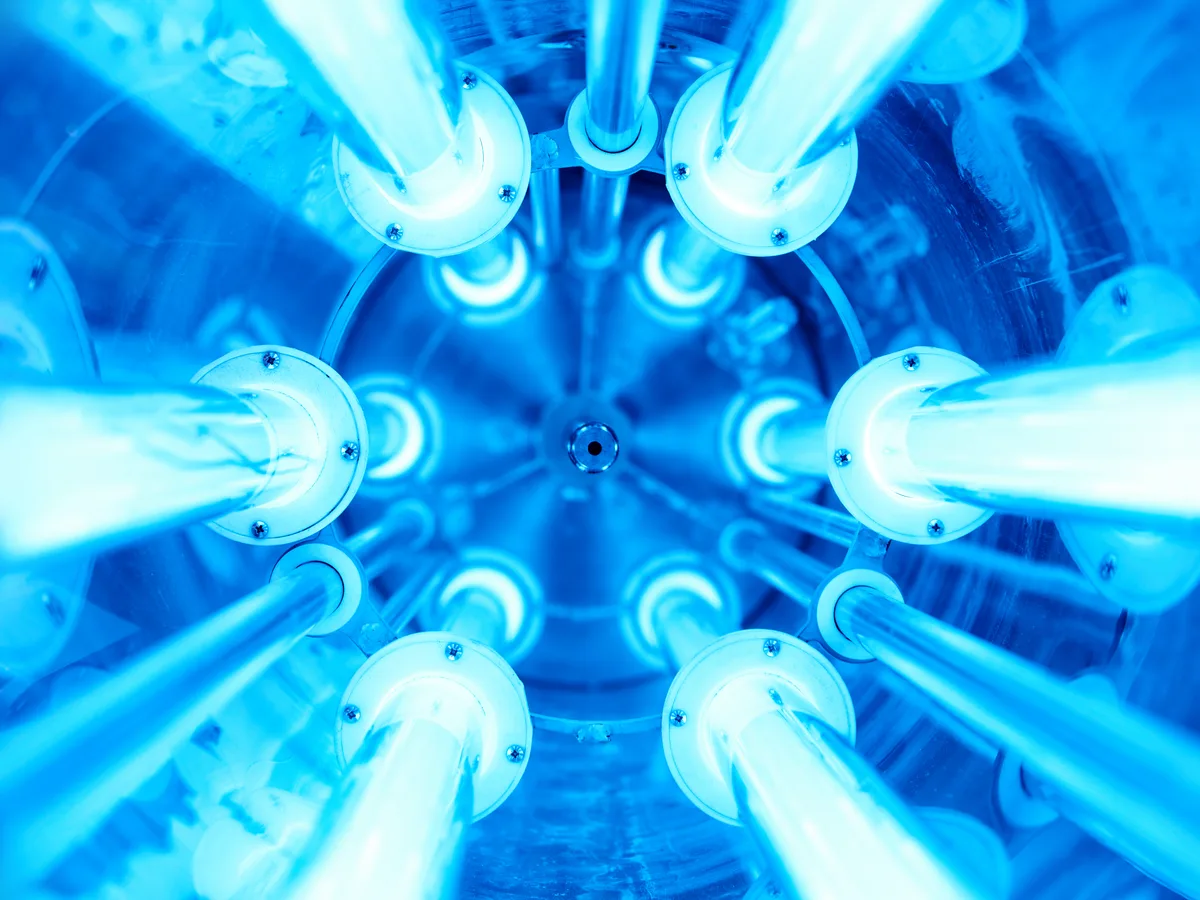
Do UV lights in HVAC systems actually work? Yes for the coil; no for the air. A germicidal UV-C lamp (254 nm) mounted in the plenum above the furnace bathes the wet evaporator coil and drain pan in ultraviolet light continuously, and mould, bacteria and the slimy biofilm that feeds on coil dust do not survive that sustained exposure. It is an established practice in hospitals and commercial air handlers, and it transfers to a house — with the honest caveat that it solves a coil problem, not an allergy problem.
Coil lamps: what they fix
In a Burlington or Oakville summer the air conditioner's indoor coil is wet for months, sitting in the dark in warm, dusty return air through the muggy stretches off Lake Ontario. The first symptom of growth is a musty or dirty-sock smell when the system starts, and the second is a coil so fouled it cannot move air properly. A coil lamp stops that cycle before it starts, and it earns its place when:
- The AC or heat pump runs long hours in humid weather and the smell returns every summer.
- You have paid for coil cleaning more than once.
- A condo fan coil with a small, hard-to-reach coil that stays wet year-round.
- Someone in the house is sensitive to mould, and the coil is a confirmed source.
A furnace-only house with no cooling has a dry coil — or no coil — and gains nothing from a UV lamp.
In-duct air-purifier lamps: much weaker evidence
A lamp placed in the return duct to sterilize passing air has a physics problem: air moves through a residential duct in a fraction of a second, and UV disinfection depends on dose, which is intensity multiplied by time. At residential lamp strengths, a single pass does little to viable spores or viruses in the airstream. Manufacturers' lab numbers usually describe a sealed test chamber, not a duct moving a thousand cubic feet per minute.
The related category of ionizers and photocatalytic (PCO) devices is weaker still, and some generate ozone as a by-product, which is a lung irritant. If the goal is fewer particles, filtration — MERV 11 to 13 media, or a whole-home air purifier — is the technology with the evidence behind it; see whether duct cleaning helps allergies for where UV fits in that order.
Installation details that decide whether it works
- Position: the lamp must have line of sight to the coil face and the drain pan; a lamp tucked beside the blower does nothing for the coil.
- Materials: UV embrittles plastic. Flex duct, plastic drain pans, wiring insulation and PVC condensate lines in the light path need shielding or the lamp will destroy them over a few seasons.
- Lamp life: UV-C output fades long before the bulb stops glowing. Plan on a new lamp every 12 months, 24 at the outside — a recurring cost to budget for.
- Safety: UV-C burns eyes and skin. Never look at a lit lamp, switch it off before opening the cabinet, and make sure the access panel carries a warning label or an interlock.
- Wiring: coil lamps usually run continuously on 120 V; some interlock with the blower, which extends lamp life but leaves the coil unlit between cycles.
The upsell to watch for
UV lights are a favourite add-on of the phone-offer duct cleaning crews: a free inspection finds mould, and the fix is a lamp at several times its real value, installed in a spot where it cannot see the coil. Our guide to spotting duct cleaning scams covers the pattern. A legitimate quote will tell you where the lamp goes, what it protects, and what the replacement bulb costs.
Related questions, answered briefly
- Do UV lights kill viruses in the house? Not meaningfully at residential in-duct doses; ventilation and filtration are the tools for that.
- Do UV lights get rid of odours? Coil lamps prevent the musty coil smell; they do nothing for cooking, pet or VOC odours.
- Is a UV light worth it with a heat pump? Yes, if the indoor coil stays wet through humid summers; a heat pump's coil sees the same conditions as an AC coil.
- Does UV replace coil cleaning? It prevents biological growth; dust still needs a physical cleaning at maintenance visits.
ZK Mechanical installs coil-mounted UV-C lamps where they solve a real problem and will tell you when a better filter is the smarter spend. For indoor air quality upgrades in Burlington, Oakville or Hamilton, contact us with the model and what you are smelling.