
Quick answer
Duct cleaning helps allergies when the ducts are genuinely contaminated: visible dust build-up, mould after a leak, pest debris or renovation dust. For everyday pollen, dander and dust-mite allergens, continuous filtration matters more, because those particles live in bedding, carpets and the air, not in the ducts. Upgrade the filter and control humidity first, then clean the ducts if there is evidence they need it.
Does duct cleaning help with allergies? Sometimes, and it depends entirely on where the allergens are. Ductwork is a conduit, not a reservoir: air moves through it at a few metres per second, and most of what settles in a duct is heavy dust that never becomes airborne again. The allergens that make you sneeze — pollen, dander, dust-mite waste, mould spores — are generated and re-suspended in the rooms, which is why a filter that runs every hour of the day beats a cleaning that happens once every few years.
Particle size decides what a filter or a cleaning can remove
Particle size decides what a filter can stop and what a duct cleaning can remove. Pollen is large, roughly 10 to 100 microns, and mostly settles or gets caught by any pleated filter. Pet dander and mould spores are much smaller, stay airborne for hours and pass through a basic fibreglass filter without slowing down. Dust-mite allergen is the opposite case: it rides on relatively heavy particles that settle within minutes, which is why it lives in bedding and carpet rather than in the air or the ducts.
- Tree pollen (April–May) and grass pollen (June): large particles; a MERV 8 pleated filter captures most of what reaches the return.
- Ragweed (mid-August to first frost): still large, but it arrives in volume everywhere from the lakeshore to the escarpment. Keep windows closed and set the blower to circulate.
- Pet dander and mould spores: MERV 11 or better captures the bulk of them; MERV 13 in a 4-inch media cabinet does noticeably better.
- Dust-mite allergen: keep humidity below 50% and wash bedding hot. No duct service touches the mattress where the mites live.
When cleaning the ducts genuinely helps an allergy sufferer
- After a renovation — drywall and sanding dust in the ducts keeps blowing fine particles into bedrooms for months.
- After water damage or a flooded basement — if the trunk or a floor run got wet, mould can grow inside the duct itself and spread spores with every cycle.
- Pest evidence — mouse droppings or nesting material in a basement return are a real allergen source and a cleaning-plus-exclusion job.
- Moving into a house with unknown history, especially one that had smokers or several pets — clean once, then rely on filtration.
- Visible matted debris inside registers, or a musty smell only when the blower starts.
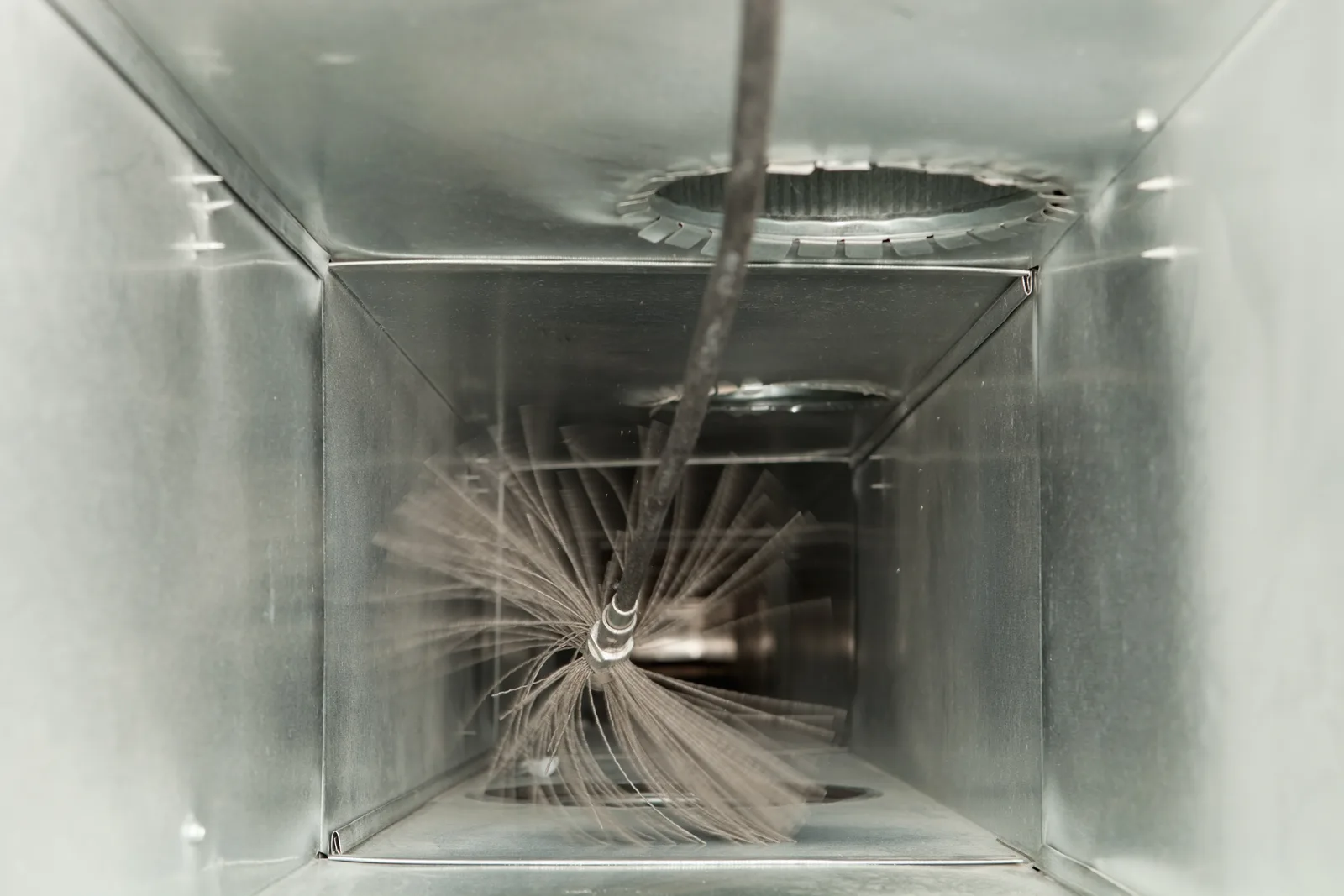
In these cases a proper negative-pressure cleaning — typically $300–$700 for a Burlington or Oakville house — removes a real source. Outside them, expect modest results. Our duct cleaning price guide covers what a legitimate visit includes.
Spend on the bedroom and the filter before the ducts
For allergy control, spend in this order: the bedroom (allergen-proof covers, hard flooring, the pet out of the room), then the furnace filter, then humidity, then the ducts. A MERV 11 pleated filter changed every 60 days is the cheapest air-quality upgrade in the house, provided the furnace can breathe through it — see whether a filter can be too restrictive. A 4-inch media cabinet with a MERV 13 filter is the next step, and a whole-home air purifier is the one after that.
Humidity is the piece homeowners skip. Lakeshore neighbourhoods such as Bronte and Roseland sit in humid summer air off Lake Ontario, and a basement at 60% relative humidity feeds both dust mites and mould. A whole-home dehumidifier, or an air conditioner sized to run long enough to actually dry the air, often does more for allergies than any duct work.
Related questions, answered briefly
- Does duct cleaning remove mould? It removes mould growing inside the ducts; it does nothing about mould on a damp basement wall or a wet evaporator coil, which need their own fix.
- Should allergy sufferers clean ducts every year? No — annual cleaning is a telemarketing script, not a medical recommendation. Clean when there is evidence, filter continuously.
- Do sanitizing sprays or fogging help? Only as a final step after a confirmed mould or pest contamination has been physically removed. For everyday allergies they add fragrance and chemicals to the airstream and little else, and we would not put them into a house with respiratory sensitivity.
- Is a portable HEPA purifier worth it? Yes, for the bedroom of the person with allergies — it is the room where they spend eight hours a night.
ZK Mechanical will tell you plainly whether your ducts need cleaning or whether a filter cabinet and a dehumidifier would serve you better. For indoor air quality service in Burlington, Oakville and Hamilton, send us a note with what you are reacting to and when.