ZK Mechanical
Request a free quote
What do you need? Pick everything that applies

Free quote, in writing, no obligation. Or just call (647) 801-1252 — 24/7.

Home / Answers

Air Quality & Ducts

Do I need a humidifier in winter in Toronto?

Reviewed by Zobir, licensed technician

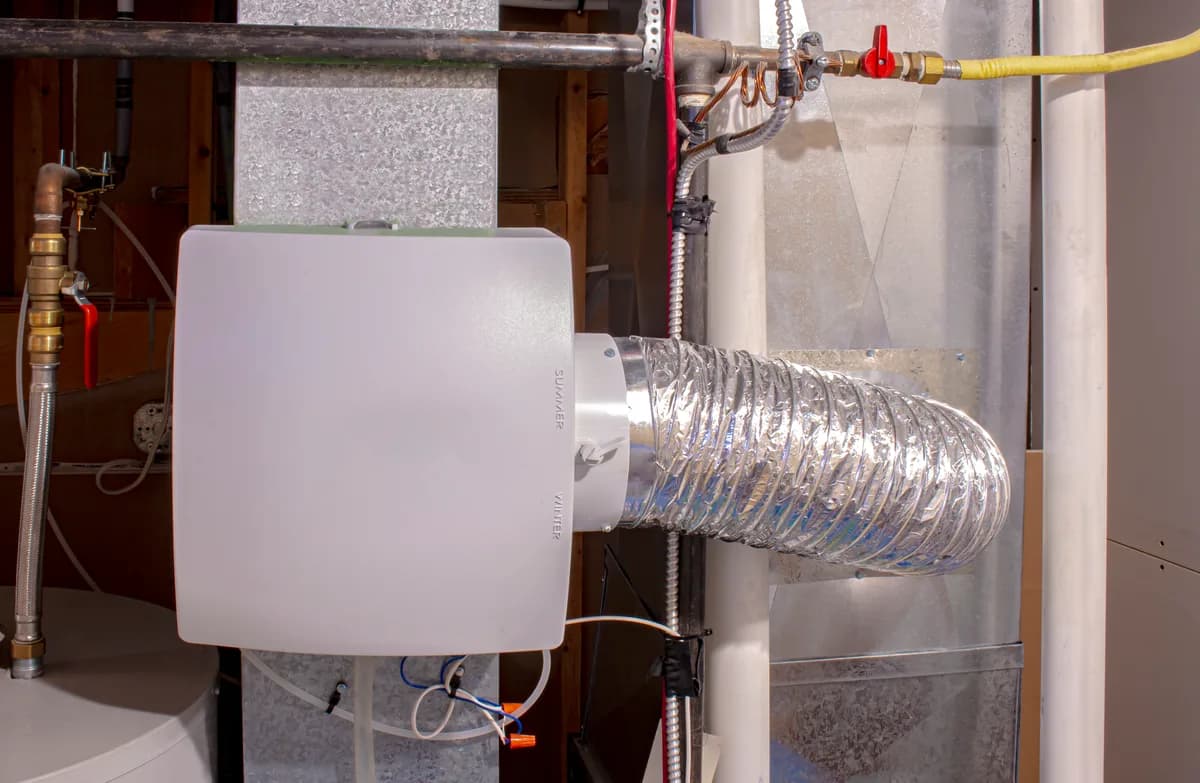
Whole-home bypass humidifier installed on the ductwork of a gas furnace

Quick answer

Most Toronto homes with forced-air heating drop to 15–25% relative humidity in January — well below the healthy 30–40% winter range. If you see static shocks, cracked hardwood, dry skin, or nosebleeds, a humidifier will help. A whole-home humidifier mounted on the furnace ($500–$1,200 installed) is more effective and lower-maintenance than portable units for whole-house comfort.

Whether you need a humidifier in winter in Toronto comes down to one measurement: indoor relative humidity below 30% on a January morning. Cold air holds little moisture, so when a furnace heats -10°C outdoor air to 21°C the relative humidity collapses — the house that felt fine in October is parched by January. A $20 hygrometer settles the question in a day; the symptoms below tell you what it will say.

Signs your home is too dry

  • Static shocks from doorknobs and light switches
  • Hardwood floors gapping, trim shrinking, or a piano going out of tune
  • Dry skin, chapped lips, scratchy throat in the morning, frequent nosebleeds
  • Houseplants drying out fast; pets shedding more than usual
  • A hygrometer reading below 30% — the definitive check, $20 at any hardware store

Target humidity for GTA winters

Aim for 30–40% and let the outdoor temperature set the ceiling. Warm indoor air condenses on cold window glass, so humidity that feels comfortable in a mild week streams down the panes in a cold snap, feeding mould on the frames and rotting sills. A humidistat with an outdoor sensor lowers the target automatically; a manual dial means you turn it down when the forecast does. (Summer is the opposite problem — see why a house feels humid with the AC on.)

  • Outdoor above 0°C: up to 40% indoors
  • Around -5°C: about 35%
  • Around -12°C: about 30%
  • Around -18°C: about 25%
  • -23°C and colder: 20%, and watch the window corners for condensation

Which Toronto homes need one — and which don't

  • Pre-war brick and 1950s–60s bungalows: leaky construction pours dry outdoor air in all winter. These are the driest houses we measure, and a whole-home unit earns its keep.
  • 1970s–90s subdivisions with a furnace and no ventilation system: typically dry by mid-January; a bypass unit on the furnace covers a standard 2-storey.
  • 2000s+ builds with an HRV: the HRV exhausts moist indoor air, so tight houses can still run dry. A powered unit keeps up better than a bypass here.
  • Homes heated by a heat pump: supply air is cooler and the blower runs long, gentle cycles, so a bypass pad that depends on warm airflow underperforms. Steam or fan-powered is the better match.
  • Condos and fan-coil suites: nothing to mount a furnace humidifier on, so a portable console or small steam unit is the option — and big single-plane glass means condensation arrives early.
  • Houses with wide-plank hardwood or instruments: floors gapping and a piano drifting out of tune every February are the clearest yes we see.

Whole-home vs. portable

  • Whole-home bypass humidifier: $500–$900 installed — uses furnace airflow; pad replaced annually; quiet and zero daily effort
  • Whole-home powered/fan humidifier: $700–$1,200 installed — higher output for larger homes
  • Steam humidifier: $1,500–$3,000 installed — precise output independent of furnace runtime; best for very dry or large houses
  • Portable units: $50–$300 — fine for a single bedroom, but need daily refilling and weekly cleaning to avoid becoming a mould source

Maintenance reality check

Whole-home humidifiers need one thing: a new evaporator pad each fall (about $20–$40) and a damper flip at season change. Lake Ontario municipal water is moderately hard, so the pad crusts with mineral scale over a season; skipped for a few years, crusted pads stop wicking and the water panel can drip — one of the causes covered in why a furnace leaks water. We check the pad, the solenoid valve and the damper position at every fall furnace tune-up.

Humidifier questions Toronto homeowners ask

  • Can a humidifier cause mould? Yes, if it runs past the window-condensation point. Wet sills and black frame corners are the signal to turn the dial down, not proof the unit is faulty.
  • Does the furnace have to run for it to work? Bypass and fan-powered units only add moisture while the blower moves air, so output drops on mild days. Steam units work independently of the heating cycle.
  • Why is mine dripping? A crusted pad, a stuck solenoid valve or a kinked drain line — all quick fixes on a service visit.
  • Will it lower my heating bill? Slightly: air at 35% feels warmer than air at 15% at the same setpoint, so many households drop the thermostat a degree once humidity is right.
  • Do I still need one with a new high-efficiency furnace? Yes — a new furnace changes nothing about how dry the air gets. If the old humidifier came off during the swap, have it reconnected or replaced as part of the job.

ZK Mechanical installs bypass, powered, and steam humidifiers across the GTA and Hamilton as part of our indoor air quality services — see the humidifier installation service for what an install involves. Tell us your square footage and heating type and we'll recommend the right unit — get in touch.

Related questions

Need a professional?

Local pages for this service