
Quick answer
A flame rollout switch keeps tripping because flame or hot combustion gas is escaping the burner box instead of being drawn through the heat exchanger. The usual causes are a sooted or blocked heat exchanger, a blocked vent, a cracked heat exchanger, delayed ignition or wrong gas pressure. It is a manual-reset safety: after a second trip, leave the furnace off until a licensed technician inspects it.
If your furnace flame rollout switch keeps tripping, the switch is not the problem. It is reporting that flame left the place it is supposed to stay, and it will keep reporting it until the cause is fixed. Treat a repeat trip as a stop sign, not a nuisance.
What flame rollout is, and why the switch is manual-reset
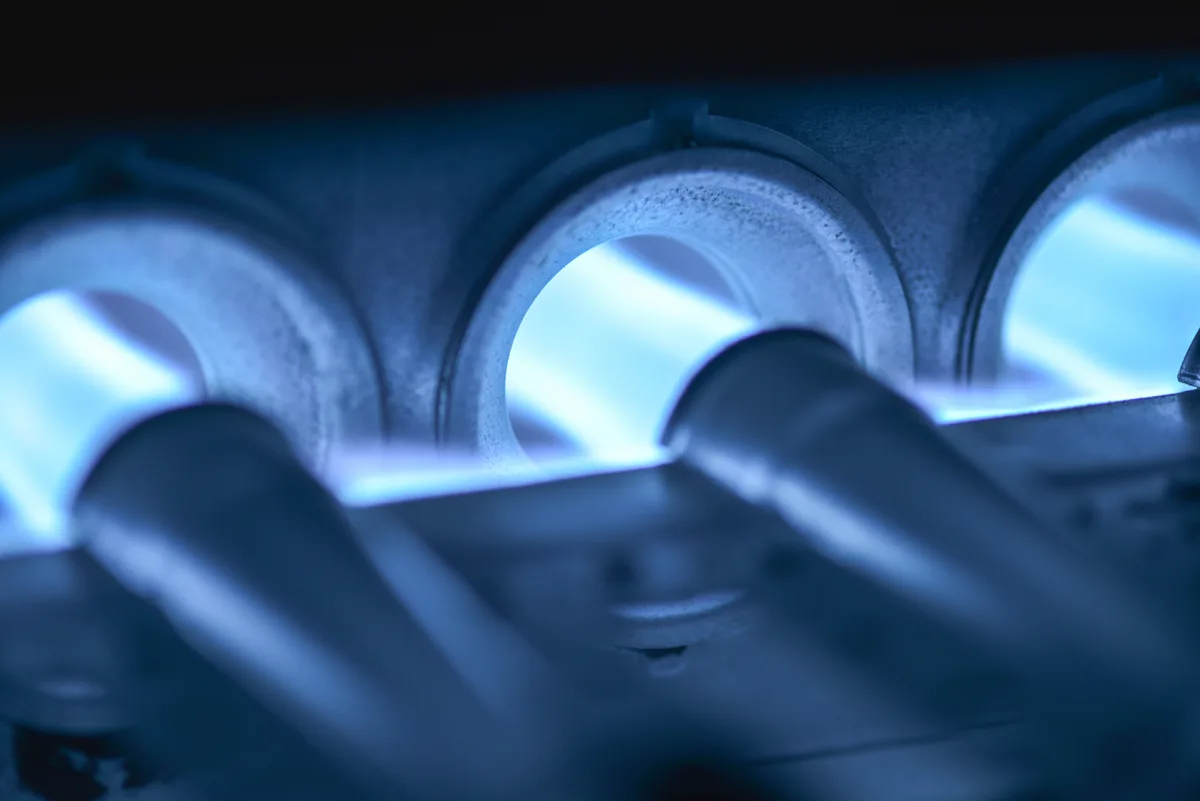
In a healthy furnace each burner fires straight into a heat exchanger tube and the inducer fan pulls the flame and hot gas through it. Rollout is what happens when that path is blocked or disturbed: the flame curls back out of the tube and into the burner compartment, where the wiring, gas valve and cabinet insulation sit.
The rollout switch is a small disc thermostat, usually one to three of them, mounted on or just above the burner box. When escaping flame heats the disc it snaps open and cuts power to the gas valve. Unlike the high-limit switch, which resets itself as the furnace cools, a rollout switch stays open until someone presses the button in its centre. That design is deliberate: it is the last safety between a combustion fault and a fire, and it is meant to make a person look before the furnace fires again.
Five reasons flame leaves the burner box
- A sooted or blocked heat exchanger. Soot, rust scale or, on a condensing furnace, a plugged secondary heat exchanger chokes the passage, so combustion gas backs up and the flame has nowhere to go but out the front.
- A blocked vent. A snow-packed or iced termination, a nest, a sagging vent pipe holding water or a failing inducer motor all reduce the draw through the heat exchanger.
- A cracked heat exchanger. When the blower starts, air pushes through the crack and blows the flame around. Flames that sit steady and then waver or lift the moment the blower comes on are the classic sign.
- Delayed ignition. Gas pools for a moment before lighting, then ignites with a thump that throws flame out of the burner box. Dirty burners and crossover ports are the usual cause.
- Wrong gas pressure. Low manifold pressure gives a lazy flame that curls back instead of driving into the tube; over-firing produces more flame than the heat exchanger can swallow.
What you can check without touching the switch
- Walk outside and look at the vent termination. Clear snow, ice or leaves away from the intake and exhaust pipes by hand.
- Check the filter. A plugged filter is not a direct cause of rollout, but it overheats the heat exchanger and shortens its life.
- Read the flash code on the control board through the sight glass and compare it with the label inside the door. Codes differ by make and model, and the label wins.
- Look, without reaching in, for black soot or brown scorch marks on the burner compartment, the cabinet above it or the wires nearby.
- Write down when it trips: at ignition, a minute in when the blower starts, or only on windy or very cold days. That timing tells the technician where to start.
Stop using the furnace and call now if
- The switch has tripped twice. Resetting it a third time is running a furnace with a known flame-containment fault.
- There are scorch marks, soot or melted wire insulation in or around the burner compartment.
- You heard a boom or thump at ignition before it tripped.
- A carbon monoxide alarm has sounded or shown a reading.
- Someone has jumpered or taped over the switch. Bypassing a rollout switch removes the only thing standing between rollout and a cabinet fire.
What a combustion inspection covers and what the repair costs
Expect more than a new switch. A proper visit includes the burners out and cleaned, the heat exchanger examined with a camera or mirror, manifold gas pressure measured with a manometer, the vent checked end to end, and a combustion analysis with the furnace firing. If the technician finds a cracked heat exchanger or flue gas spilling, the furnace is tagged and stays off; what a red tag means in Ontario explains that process.
- Diagnostic visit: $90–$150, credited toward the repair.
- Burner and combustion cleaning as part of a tune-up: $120–$250.
- Draft inducer motor: $400–$900.
- Gas valve: $500–$1,000.
- Heat exchanger replacement: $1,500–$3,000 in parts and labour.
The decision rule on the last line: heat exchangers crack mostly on furnaces 15 or more years old, and at that age the money is usually better put toward a new furnace than into the old cabinet. Before agreeing to either, read how to know if a heat exchanger is cracked and ask to see the crack. Other published ranges are on the pricing page.
Rollout faults are gas-side work, which in Ontario means a TSSA-licensed technician. ZK Mechanical's furnace repair service covers Burlington, Oakville, Milton, Hamilton, Mississauga and the rest of our area, and the phone is answered around the clock at (647) 801-1252. You can also describe the trip pattern in a message so the technician arrives with the right parts.