
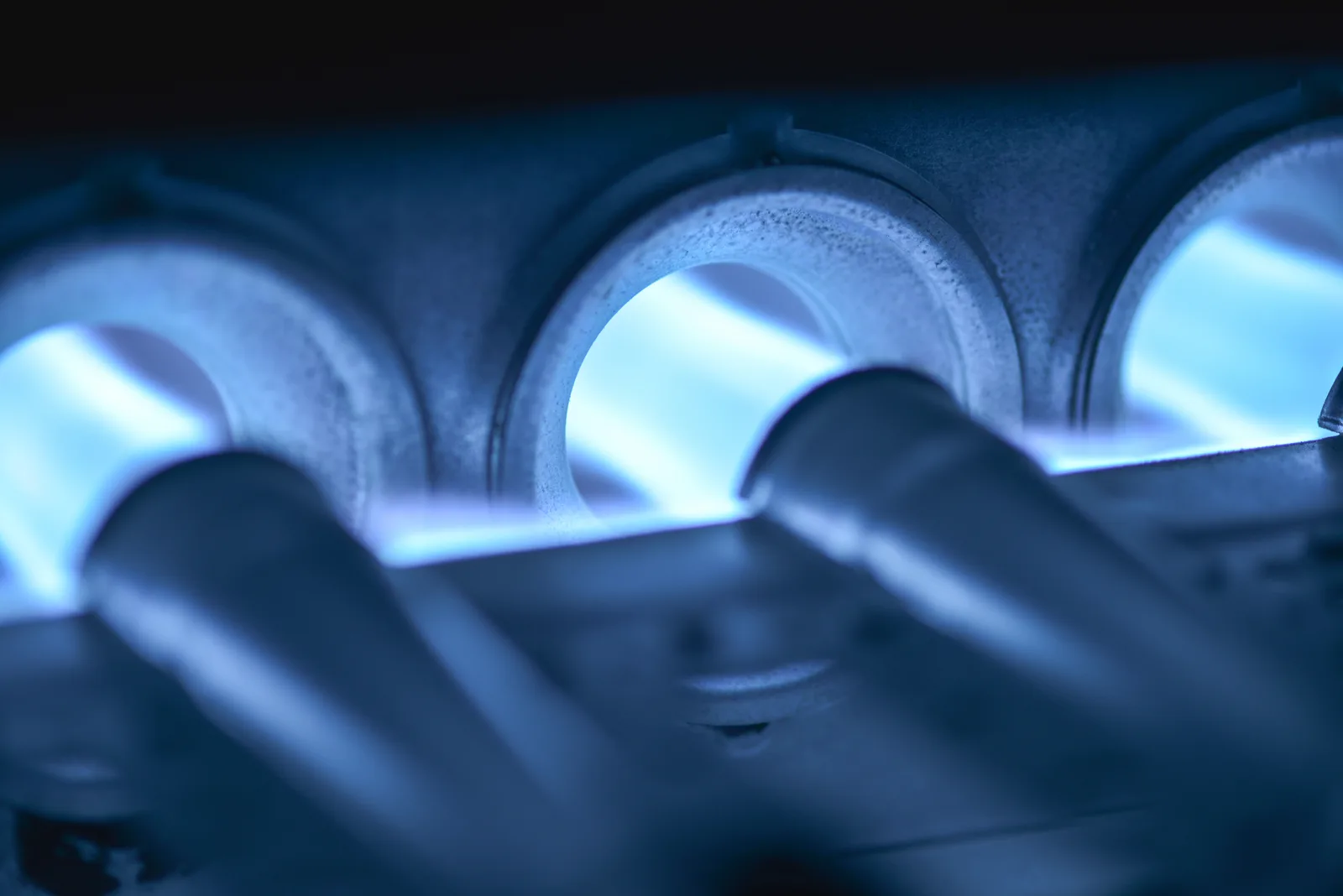
York is a heavy-commercial name that also builds residential equipment, and the residential furnaces reflect that heritage — robust sheet metal, conventional controls, and a design approach that favours serviceability over refinement. It is not the quietest brand in a finished basement, and it does not need to be the most refined to be a sound twenty-year furnace when it is sized and vented properly.
The badge-sharing is the practical thing to know. York, Coleman, Luxaire and Fraser-Johnston equipment comes off shared platforms under one manufacturer, so the service procedure is the same across all four and components frequently interchange. That matters in the older housing around Ancaster and Dundas, where a lot of basements hold a Fraser-Johnston unit that a homeowner assumes is an orphan brand. It is not, and the parts are not exotic.
Those older neighbourhoods also explain the other York pattern we see. Pre-war brick houses on the Escarpment side of Hamilton were mostly converted from gravity or boiler heat, and the duct systems that got grafted on are undersized by modern standards. Drop a high-efficiency York into that and the furnace is not the problem — static pressure is. We measure it before quoting, because a correctly sized furnace choking on 1950s ductwork will trip its limit switch all winter and get blamed for it.
We service and install York as an independent contractor with no dealer relationship to declare. Older York Diamond 80 and Diamond 90 furnaces still turn up regularly and we will service them, but on a unit past the twenty-year mark we will always give you the replacement number alongside the repair number so the decision is yours and not a surprise.
York lines we install and service
York's premium residential tier: the YP9C modulating gas furnace, the YXV variable-capacity air conditioner and the YZV variable-capacity heat pump, on communicating controls. Long low-output cycles, tight temperature control and the quietest cabinets York makes.
The mainstream range — TM9V and TM9E condensing furnaces with ECM blowers, matched to mid-tier condensers. This is the tier most GTA York replacements use, and it is where the parts are cheapest and most available.
Same manufacturer, same platforms, different badges and model numbering. Fraser-Johnston in particular was sold heavily in Ontario, so a lot of Hamilton and Halton basements carry that plate. We service all of them and cross-reference parts between them when a specific number is out of stock.
The Diamond 80 and Diamond 90 furnaces from the 1990s are still running in plenty of houses around here. Serviceable, simple, and increasingly a parts search — inducer assemblies and boards for those generations are order-in when they are available.
What goes wrong on York equipment
Draft inducer noise turning into a lockout
You get a growl or a rising whine on every start for a few weeks, then a furnace that will not light because the pressure switch never sees adequate draft. A replacement draft inducer motor is $400–$900. Caught while it is still just noisy, the visit is cheaper and you are not doing it at midnight in a cold snap.
Limit switch trips from undersized return air
Endemic in converted older houses. The furnace heats, the limit opens on high temperature, the burner shuts down while the blower keeps running, and it cycles like that until it locks out. Replacing the switch treats the symptom; the real fix is adding return air or correcting a crushed duct, and we will show you the static pressure reading rather than asking you to take it on faith.
Integrated furnace control board failure
Symptoms are erratic — a blower that runs continuously, ignition that works intermittently, or a board that shows no code at all. Replacement runs $500–$1,200. On York equipment the board revision matters, so we read the full model and serial off the rating plate before ordering rather than matching by photograph.
Condenser will not start on the first hot day
The oldest story in the trade and still the most common York AC call: a capacitor that gave up over the winter, or a contactor with pitted points. Either is $150–$350 and one visit. Booking a spring tune-up at $120–$250 catches both before they strand you, which is the entire argument for seasonal maintenance.
York warranty: what to know
- Extended parts coverage on York equipment has to be claimed by registering the unit after it is commissioned, and the deadline sits on the warranty paperwork that came in the box with the unit. Treat it as a job to finish before the installer's truck leaves, not paperwork for a rainy weekend.
- The exact term differs by product and by model year, and a furnace, a condenser and a heat pump bought together will not necessarily carry identical coverage. The warranty certificate in your literature packet and York's registration page are the authority; a brochure or a dealer web page is not.
- Heat exchanger coverage on York's gas furnaces runs longer than the parts term, with the longest coverage on the higher tiers. Because that term is the one that decides a replace-or-repair conversation fifteen years from now, it is worth confirming in writing at install rather than assuming.
- Labour is not included in any manufacturer term. If a contractor is quoting you a labour warranty on top, get its length and its exclusions written on the quote — a verbal labour warranty is worth what it is written on.
- Registration details have to match the installation: the serial number, the install date and the address. A claim filed against a registration with the wrong date is the most common avoidable rejection we see, and it usually traces back to somebody registering a unit before it was actually commissioned.
Parts availability in the GTA
York parts move through the manufacturer's distribution network and are well covered in the Greater Toronto and Hamilton Area for anything built in the last fifteen to twenty years. Inducer motors, gas valves, limit and pressure switches, contactors, capacitors, flame sensors and igniters are same-day or next-morning items, and the Coleman, Luxaire and Fraser-Johnston crossover widens the pool noticeably when a specific York number is short. Integrated control boards and communicating Affinity components are the order-in category — usually a few business days, and worth getting right the first time given the price. Where it gets genuinely difficult is the Diamond-era equipment: some inducer assemblies and boards for those generations are discontinued outright, and when that happens we tell you before you spend money on a diagnostic that can only end one way. The ignition consumables ride with the technician, so a straightforward January no-heat rarely needs a second appointment.
York Furnace Error Codes Explained — what each one means and whether it is safe to keep running.
Common questions
My furnace says Fraser-Johnston. Can you still get parts?
Yes, in most cases. Fraser-Johnston is one of the badges built on York platforms by the same manufacturer, so the components are York components with different numbering, and cross-referencing them is routine. Send us a photograph of the rating plate — the model and serial tell us the platform, the age and whether anything on it has been discontinued.
How do I read a York furnace fault code?
Look through the sight glass in the blower door for the LED on the control board, then open the door and read the decoding table stuck to the inside of the panel — it is printed for your board revision and outranks any general chart. Note the pattern, then check what it means and how urgent it is in our York furnace error code guide.
Is York a good brand, or a budget one?
It sits in the middle, which is an honest place to be. You are buying solid sheet metal, conventional serviceable controls and wide parts availability rather than the sound insulation and refinement of a premium brand. In a mechanical room you never sit in, that trade is often the right one — and as with every manufacturer, the installation decides more of the outcome than the badge. For what actually drives lifespan on a gas furnace here, read how long a furnace lasts in Ontario.
My York furnace short-cycles. Is it too big?
Possibly, but check airflow first. In converted older houses around Ancaster and Dundas, restricted returns and crushed ducts trip the high limit and produce exactly the same symptom as an oversized furnace, and the fix is far cheaper. We take a static pressure reading and check the temperature rise against the rating plate before anybody talks about replacing equipment.
Should I repair a twenty-year-old York or replace it?
Weigh the repair against the remaining life honestly. A consumable on a furnace that still heats evenly and passes a combustion check is worth doing. A board plus an inducer on a unit past twenty, with a heat exchanger you would not want to bet a winter on, is not. Seven warning signs it is time to replace a furnace is a good checklist, and a high-efficiency replacement installed runs $4,500–$7,500.