
Quick answer
A furnace that stops working right after a new thermostat goes on almost always has a wiring or setup fault, not a failed furnace. The usual causes, in order: wires landed by colour instead of by the old terminal letters, a missing Rc/Rh jumper, no C wire, the wrong equipment type chosen in setup, or a blown 3 A fuse on the furnace control board.
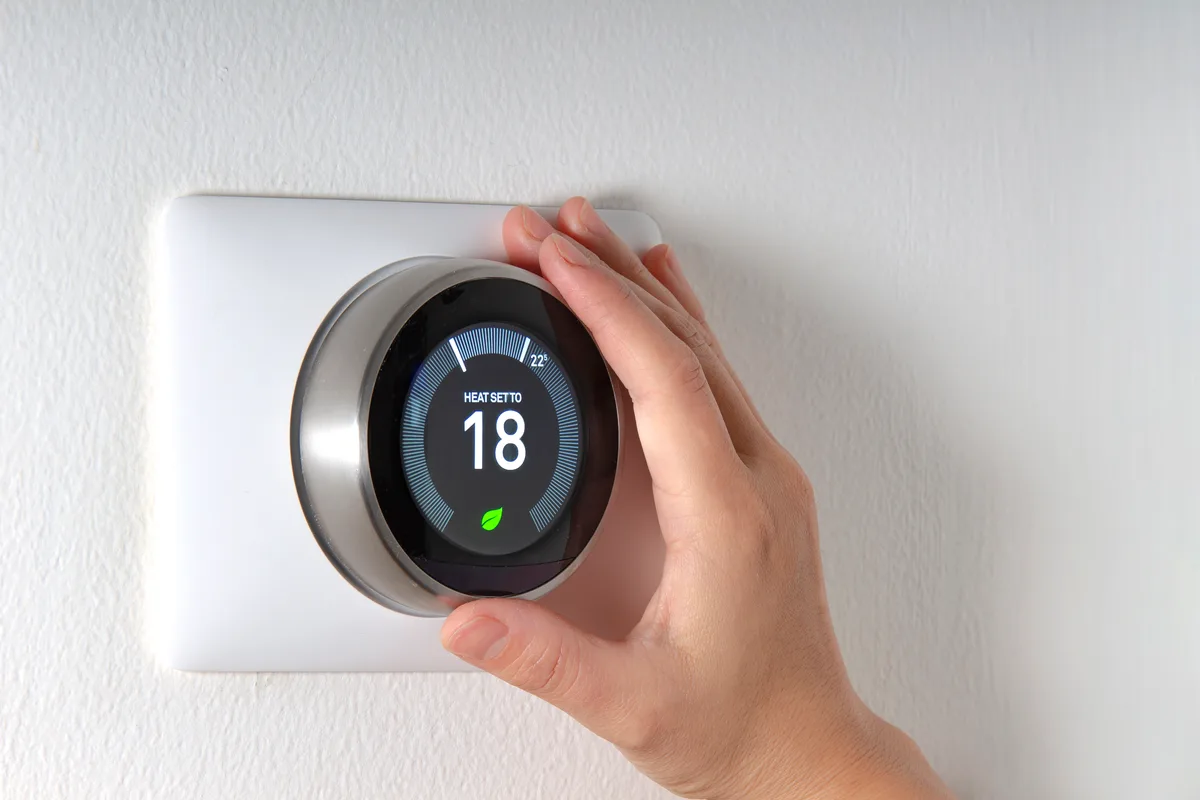
When a furnace is not working after you installed a new thermostat, start from one fact: the furnace ran yesterday, so the fault is almost certainly in the last thing that changed. A thermostat is a set of switches that connect the 24-volt R wire to W for heat, G for the fan and Y for cooling. If a wire sits on the wrong terminal, a jumper is missing or the setup menu describes equipment you do not own, the furnace never receives a proper call for heat. If the screen and the furnace both went dead at the same moment, a fuse has blown.
Wiring faults: terminal letters, the Rc/Rh jumper and the C wire
Thermostat wire colours are a habit, not a standard. Red is usually R, white W, green G, yellow Y and blue or black C, but the installer who wired your house was free to use any conductor for any job, and many did. If you matched colours to the new backplate instead of copying the letters from the old one, there is a fair chance W and another wire are swapped.
The fix is to read both ends. Turn the furnace switch off, take the blower door off, and look at the low-voltage terminal strip on the control board: whichever colour sits under W at the furnace must sit under W at the thermostat, and the same goes for R, G, Y and C.
Many thermostats have two power terminals: Rc for cooling and Rh for heating. A furnace with central air on one transformer has a single R wire, so the two terminals must be bridged by a metal jumper, a slide switch or a setting in the menu. Land the lone R wire on Rc with no jumper and the cooling works in July while the heat does nothing in October.
A smart thermostat also needs a C (common) wire to power its screen and radio around the clock. Without one, some models try to trickle-charge through the heating circuit, which shows up as a furnace that chatters, short-cycles or ignores the call, and a screen that reboots. The repair is a C-wire installation: using a spare conductor already in the cable, fitting an adapter at the furnace, or pulling new cable. Houses built with heat-only furnaces, pre-war brick and many 1950s–60s bungalows among them, often have two-conductor cable with nothing spare.
Furnace and thermostat both dead: the 3 A fuse on the control board
If the new thermostat is blank and the furnace will not even run its fan, the R wire touched C or the metal cabinet while the power was on. That short takes out the 3 A automotive-style blade fuse on the furnace control board, which is there to protect the transformer. With the fuse open there is no 24-volt power for anything, so both ends go dead together.
With the furnace switch off, a blown fuse can be swapped for one of the same 3 A rating; never fit a larger one, because the next thing to burn is the transformer or the board. If the replacement blows too, the short is still there: a nicked wire at the wall plate, a staple through the cable, or two bare ends touching behind the thermostat. Stop there and read why a furnace keeps blowing the control board fuse.
The wrong equipment type in setup energises the wrong terminal
A thermostat told it is running a heat pump heats by switching on Y and the O/B reversing-valve terminal, not W. On a gas furnace with central air, that means a call for heat starts the outdoor air conditioner or does nothing at all, and the burners never light. The installer menu has to describe the equipment in the basement.
- System type: conventional, furnace or forced air, not heat pump.
- Heat stages: one for a single-stage furnace; two only when a W2 wire is landed at both the board and the thermostat.
- Fan control in heat: the gas or oil option, so the furnace runs its own blower; the electric option starts the fan the instant heat is called and pushes cold air.
Check this yourself first, and when to stop
- Furnace switch on, breaker on, and the blower door fully seated on its safety switch.
- Every wire under the same letter at both ends, with no bare copper touching its neighbour.
- Rc and Rh bridged if there is only one R wire.
- Fan set to ON: if the blower starts, the board, fuse and R wire are alive and the fault is in the W circuit or the settings.
- Call a technician if a second fuse blows, or you smell hot electrical insulation at the furnace.
- Call if the thermostat has power and shows a call for heat, the wiring checks out, and the furnace still sits idle or flashes a fault code.
- Call the same day if the house is cooling fast in a cold snap and someone in it should not be without heat overnight.
What it costs to have a thermostat hookup put right
A wiring or setup fault is found on the diagnostic visit and is usually a cheap call. Published bands are on the pricing page.
- Diagnostic visit: $90–$150, folded into the repair if you proceed.
- Correcting the terminals, replacing the fuse and fixing the setup: within the $150–$450 band that covers most small furnace fixes.
- Control board damaged by the short: $500–$1,200, which is why the fuse should never be bypassed or upsized.
- New thermostat cable or a C-wire adapter: priced on a written quote, because it depends on how far the cable runs and whether the walls are finished.
ZK Mechanical's TSSA-licensed technicians wire and commission thermostats on gas furnaces, heat pumps and dual-fuel systems across Burlington, Oakville, Hamilton and Mississauga. If you would rather have it done once and tested, book a smart thermostat installation, see what smart thermostat installation costs, or send us the model and a photo of the wiring.