
Quick answer
A furnace that keeps blowing the 3-amp or 5-amp blade fuse on its control board has a short in the 24-volt wiring, and the fuse is protecting the transformer. The usual culprits are a damaged thermostat cable, the wire to the outdoor AC contactor, a humidifier solenoid or a gas-valve coil. Replace it once with the same rating; if it blows again, stop and find the short.
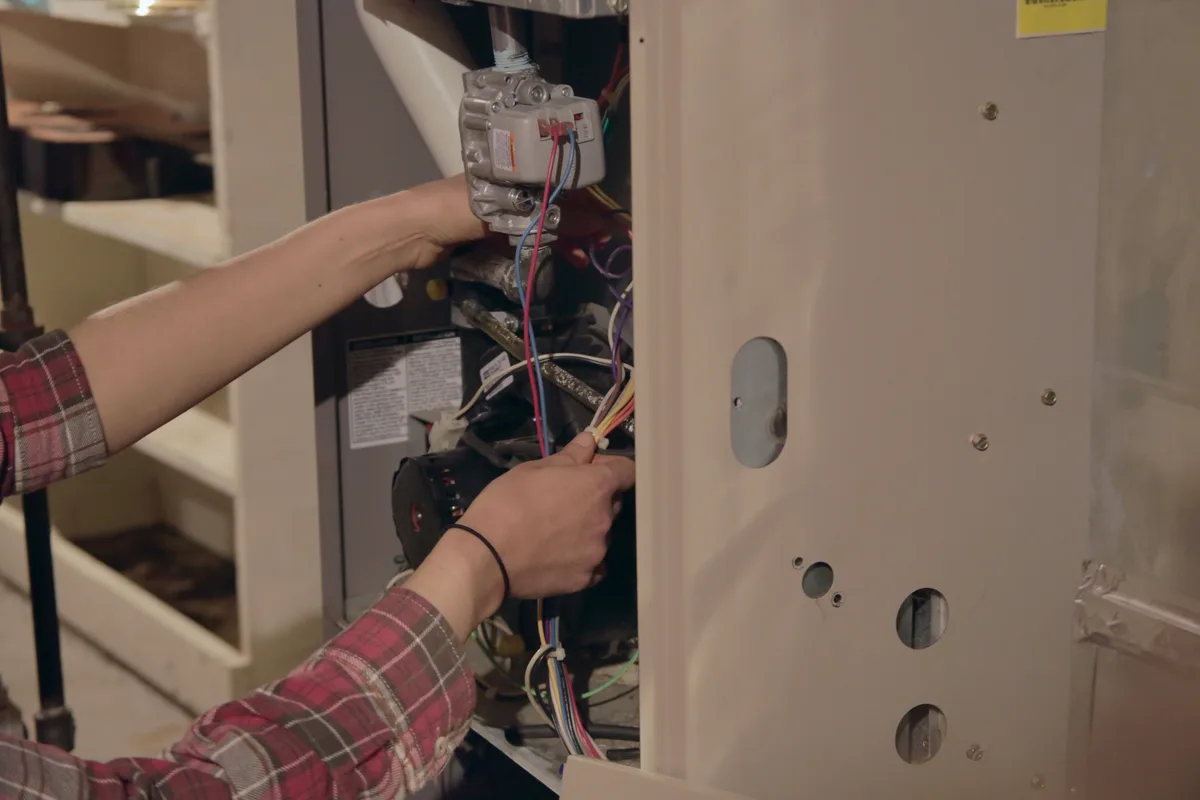
When your furnace keeps blowing the fuse on the control board, the fuse is the messenger. It is a 3-amp (violet) or 5-amp (tan) automotive blade fuse, the same kind used in a car, and it sits on the low-voltage side of the transformer that feeds the thermostat, the gas valve and every accessory wired to the board. That 24-volt circuit normally draws well under 2 amps. A fuse that pops is seeing a dead short or a failing coil, and a new fuse will pop for the same reason.
What the 3-amp fuse protects, and why a bigger one is never the fix
The fuse protects the transformer and the copper traces on the control board. Most residential furnace transformers are rated at 40 VA, which is under 2 amps at 24 volts, so a 3-amp fuse already allows a margin. Fit a 10-amp fuse, or bridge the holder with foil, and the short is still there. The current then burns out the transformer winding or a trace on the board instead.
That turns a wiring repair into a $500–$1,200 control board. Use the rating printed on the board beside the fuse holder and nothing higher. Blade fuses from any hardware or auto parts store are the correct part.
Where the short usually is, judged by when the fuse blows
The moment the fuse blows tells you which circuit to suspect. Note what the system was being asked to do when it died.
- Blows the instant power is restored: the red (R) wire is touching the common wire or bare metal. Look for thermostat cable stapled too tightly to a joist, pierced by a drywall screw, chewed by mice or pinched under the furnace door.
- Blows only when the air conditioner is called: the two-conductor wire running out to the condenser has rubbed through where it is taped to the refrigerant line set, has been nicked by a lawn trimmer, or the contactor coil in the outdoor unit has shorted. This one hides all winter and shows up on the first hot day.
- Blows when the humidifier opens: the solenoid water valve coil on a bypass humidifier is failing, often after a slow leak has wet it.
- Blows a few seconds into a heat call, right when the burners should light: the gas-valve coil is shorted or its harness has chafed on the burner box.
- Blows after a new thermostat went in: a stray copper strand is bridging two terminals on the wall plate, or the wires were moved with the power on.
- Blows at random: a wire is rubbing on a cabinet edge or the blower housing and shorts only when the furnace vibrates. The leads to a condensate pump safety switch are worth a look too.
What you can safely do before calling
- Switch the furnace off at its power switch or breaker before touching the fuse. Pull it straight out and look at the metal link through the plastic body. A broken or blackened link is blown.
- Replace it once, with the same amperage. Tape a spare of that rating to the furnace, never a larger one.
- Before restoring power, look at the thermostat wires on the board's terminal strip and behind the thermostat for bare copper touching anything.
- Outside, follow the thin wire from the house to the air conditioner and look for cuts or a rubbed-through jacket.
- Turn the humidistat to off so the humidifier is out of the circuit, then try a heat call.
- If the second fuse blows, stop. Write down exactly what was calling when it went.
When to stop replacing fuses and call a technician
A blown low-voltage fuse is not a gas or fire hazard on its own. The furnace is simply dead, usually with a dark thermostat, which is one of the causes listed in why a thermostat screen goes blank. It becomes urgent with no heat in freezing weather, and it becomes expensive when someone keeps feeding it fuses.
- Call now if the fuse blows at ignition. A shorted gas valve is not a homeowner part.
- Call now if you see scorch marks on the board, smell hot electronics, or the transformer hums and is too hot to touch.
- Call now if there is water on or near the control board.
- Call if two fuses have gone, whatever the pattern.
How a technician finds the short, and what the repair costs
Fault-finding is elimination, one low-voltage circuit at a time. The technician lifts every thermostat and accessory wire off the board, powers up with a resettable breaker in place of the fuse and confirms the board and transformer hold on their own. Each circuit then goes back on in turn (heat, fan, cooling, humidifier) until the breaker trips. An ohmmeter reading from that wire to ground pins the short to the cable, the coil or the device.
- Diagnostic visit: $90–$150, credited to the repair when you go ahead.
- Repairing or re-running a damaged thermostat or condenser wire, or replacing a shorted contactor: most fixes land at $150–$450.
- Gas valve with a shorted coil: $500–$1,000.
- Control board damaged by an oversized fuse: $500–$1,200, detailed in what a furnace control board costs.
- Transformer or humidifier solenoid: quoted in writing on the visit.
House age changes where we look first. In 1970s–90s subdivision homes the basement was often finished after the furnace went in, so the thermostat cable sits stapled behind drywall where a later screw or baseboard nail can find it. Century farmhouses and rural properties give mice easy access to cable runs in the joist space. In both cases a new cable on a clean route beats a splice buried in a wall.
If it is the breaker in the electrical panel that trips and not the small fuse on the board, that is a 120-volt fault with different causes: read why a furnace keeps tripping the breaker. For a fuse that will not hold, ZK Mechanical traces the short instead of swapping parts until it stops. Book furnace repair at (647) 801-1252 or request a visit, and find related no-heat questions in the heating answers hub.