
Quick answer
To tell whether the thermostat or the furnace is the problem, work from wall to basement: is the display on, is it set to HEAT and calling, does the fan run on ON, does the furnace show a fault code. If the furnace starts when a technician jumpers R to W at the control board, the thermostat or its cable is at fault. If it stays dead, the furnace is.
How do you know if your thermostat or your furnace is the problem? Follow the call for heat from one end to the other and see where it stops. The thermostat's only job is to close a switch between R and W; everything after that, from the inducer fan to the burners, belongs to the furnace. Five checks, done in order and without tools, sort most houses into one camp or the other.
Five checks in order, from the thermostat to the furnace
- Display on: a blank screen means dead batteries or lost 24-volt power, covered in why a thermostat screen goes blank. A lit screen moves you to the next check.
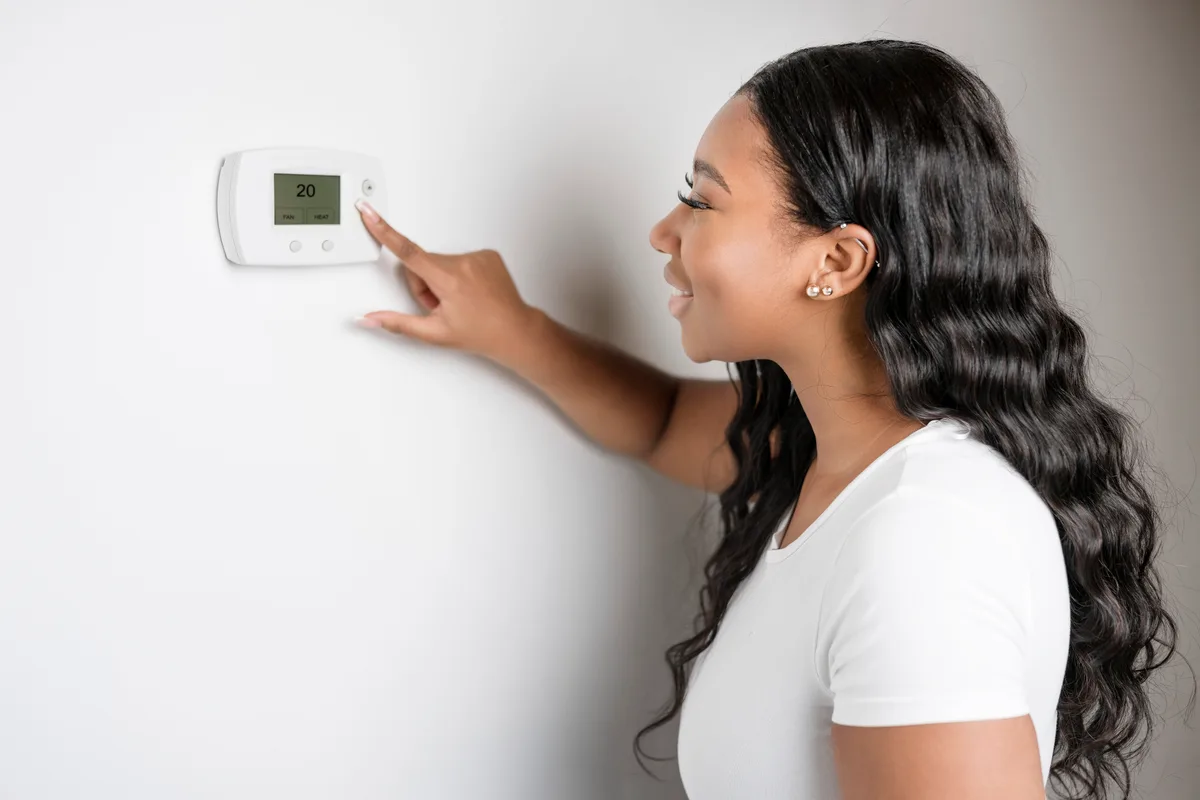
- Set to HEAT and calling: raise the set point three degrees above room temperature and look for a flame icon or the words Heat On. No call symbol with the set point above room temperature points at the thermostat's mode, schedule or hold.
- Fan ON test: switch the fan from AUTO to ON. A blower that starts proves the thermostat has power, the R and G conductors in the cable are intact and the furnace board is alive. No blower means the furnace has lost power at the switch, the breaker, the door switch or the board fuse.
- Furnace LED status code: look through the small window in the lower door. A steady light or slow heartbeat is normal on most boards; a repeating count of flashes is a stored fault, decoded in what a flashing furnace light means.
- Does the inducer start: seconds into a call for heat, a small fan near the burners should begin to hum. If it does, the thermostat's message arrived, and whatever fails next is a furnace fault.
The technician's test: jumper R to W at the control board
The decisive test takes a technician about two minutes. With the power off, the thermostat wires come off the board's R and W terminals; with the power back on, a short jumper joins R to W directly. That is exactly what a thermostat does when it calls for heat, minus the thermostat and the length of cable buried in the wall.
- Furnace runs a normal heating cycle on the jumper: the furnace is healthy, and the fault is the thermostat, its batteries, its settings or the cable.
- Furnace stays dead or faults on the jumper: the thermostat is cleared, and the fault is inside the furnace.
- Furnace runs on the jumper and the thermostat tests fine off the wall: the cable is broken, chewed or stapled through somewhere between the two.
A meter confirms the result. Twenty-four volts between R and C at the board shows the transformer and fuse are good, and 24 volts between W and C during a call shows the thermostat is asking. This is not a test to improvise with a paper clip, because a slip from R to C blows the 3 A board fuse and turns one fault into two.
Thermostats rarely fail outright, so do not buy one before the diagnostic
The decision rule: a thermostat with a lit display that shows a call for heat is working until a test proves otherwise. It is a low-voltage switch with few parts to wear, while a furnace has an igniter that cycles thousands of times, a flame sensor that fouls and motors with bearings. Buying a new thermostat first is a common wasted purchase on a no-heat call, and fitting it adds a fresh chance of a wiring error.
The thermostat faults that do turn up are plain ones: dead batteries, a smart thermostat starved of power for lack of a C wire, a schedule or hold that overrides the set point, a setup menu that says heat pump on a gas furnace, or a loose W wire at the backplate. Heat that runs but overshoots or undershoots is a separate question, answered under why a thermostat reads the wrong temperature.
What each outcome costs in Ontario
Either way the visit starts with the same diagnostic fee, and the bill depends on which side of the jumper test the fault sits. Most furnace repairs land between $150 and $800; the full list is on the pricing page.
- Diagnostic visit: $90–$150, credited toward the repair if you go ahead.
- Thermostat side, a loose wire, wrong setting or blown board fuse: the low end of the $150–$450 band that covers most small fixes.
- Thermostat side, a new thermostat or new cable: quoted in writing, since the price follows the model you choose and the cable route.
- Furnace side, flame sensor cleaning or replacement: $150–$300.
- Furnace side, hot surface igniter: $200–$450.
- Furnace side, draft inducer motor: $400–$900.
- Furnace side, control board: $500–$1,200.
Call now, or safe to wait for a booked visit
- Call now if you smell gas or a carbon monoxide alarm is sounding: get everyone out first, then phone from outside.
- Call now if the furnace breaker trips again after one reset, or the cabinet smells of burning plastic.
- Call now if the indoor temperature is falling toward 10 °C with freezing weather outside, because the plumbing is next.
- It can wait for a booked visit if the furnace heats but short-cycles, the thermostat reboots now and then, or the heat works in some schedule periods and not others.
ZK Mechanical runs the jumper test before recommending any part, so you pay for the fault you have and not for a guess. For furnace repair anywhere from Hamilton to the west side of Toronto, call (647) 801-1252 or describe what the five checks showed.