
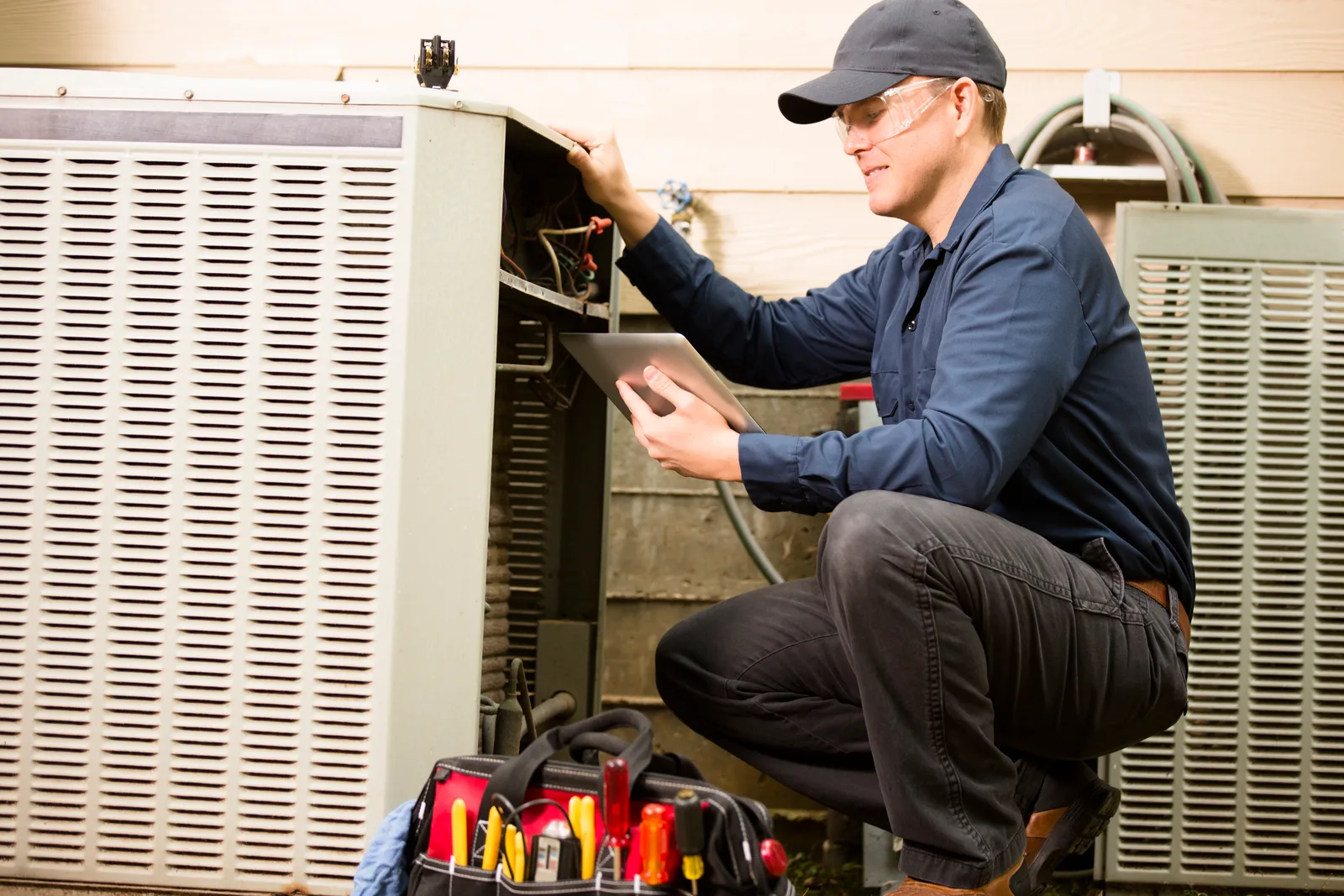
The problem
An air conditioner that is not cooling has a short list of likely causes — a clogged filter, a failed run capacitor, a frozen evaporator coil, a pitted contactor, or refrigerant that has leaked out — and they need different fixes. The expensive mistake is topping up refrigerant without finding the leak. Refrigerant is not consumed in normal operation, so a system low on charge has a leak, and adding gas without repairing it buys a few weeks and then vents the replacement into the atmosphere.
What we did
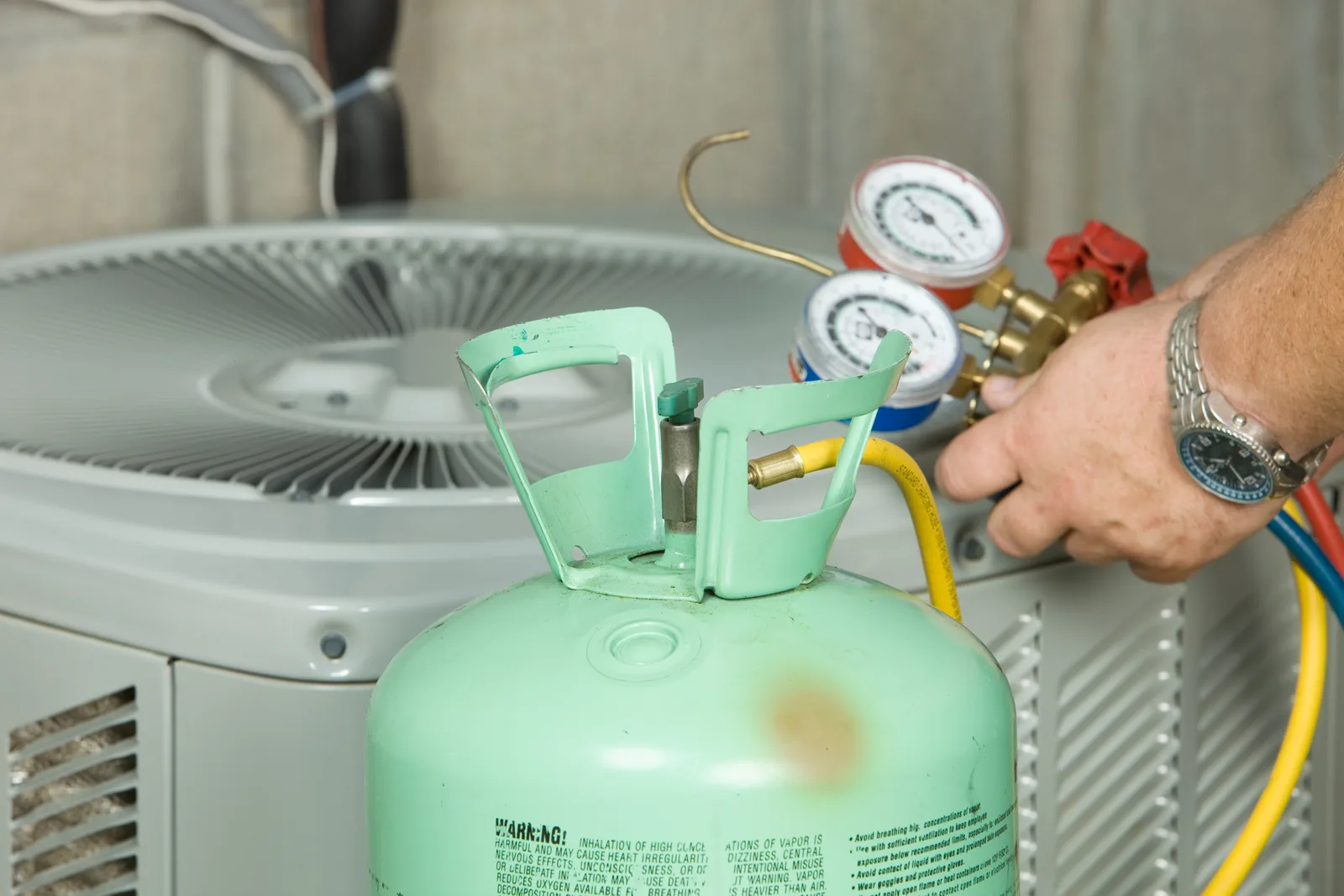
Diagnosis starts with readings, which is what the manifold gauges in the photo are for: suction and head pressures, superheat and subcooling, capacitor microfarads against its rated value, voltage and amp draw at the contactor and compressor, and an inspection of the coil and condensate drain. Those numbers say which of the causes it is. If the charge is low, the leak is found with a detector or a nitrogen pressure test and repaired, then the system is evacuated and the charge weighed back in to the nameplate value by an ODP-carded technician.
- Manifold gauge set
- Diagnostic instruments
- Outdoor condensing unit
The result
The right repair the first time, with the cause fixed rather than the symptom masked. Most AC failures turn out to be inexpensive — a capacitor, a contactor, a clogged drain — and land in the $150–$450 range when they are correctly identified.
Is this your situation?
This kind of work is worth a conversation if any of these sound familiar:
- The air conditioner runs but the house is not getting cool.
- The system has been topped up with refrigerant before, more than once.
- The indoor coil or the line set is freezing over.
- You want the cause identified before anyone quotes a part.
Questions about this kind of job
What do superheat and subcooling tell a technician?
Superheat is how much the refrigerant vapour has warmed past its boiling point leaving the evaporator; subcooling is how much the liquid has cooled below its condensing point leaving the condenser. Together with the pressures they show whether the charge is low or high, whether the metering device is working, and whether airflow across either coil is restricted, all without opening the system.
Why can't the technician just add refrigerant?
Because the refrigerant did not go anywhere on its own. A sealed system that is low has a leak, and topping it up leaves the leak in place, so the charge drops again and the gas that was added ends up in the atmosphere. Refrigerant handling in Ontario requires an ODP card, and knowingly venting it is prohibited. Finding and repairing the leak is the actual repair.
How is a run capacitor tested?
With the power off and the capacitor discharged, a multimeter on the capacitance setting reads its microfarads and the result is compared with the value printed on the can. A reading more than about 6 percent below rating means it is failing even if the unit still starts. A bulged top or oily residue on the case is a visual sign, but the meter reading is the test.
What causes the evaporator coil or line set to freeze?
Either too little airflow across the indoor coil, from a clogged filter, a dirty coil or a failed blower, or too little refrigerant, which drops the coil temperature below freezing. Both produce ice on the copper suction line and eventually a block of ice on the coil. The system is shut off to thaw, then the readings show which of the two it was.