
The problem
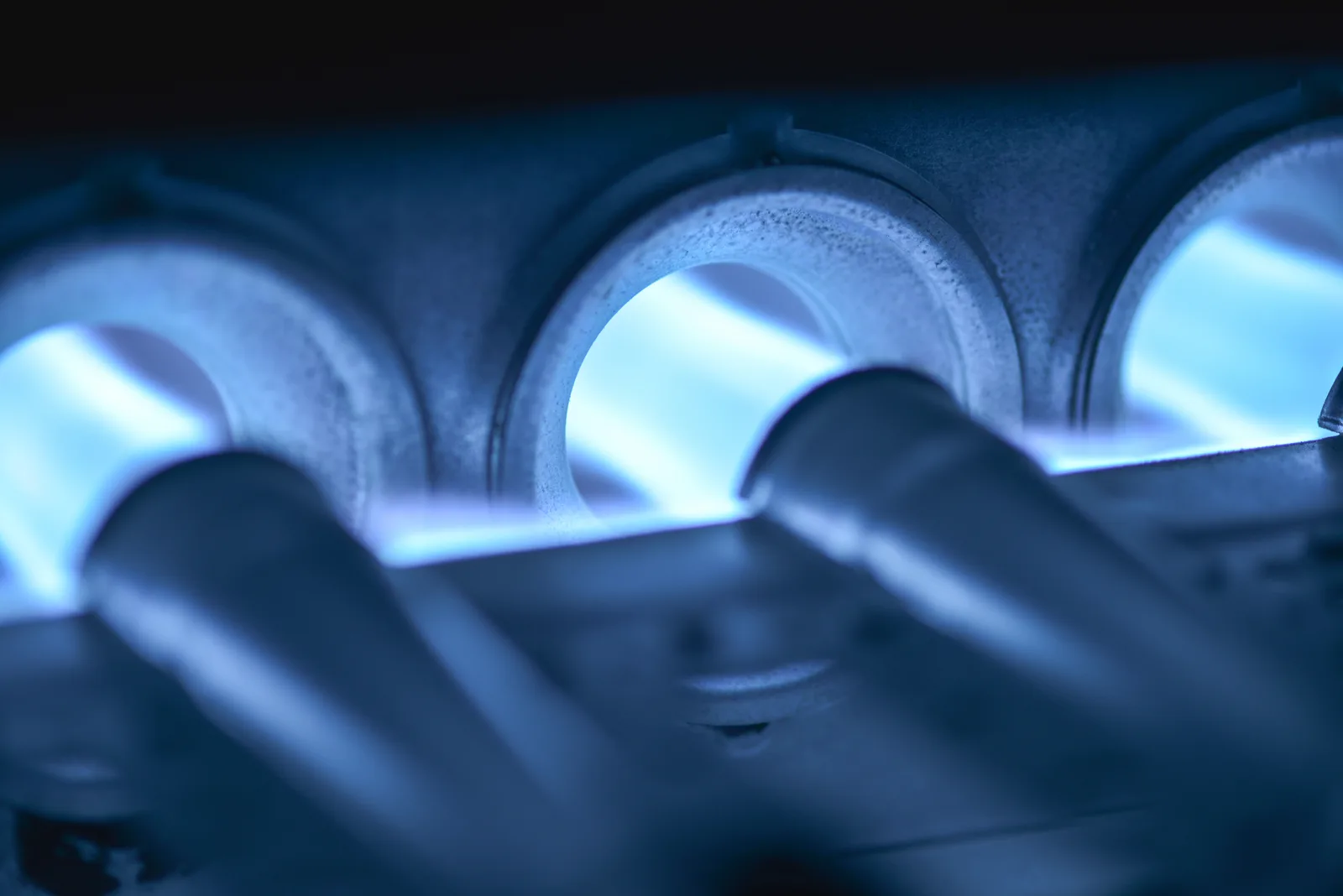
A furnace that lights and produces heat can still be running badly, and the homeowner has no way to tell. Flames that lift off the burner, roll out of the chamber or burn yellow instead of blue, a flame sensor reading near its dropout threshold, or carbon monoxide climbing in the flue all produce heat right up until the day they produce a lockout instead — usually on the coldest night, because that is when the furnace runs longest. The blue flames in the photo are what a healthy burner looks like; the inspection is about what the eye cannot see.
What we did
An inspection means watching the burners through a full cycle and measuring what cannot be seen: flue oxygen and carbon monoxide with a combustion analyser, flame signal in microamps against the manufacturer's minimum, manifold gas pressure against the rating plate, temperature rise across the heat exchanger, and the heat exchanger itself checked for cracks with a mirror or camera. A weak flame signal is the single most useful early warning available, because it shows up while the furnace is still heating the house, and the sensor is cleaned with fine abrasive rather than replaced.
- Gas furnace burner assembly
- Combustion analyser
- Flame sensor and igniter
The result
Faults caught while they are still a scheduled visit rather than an emergency one, and a documented record of what was measured. A tune-up at $120–$250 is a fraction of what a February no-heat call and its consequences cost.
Is this your situation?
This kind of work is worth a conversation if any of these sound familiar:
- The furnace occasionally locks out and then works again after a reset.
- It has not had a combustion check since it was installed.
- You are buying or selling and need the heating system assessed.
- You want the flame signal measured while the furnace is still heating reliably.
Questions about this kind of job
What should furnace flames look like?
Steady, mostly blue, sitting on the burner ports with a small lighter tip and no lifting or rolling. Yellow, lazy flames point to incomplete combustion from dirty burners or too little combustion air; flames that lift off the ports or roll out of the chamber point to a restricted heat exchanger or a flue problem. Either one is a reason to shut the furnace down and measure.
What is a flame sensor and why does it cause intermittent lockouts?
A steel rod sitting in the flame that carries a tiny current, measured in microamps, back to the control board to prove the burners lit. As it coats with oxidation the signal drops, and when it falls below the board's minimum the furnace shuts the gas off a few seconds after ignition, tries again, and eventually locks out. Cleaning the rod restores the signal in most cases.
How is a cracked heat exchanger found?
By combination: a combustion analyser watching for flue oxygen and carbon monoxide readings that shift when the blower starts, a visual inspection of the cells with a mirror or a borescope, and flame behaviour that changes when the blower comes on. A confirmed crack is a shut-down condition because it can push combustion gas into the supply air, and on an older furnace it usually means replacement.
Is a carbon monoxide alarm required in a house with a gas furnace?
Yes. Ontario's Hawkins-Gignac Act requires a working carbon monoxide alarm adjacent to sleeping areas in any home with a fuel-burning appliance or an attached garage. It is a backstop, not a substitute for inspection: an alarm goes off when carbon monoxide has already reached the living space, while a combustion analyser catches it in the flue before the heat exchanger fails.