
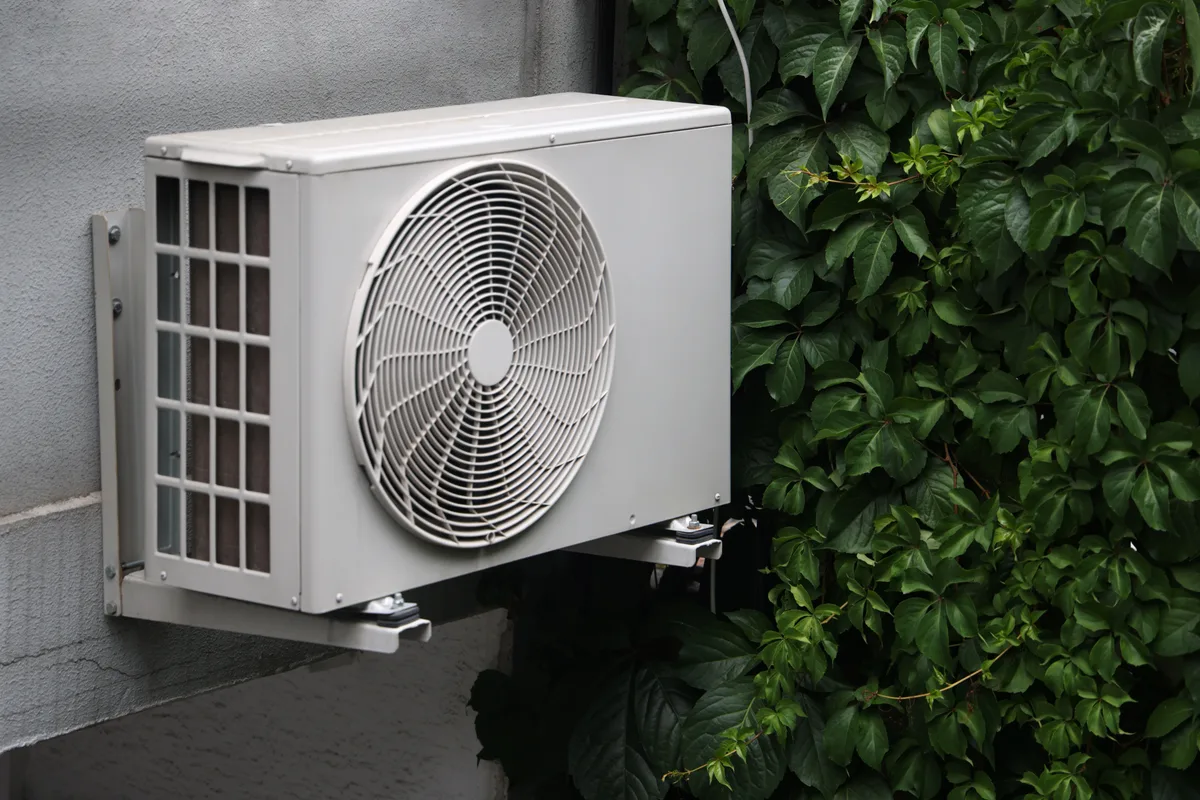
A Mitsubishi Zuba heat pump is worth it in Ontario when you want the heat pump, not a gas furnace, to carry the house through January. Mitsubishi publishes Zuba Central at 100% of its heating capacity at -15 °C and operating to about -30 °C, which covers the winter nights Burlington, Oakville and Hamilton see. If you already own a sound gas furnace, the hybrid version or a less expensive heat pump usually returns more per dollar. A 3-ton cold-climate heat pump installs for $9,500–$15,000, and current Ontario programs return up to $7,500 on eligible systems.
What a Zuba Is, and Which Zuba Your Quote Means
Zuba is Mitsubishi Electric's cold-climate heat pump line for Canada, and the version most homeowners mean is Zuba Central: an outdoor unit matched to a multi-position air handler that sits where the furnace sat and feeds the existing ducts. The air handler replaces the furnace outright. There is no burner, no gas valve and no vent pipe.
Read the model line on your quote, because Mitsubishi's 2025 Canadian literature uses Zuba as a family name. Zuba Single is a one-room ductless system, Zuba Multi runs several indoor units from one outdoor unit, Zuba Central is the ducted whole-home system, and Zuba Hybrid is a coil that sits on a gas furnace. Those are four different jobs at four different prices.
All of them use an inverter compressor that changes speed to match the load, and the Central outdoor unit includes a base pan heater so defrost water drains instead of freezing in the cabinet. The newest units run on R-454B refrigerant. Mitsubishi's literature lists a 10-year parts and compressor warranty when the system is installed and registered by an installer holding the manufacturer's certification, so ask any contractor, us included, to put that registration in writing.
What -30 °C and Full Capacity at -15 °C Mean for a GTA House
The number that matters is capacity at -15 °C, not the -30 °C operating limit. A heat pump that still delivers its rated output at -15 °C can be sized to the house's heat loss instead of being oversized to make up for what it loses in the cold. Design temperatures used for heat-loss calculations across Halton, Hamilton and Peel sit in the high minus-teens, so a correctly sized Zuba Central works near full output only on the coldest handful of nights.
Below -15 °C the output tapers, and Mitsubishi's own footnote says the unit can operate down to -30 °C depending on conditions. That is an operating limit, not a promise of full heat. It is why every Zuba Central quote should name a backup heat source and rest on a heat-loss calculation, not a rule of thumb per square foot.
Backup Heat: Electric Heater Kit or the Hybrid Coil on a Gas Furnace
You have two real backup choices, and the electrical panel usually picks between them.
- Electric heater kit in the air handler: Mitsubishi lists resistance heaters of 8, 10, 15 and 17.5 kW, with the size available depending on the air handler. A 10 kW heater draws about 42 amps at 240 volts and a 15 kW heater about 63 amps, on top of the outdoor unit's own circuit. On a 200-amp service that is routine; on a 100-amp service it needs a load calculation first. The new circuits are ESA-permitted work for a licensed electrical contractor.
- Zuba Hybrid on a gas furnace: a Mitsubishi coil mounts on the furnace and the control switches between heat pump and gas. Mitsubishi requires a furnace certified to ANSI Z21.47/CSA 2.3, excludes oil and drum-type furnaces, and limits furnace output to no more than 300% of the coil's rated heating capacity. An oversized older furnace can fail that last test.
- No backup at all: possible on paper in a tight, well-insulated house, but we do not quote it. A compressor fault in January with no second heat source is an emergency.
If the panel is the obstacle, compare the price of a service upgrade against the hybrid route before deciding. A service upgrade involves the utility that owns your meter (Burlington Hydro, Oakville Hydro, Milton Hydro, or Alectra Utilities in Hamilton, Mississauga and Brampton), which adds scheduling time. Our guide to panel upgrades for heat pumps walks through the load calculation.
Three Fit Checks Before You Sign for a Zuba Central
Free quotes, written pricing.
Most disappointments with a ducted heat pump trace back to the ducts, the outdoor location or the paperwork, not the equipment. Check these three before a deposit changes hands.
- Duct static pressure. A heat pump delivers cooler supply air than a furnace, so it has to move more of it. We measure static pressure on the existing ducts with the old furnace running; if the return side is already choked, the air handler will be noisy and short of airflow until a return is added. 1970s–90s subdivision houses with a single central return are the usual suspects.
- Outdoor clearance and stand height. Mitsubishi states the outdoor unit should be installed above snow level, which in practice means a stand or wall bracket, not a pad on the ground. The cabinet is slim, 11 1/4 to 14 inches deep, so it fits a side yard, but it still needs open air in front of the fan and somewhere for defrost meltwater to go that is not a walkway.
- Rebate eligibility by model. The Home Renovation Savings Program checks the exact outdoor and indoor model pairing against its eligible list, the installer must be on the program's participating-contractor list, and approval comes before the install. Get the model numbers on the quote and confirm them against the heat pump rebate rules.
What a Zuba Central Costs Installed in Ontario
Expect a Zuba Central to price in the upper part of the cold-climate range, because it is a premium system that usually comes with an air handler and heater kit.
- Ducted cold-climate heat pump for a whole home: roughly $6,000–$16,000 installed before rebates, depending on capacity, brand tier and electrical work
- A 3-ton cold-climate system, the common size for a detached house: $9,500–$15,000 installed
- Ontario programs today: up to $7,500 returned on an eligible system
What moves a Zuba quote within those bands is the air handler size, the electric heater kit and its wiring, any return-air duct work, the stand and line-set route, and whether the panel needs upgrading. None of those can be priced from a photo, so the number that counts is the written quote after a site visit. General figures for other equipment are on our pricing page.
Zuba Central Versus the Alternatives on Your Quote
Zuba earns its price when it replaces the fossil-fuel system; it is overbuilt as an add-on to inexpensive gas heat.
- Against a hybrid system on your existing furnace: hybrid costs less, needs no electric heater kit and no panel work, and still shifts most of the heating season to the heat pump. It is the sensible choice for a gas-heated house with a furnace under ten years old.
- Against another ducted cold-climate brand: compare capacity at -15 °C, the lowest catalogued temperature, sound ratings and who will service it. Our Bosch vs Mitsubishi ducted comparison sets two of the common quotes side by side.
- Against ductless: if the house has no ducts, Zuba Central is the wrong product and a multi-zone system is the right one.
Verdict: Who Should Buy a Zuba in Ontario
Buy a Zuba Central if you are leaving propane, oil or electric resistance heat, or removing a gas furnace for good, and the house has ducts that pass a static pressure test. Rural lots in Caledon, Kilbride, Lowville and rural Flamborough, where gas mains do not reach, are where it pays back fastest because the fuel it replaces is expensive.
- Choose Zuba Central with an electric heater kit if you have a 200-amp service, sound ducts and no gas, or you want off gas entirely.
- Choose Zuba Hybrid or another hybrid heat pump if your gas furnace is healthy and your panel is 100 amps.
- Choose a lower-priced heat pump if a furnace will always carry the coldest hours and you mainly want efficient cooling and shoulder-season heat.
We size from a heat-loss calculation, measure the ducts and put the model numbers, backup heat and rebate status in writing. See heat pump installation for how the job runs, or book a free written quote.
Frequently asked questions
Does a Zuba heat pump need backup heat in Ontario?
Plan for it. Mitsubishi's own literature says an auxiliary heat source may be required depending on location and use. Zuba Central holds full capacity to -15 °C and tapers below that, so the heater kit or furnace covers the coldest hours and any defrost or service event. Sized from a heat-loss calculation, the backup runs for a small share of the season in our area.
Can a Zuba Central use my existing furnace ducts?
Usually, yes. The multi-position air handler connects to the same supply and return plenums the furnace used. The limit is airflow: a heat pump needs more air than a gas furnace for the same heat, so undersized returns show up as noise and weak heat upstairs. We test static pressure first and price any added return air as its own line on the quote.
Is Zuba the same thing as Hyper-Heat or H2i?
H2i, also written Hyper-Heat, is the Mitsubishi compressor technology that keeps capacity up in cold weather. Zuba is the Canadian product family built on it. A quote that says Hyper-Heat without a model number could be a one-room ductless unit or a whole-home ducted system, so ask for the outdoor and indoor model numbers before comparing prices.
How long is the warranty on a Zuba?
Mitsubishi's Canadian literature lists a 10-year parts and compressor warranty on Zuba models when the system is installed and registered by an installer with the manufacturer's certification, with conditions set out in the warranty terms. Labour is a separate matter between you and the installer. Ask for the registration confirmation after the install and keep it with the invoice.