
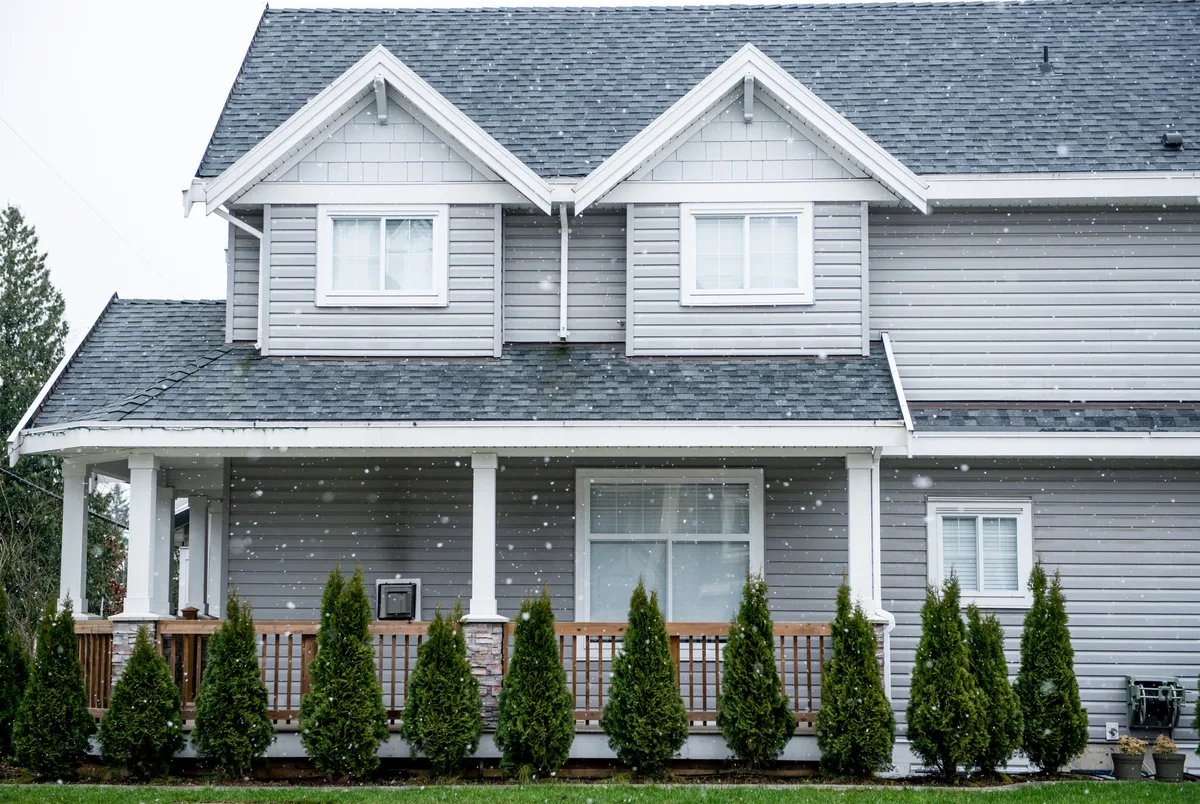
The best furnace for a large two-storey house is a two-stage or modulating model with a variable-speed ECM blower, sized to the heat loss and to what the ducts can move. In a 2,500 to 3,500 sq ft home, long low-fire cycles are what close the gap between a warm upstairs and a cool main floor, and a bigger single-stage furnace makes that gap wider. Have the static pressure and return air measured before anyone names a size, because the ductwork sets the ceiling on what any furnace can deliver.
Why Two-Stage or Modulating Burners Suit 2,500 to 3,500 sq ft
Staged heat evens out a two-storey because it keeps air moving for longer. The thermostat sits on the main floor. A single-stage furnace satisfies it in a few minutes and shuts off before the bedrooms at the end of the longest duct runs have received their share.
A two-stage furnace on low fire runs much longer for the same heat, so the far rooms catch up. A modulating furnace goes further and trims its flame in small steps to match the heat loss, which holds the house within a fraction of a degree. Both depend on the variable-speed ECM blower, which ramps gently, slows down with the flame, and can circulate air at a low speed between cycles to mix the two floors.
Physics works against you otherwise. Warm air rises up the stairwell and collects on the second floor in winter, and the same stairwell lets cool air fall in summer. Continuous slow circulation is the cheapest tool there is for that.
What Size Furnace a Large Two-Storey Needs
Most houses in this range calculate between 60,000 and 100,000 BTU of input, and the age of the house moves the answer more than the floor area does. A 1980s or 1990s subdivision home with original windows sits toward the top. A 2000s or newer build in Milton, north Oakville or Brampton with better insulation and tighter construction often needs a size less than the furnace the builder installed.
Our furnace sizing guide explains the calculation. For this page the point is narrower: the heat loss gives you the size the house needs, and the ducts tell you the size the house can use.
Static Pressure and Return Air Decide What the House Can Use
A furnace only delivers its rated heat if the blower can move its rated airflow, and the ducts decide that. Most residential furnaces are designed for about 0.5 inches of water column of total external static pressure. When the measured figure is well above that, the furnace is being asked to push air through ducts that are too small for it.
- A return grille that whistles, or a filter that bows inward when the blower runs.
- The furnace shutting its burner off on the high-limit switch and restarting a few minutes later.
- Bedrooms at the far end of the house that never get enough air in either season.
- An air conditioner that freezes its coil or cannot keep up upstairs.
The usual cause in two-storey subdivision homes is undersized return air: one or two central returns trying to feed a furnace that needs far more. If static is already high with the current furnace, a larger furnace will not deliver more heat. It will trip its limit more often.
The fixes are sheet-metal work, not equipment. Adding a second-floor return, enlarging the return drop, or fitting a deeper media filter cabinet all lower the pressure, and return air duct installation is often the best money spent on the whole project. Where the ducts cannot be changed, the right answer is a smaller furnace that the ducts can serve.
One Zoned System Versus Two Furnaces
Free quotes, written pricing.
Zoning gives each floor its own thermostat from one furnace; a two-furnace design gives each floor its own equipment. For most houses under about 3,500 sq ft, one well-sized furnace with zoning is the better value, provided the ducts can be split.
- A zoned system needs a two-stage or modulating furnace with a variable-speed blower, so it can turn down when only one floor calls.
- It needs motorized dampers in the supply trunks or branches that feed each floor, a zone control panel, and a thermostat or sensor for each zone.
- It needs a discharge-air temperature sensor to protect the furnace, and ducts on each zone large enough to take the furnace's minimum airflow without a bypass dumping air back into the return.
- It only works if the upstairs and downstairs branches separate somewhere you can reach, usually at the trunk in an unfinished basement.
Our zoning system installation page describes the parts and the survey we do first.
- A two-furnace system adds a second, small furnace in the attic or an upper-floor closet with its own supply and return ducts.
- That furnace needs its own gas line, plastic vent, electrical circuit, thermostat and a condensate drain protected from freezing.
- Cooling means a second coil and a second outdoor unit as well.
- You maintain two of everything, and in return a failure in one system leaves half the house heated.
Two furnaces make sense above roughly 4,000 sq ft, in a house that was built that way, or where an addition cannot be reached by the existing ducts. Retrofitting a second furnace into a finished two-storey means building a second duct system, and that is rarely worth it for a temperature difference a return and zoning can fix.
The Furnace Blower Runs the Air Conditioner Too
A house this size cools with three to five tons, and the furnace blower moves all of it. Choose the furnace with the cooling airflow in mind, or the upstairs complaint simply moves from January to July. A variable-speed blower also slows down to wring more moisture out of the air, which matters within a few kilometres of the lake.
If the air conditioner is the same age as the furnace, price them together. Replacing both at once typically runs $7,500–$11,500 and avoids matching new equipment to an old coil.
What the Furnace Costs for a House This Size
- Two-stage 96% furnace with an ECM blower: $4,500–$6,500 installed, where most replacements fall.
- Modulating furnace with a variable-speed blower and its control: the top of the $4,300–$7,000 band for a high-efficiency furnace in the GTA.
- Premium-badge models at either tier: typically $500–$1,500 over a comparable value brand.
- Added returns, zoning dampers and controls: quoted separately after the duct survey.
Verdict: Two-Stage as the Floor, Modulating if You Zone
- Buy a two-stage furnace with a variable-speed ECM blower as the minimum for a 2,500 to 3,500 sq ft two-storey.
- Buy modulating if you are adding zoning, if the house has rooms over the garage or a bonus room that lags, or if you plan to stay 15 years or more.
- Fix the return air before or with the furnace. It does more for the second floor than any upgrade in the equipment.
- Choose two furnaces only when the house is larger than this range or the ducts cannot be zoned.
- Do not buy a larger single-stage furnace to solve a cold second floor.
At the quote we take a static pressure reading on the existing system and count the return air, then size the furnace to both. See how we handle the work on our furnace installation page, or book a visit and tell us which rooms run cold so we can start there.
Frequently asked questions
Will a bigger furnace fix a cold second floor?
No. A cold second floor is an air-delivery problem, not a capacity problem. A larger furnace satisfies the main-floor thermostat even faster and shuts off sooner, so the upstairs gets less heat, not more. Longer cycles from a two-stage furnace, more return air from the second floor, and zoning are the fixes that work.
Can zoning be added to the furnace I already have?
It depends on the furnace and the ducts. A two-stage or modulating furnace with a variable-speed blower is a good candidate. A single-stage furnace with a fixed-speed blower is not, because it cannot reduce its output when one floor is closed off. The trunks also have to separate by floor where dampers can be installed.
Is a modulating furnace worth it over two-stage in a two-storey house?
For most two-storey homes, two-stage delivers the bulk of the improvement. Modulating earns its premium when the house is zoned, has a room that always lags, or the owners are sensitive to small temperature swings. The gas saving between the two is minor; you are paying for finer control and quieter operation.
Should I close main-floor vents to push more heat upstairs?
Closing one or two registers partway is harmless and can help. Closing many raises the static pressure, which cuts total airflow, makes the ducts noisy and can trip the furnace's high limit. Proper balancing is done at the branch dampers in the basement, and a persistent imbalance points to a return-air shortage.