
Quick answer
A furnace that will not start on the first cold day has usually been caught out by five months sitting idle. Check four things first: thermostat still set to COOL, dead thermostat batteries, the furnace switch or breaker off, and the gas valve closed. If those are fine, the likely faults are an oxidized flame sensor, a dry or blocked condensate trap, or a spider web in a burner orifice.
When your furnace won't start the first time you turn it on in the fall, the cause is almost always something that changed, or quietly degraded, while it sat unused since April. Nothing wore out over the summer. Settings were switched for cooling, batteries ran down, metal oxidized in a humid basement, water evaporated out of a trap, and a spider found a sheltered place to build. Work through the simple misses first, because two of them are fixed at the thermostat.
Simple things to check before you call
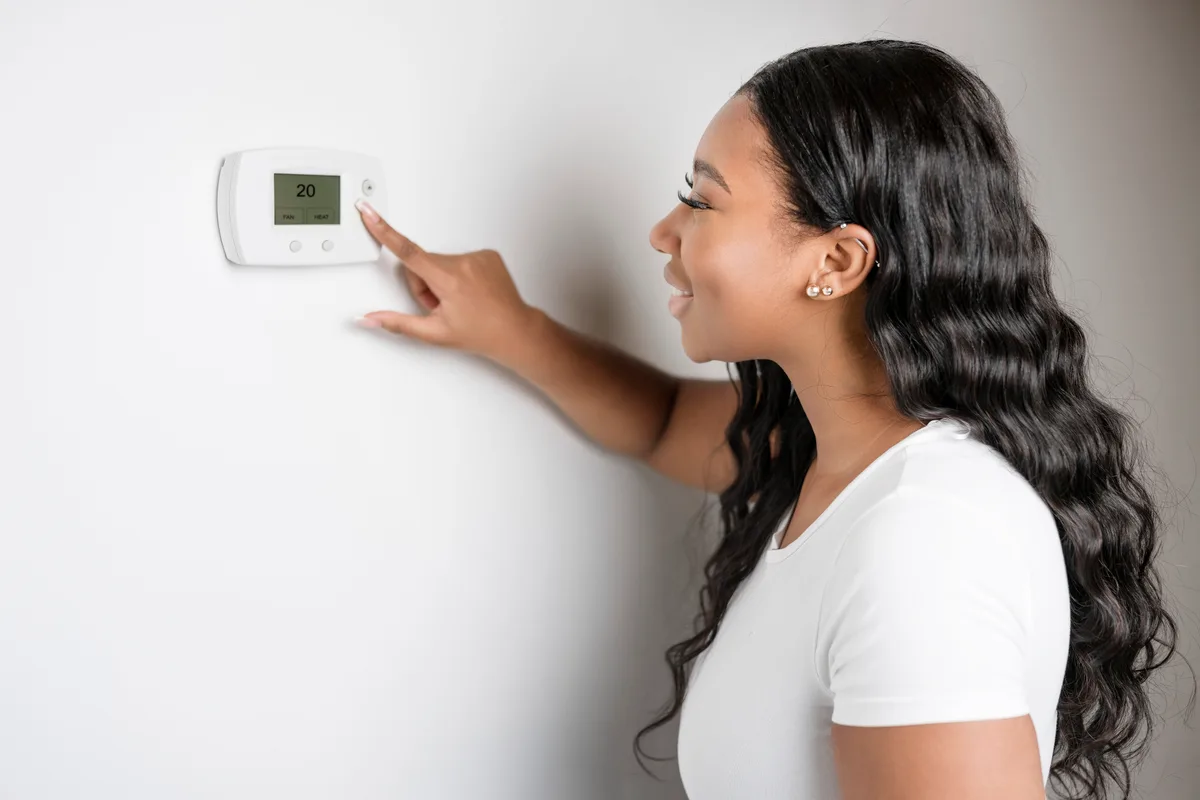
- Thermostat mode. It may still be in COOL, or in OFF from the shoulder season. Set it to HEAT and raise the setpoint at least 3 °C above room temperature. On a smart thermostat, check that a summer schedule or an eco hold is not overriding you.
- Thermostat batteries. A thermostat with weak batteries can light its screen and still fail to close the heating relay. Replace them every fall whether or not the low-battery icon is showing.
- Furnace switch and breaker. The switch on or beside the furnace looks like a light switch and gets flipped when summer storage is shuffled around the basement. Check it, then the breaker marked furnace in the panel.
- Appliance gas valve. The valve on the pipe beside the furnace is open when its handle lies along the pipe and closed when it sits crosswise. If it is closed and you do not know why, ask before opening it, and if you smell gas, leave and call Enbridge Gas from outside.
- Filter and blower door. A filter left in since spring carries a summer of AC use, and a door that is not seated holds the safety switch open.
Give the furnace five minutes after each change. A normal start-up is inducer fan, igniter glow, burners, then the main blower. A faint dusty smell for the first few cycles is ordinary burn-off.
Faults that develop while a furnace sits all summer
- Oxidized flame sensor. The sensor is a thin metal rod in the burner flame. Over a humid summer it grows an oxide film that blocks the tiny current the board uses to prove flame, so the burners light, run a few seconds and shut off; why a furnace ignites then shuts off covers that pattern.
- Dried or blocked condensate trap. A high-efficiency furnace needs water in its trap to seal the drain against the inducer's suction. If the trap dried out, or the AC filled the shared drain with slime, the pressure switch will not hold and you may hear gurgling. Some traps need priming with a cup of water at the start of the season, as the manual directs.
- Spider webs. Small spiders nest in burner orifices, pilot tubes and the rubber pressure-switch hose over the summer. A web in one orifice gives a burner that lights late or not at all, and a web in the pressure tube stops the furnace before ignition.
- Pilot out on older units. Standing-pilot furnaces, still found in some bungalows and farmhouses, lose their pilot over the summer or have it turned off. If it will not relight or stay lit, the thermocouple has likely failed.
- A seized inducer or blower. Bearings that were noisy in March can be stiff in October. A hum with no fan movement means power off and a call.
- A blocked vent. Wasps and birds like plastic vent terminations and chimney caps in summer.
Why the first cold snap in October floods repair schedules
Every furnace in the region gets its first real call for heat on the same night. The ones with a marginal flame sensor or a blocked drain all fail together, usually on the first frosty weekend of October, and every heating contractor's phone rings at once. A fault that would have been a relaxed booking in September becomes a wait.
You can step out of that queue for free. On a mild day in September, switch the thermostat to HEAT, raise it a few degrees and let the furnace run a full 15-minute cycle. If it lights and stays lit, you know. If it does not, you have weeks to get it looked at, and our guide on when to book pre-winter maintenance has the timing.
What a pre-season tune-up catches, and what the fixes cost
A fall tune-up is aimed squarely at the sat-all-summer faults. The technician cleans the flame sensor, checks the igniter, flushes and primes the condensate trap, clears the pressure-switch tubing, inspects the burners and the vent termination, and runs the furnace through full cycles with a combustion reading. The pricing page has the full list of bands; the ones that matter here are:
- Furnace tune-up: $120–$250.
- Flame sensor cleaning or replacement: $150–$300.
- Hot surface igniter: $200–$450.
- Condensate drain cleaning or trap replacement: $150–$350.
- Diagnostic visit when the furnace is already down: $90–$150, applied to the repair if you proceed.
When a furnace that will not start needs a call right away
- Call now if you smell gas, or the furnace lights with a bang.
- Call now if the furnace tried, locked out, and a reset brings the same failed attempts. More resets will not fix it.
- Call now if there is water under the furnace or the inducer hums without spinning.
- Call now if it is below freezing outside and the house is already cold. ZK Mechanical's emergency line is answered 24/7 with no after-hours surcharge.
- It can wait for a booked visit if the weather is mild and the furnace runs but smells, rattles or cycles oddly.
ZK Mechanical is owner-operated out of Burlington, and its TSSA-licensed technicians serve homes from Hamilton to Etobicoke. For a furnace that will not light, call (647) 801-1252 for furnace repair; to get ahead of the October rush, book a tune-up. The year-round checklist for a dead furnace is in why a furnace will not turn on.