
Quick answer
An outdoor AC fan that is not spinning usually has a failed run capacitor, seized fan-motor bearings, a burnt contactor, or no power from a tripped breaker or pulled disconnect. If the unit is humming or the compressor is running with the fan still, turn the system off at the thermostat: without the fan the compressor overheats within minutes. A capacitor replacement runs $150–$350.
If your outdoor AC fan is not spinning, listen before you look. Silence means the unit has no power or no signal to run. A hum or buzz with a still blade means power is arriving and something cannot start, and that is the case where the system needs to go off at the thermostat right away.
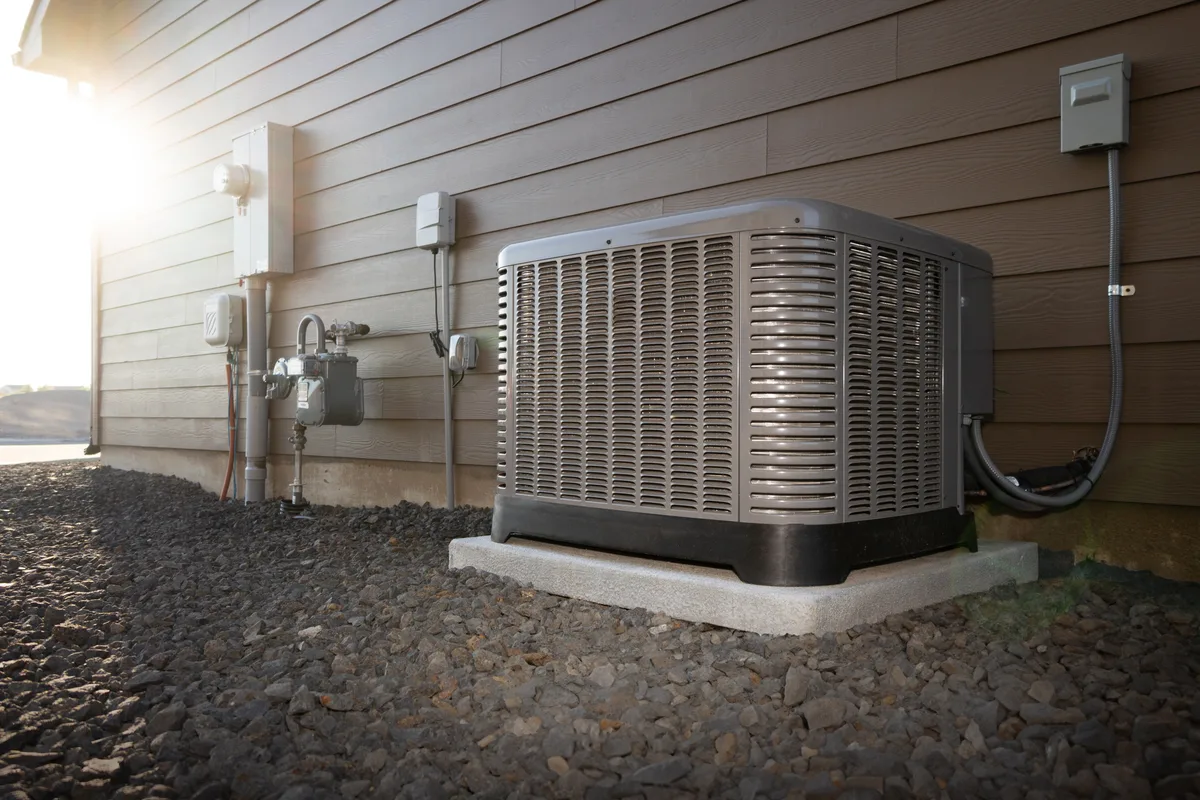
The fan pulls outdoor air through the condenser coil and carries away the heat taken out of your house. With the blade stopped, that heat has nowhere to go. Refrigerant pressure on the high side climbs, the compressor draws more current and runs hotter, and after a few minutes it trips on its high-pressure switch or internal overload. It cools down, restarts and does it again, and each round takes life out of the compressor.
The four usual causes of a stopped condenser fan
- Failed run capacitor. The capacitor gives the fan motor the phase shift it needs to start and keep turning. When it weakens, the motor hums and the blade sits still or turns slowly. A swollen or domed top on the capacitor can is the visible sign; a healthy one is flat.
- Seized fan-motor bearings. The condenser fan motor sits out in the weather for years and its bearings dry out. The blade feels stiff or gritty when turned with the power off, or the motor starts, runs hot and stops on its thermal protector.
- Burnt contactor. The contactor is the relay that switches 240 V to the fan and compressor. Pitted or burnt contacts can leave one leg open, so nothing starts or the unit chatters.
- No power. A tripped double-pole breaker in the panel, or a disconnect beside the unit that was pulled for a spring cleaning and never pushed back in.
If the unit is a heat pump and it is winter, a stopped fan can be a normal defrost cycle. That case is covered in why a heat pump fan is not spinning.
What you can check safely
- Turn the thermostat to Off first, then look at the breaker and the disconnect. A tripped breaker gets one reset.
- Look down through the top grille for a stick, a toy or a nest wedged against the blade.
- With the disconnect pulled, nudge the blade with a stick through the grille. A blade that spins freely points toward the capacitor; a stiff one points toward the motor.
- Do not remove the service panel. The capacitor stores a charge after the power is cut.
The stick test is a diagnosis, not a fix
The well-known trick is to push the blade with a stick while the unit hums; if the fan takes off and keeps running, the capacitor is weak. It does tell you something. It is also a hand near a spinning blade on a live 240 V unit, and it proves nothing about the compressor, which shares the same dual capacitor on most residential condensers and may be struggling to start too.
A fan that needs a push will need one at every cycle, and it will not get one at 3 p.m. when nobody is home. Treat a successful push-start as the reason to book a capacitor replacement, and leave the system off until it is done. How to tell if an AC capacitor is bad lists the other symptoms.
Capacitor ratings and fan motors: why the exact part matters
A capacitor is replaced by its microfarad (µF) rating, printed on the label: 45/5 µF, for example, on a dual capacitor that serves both the compressor and the fan. The replacement has to match that microfarad value. Its voltage rating, 370 or 440 V, may be equal or higher but never lower. A capacitor with the wrong value will still run the motor, and it will overheat it.
Fan motors come as OEM parts or universal replacements. An OEM motor drops in with the same mounting, shaft length and blade position. A universal motor is a sound repair when its horsepower, RPM, voltage, frame size and rotation match the original and it is paired with the capacitor its own label calls for, not the old one. Blade height in the shroud matters too: set wrong, the fan moves less air and head pressure runs high all summer.
What it costs to get the outdoor fan running again
- Diagnostic visit: $90–$150, credited when the repair goes ahead.
- Run capacitor: $150–$350.
- Contactor: $150–$350.
- Condenser fan motor, OEM or universal, with a matched capacitor: $300–$700.
A capacitor or contactor is normally a one-visit repair; a fan motor specific to one brand may have to be ordered. ZK Mechanical tests the capacitor, the motor windings and the compressor's amp draw before quoting, so you are not sold a motor when the capacitor was the fault. Call (647) 801-1252, see AC repair or the condenser fan motor replacement page, compare figures on the pricing page, or send a request online.