
Quick answer
No. Leave it running and let the thermostat decide when to bring backup heat in. A cold-climate unit still produces useful heat far below freezing, and shutting it off hands the whole house to electric elements or the furnace, which costs more to run. Switch it off only for a mechanical reason: a solid casing of ice, a grinding fan, or a technician telling you to.
Turning your heat pump off in extreme cold feels protective, the way people used to cover an air conditioner for the winter. It is not. The equipment is built to run in that weather, the controls are built to manage the handoff to backup heat, and the moment you take the compressor out of the picture you are paying full price for every unit of heat the house needs on the most expensive night of the year.
What switching it off actually costs
Even at -20°C a cold-climate unit is still returning more heat than the electricity it consumes — the ratio has narrowed, but it has not inverted. Turn it off and the electric elements take over at a flat one-for-one, or on a hybrid the furnace runs at full duty for the entire cold snap. Over a three-day deep freeze that difference is visible on the bill, which is the opposite of what the person flipping the switch intended.
Auxiliary heat and emergency heat are not the same button
Auxiliary heat is automatic. The thermostat brings the backup stage in when the heat pump cannot keep up, then drops it again, and you should expect to see that indicator on cold nights. Emergency heat is manual, and it locks the compressor out entirely so that only the backup runs. Emergency heat is for when the outdoor unit is broken, iced solid or otherwise unsafe to run — not for cold weather in general. Seeing aux on a January night means the system is behaving; leaving em heat on for the season means paying for backup heat you did not need.
Deep setbacks are the real mistake in a cold snap
A heat pump prefers to hold a steady setpoint. Drop the thermostat several degrees overnight and the morning recovery asks for more heat than the compressor can supply, so the strips or the furnace cover the gap — often for an hour or more during the winter on-peak window. Keep setbacks to a degree or two in the coldest weather, or use a thermostat with adaptive recovery that starts early and gently. Heat pump thermostat settings covers the specific menus on the common models.
The short list of reasons to shut it down
- The outdoor unit is encased in ice rather than lightly frosted, or the fan is locked. Switch to emergency heat and read why is my heat pump icing up.
- Grinding, screeching or a hard mechanical knock from the outdoor unit.
- You suspect a refrigerant leak — weak heat with the unit running constantly and the coil frosting in dry weather.
- The coil is buried in drifted or shovelled snow and you cannot clear it right now.
- A technician has told you to, pending a repair.
What to do during an extreme cold warning instead
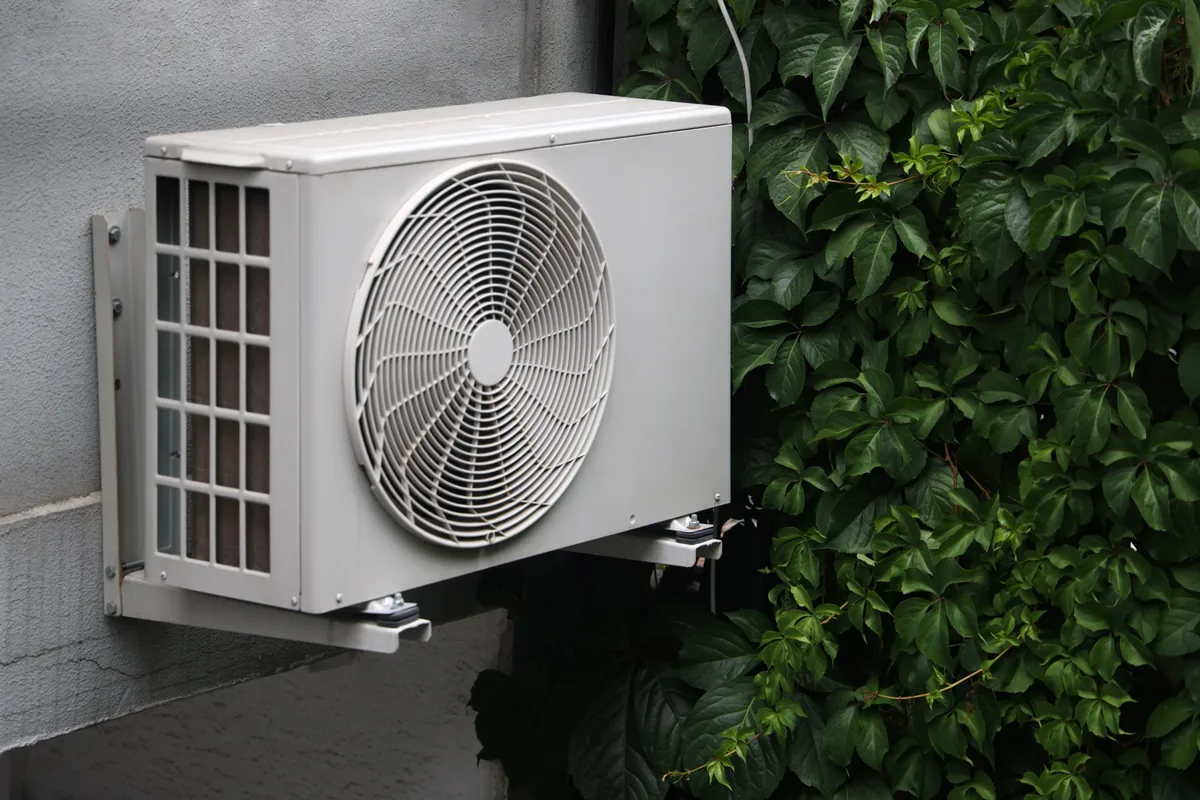
- Clear snow away from the outdoor unit and keep the discharge path open. Never cover or wrap it — the unit has to breathe all winter.
- On a hybrid, check the furnace's side-wall intake and exhaust terminations at ground level too; drifting snow blocks those in the same storm.
- Put a fresh filter in before the cold arrives. Low airflow is felt far more by a heat pump than by a furnace.
- Leave interior doors open so the system can move heat around the house rather than fighting closed rooms.
- Watch the thermostat's aux runtime for a day or two. Constant backup in mild weather is a fault worth a call, and why does my heat pump run constantly explains the difference.
Should a hybrid be forced onto gas for the week?
Not if the switchover temperature was set properly. A dual-fuel thermostat already hands over to the furnace below the point where gas becomes the cheaper heat, so overriding it manually mostly means the furnace runs during hours the heat pump would have covered more cheaply. If you are not sure what your switchover is set to, that is worth checking during the fall visit rather than guessing in January.
What to do when the power comes back after an outage
An ice storm along the escarpment can take the lines down, and neither a heat pump nor a gas furnace runs without electricity. When power returns, leave the thermostat alone for a few minutes; the control has a built-in delay before restarting the compressor, and repeatedly switching modes to hurry it only invites a lockout. If the house has dropped several degrees by the time power returns, expect backup heat to carry the recovery.
The temperature at which a heat pump stops producing useful heat is a separate question, answered in at what temperature does a heat pump stop working. If something sounds or looks wrong during a cold snap, ZK Mechanical runs a 24/7 line with no overtime or weekend surcharge — see heat pump repair or contact us.