
Quick answer
You know there is mould in your air ducts when three things line up: a musty smell that appears only while the fan runs, visible fuzzy or slimy growth on registers, the coil or the drain pan, and a moisture source to feed it. Without moisture it is almost always dust or soot. Health Canada's advice is to fix the water problem first and skip air testing.
To know if there is mould in your air ducts, look for moisture before you look for mould. Bare sheet-metal duct carrying dry air is a poor place for anything to grow: there is no water and little food. Mould in an HVAC system lives where water is, which means the cooling coil, the drain pan, the humidifier and any duct that sweats or has been wet. If you cannot find a water source, the dark stuff at the register is probably something else.
Three signs that point to real mould in the system
- A musty, earthy smell that starts when the blower starts and fades when it stops. A smell that is there all the time is more likely the basement, a floor drain or a wet wall.
- Visible growth: fuzzy or slimy patches, often grey, green or black, on the inside of register boots, on the coil face, in the drain pan or on the fibreglass lining of the plenum. It smears when wiped and comes back in the same spot.
- A moisture source nearby: a humidifier pad left wet all summer, a blocked condensate drain with standing water in the pan, uninsulated supply ducts sweating in a humid basement or crawlspace, or a past flood that reached the ducts.
One sign alone proves little. All three together make a strong case, and the place to look first is the evaporator coil and its pan, because they are wet every day the air conditioner runs.
Most black mould at vents is dust and soot
Dark streaks on the ceiling or wall around a supply register are, in most houses, not mould. They are fine dust and soot carried by the airstream and deposited where the air changes speed, and candles, cooking and a fireplace make them darker. They wipe off dry and grey, they do not smell, and they follow the direction of the airflow instead of forming round colonies. Our page on black soot around heating vents covers that case.
Bathroom and kitchen registers are the exception: steam condenses on a cold metal grille, and surface mould can grow on the grille itself while the duct behind it is clean. Take the grille off and wash it. If the inside of the boot is clean metal, you have your answer.
Testing: a tape lift, a lab, and what Health Canada says
If you want to confirm a suspect patch, a tape-lift or swab sample of the material itself, sent to a lab, tells you whether it is mould. Home air-sampling kits do not: mould spores are in all outdoor and indoor air, so a dish left open will always grow something. Health Canada does not recommend air testing for mould and sets no numeric safe level. Its guidance is the same whatever the species: find and fix the moisture, then remove the growth.
That order matters for your wallet. Cleaning or fogging ducts while the pan still holds water or the ducts still sweat buys a few weeks. Be wary of anyone who diagnoses toxic black mould from a photo of a dusty register and sells a sanitizing package on the spot.
What duct cleaning can and cannot do about mould
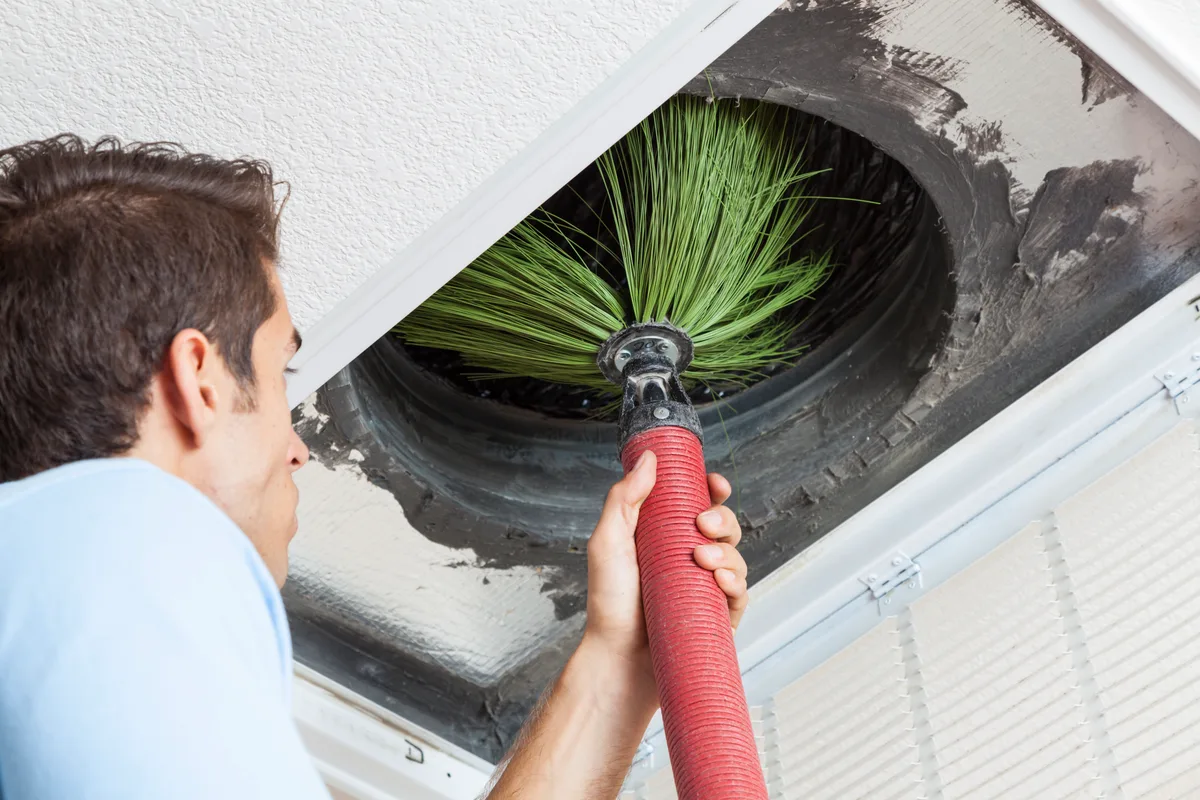
- Bare sheet-metal ducts: can be brushed and vacuumed clean under negative pressure once the moisture is fixed.
- Fibreglass-lined plenums, duct board and flex duct with growth: replaced, not cleaned. The growth is in the porous material, and brushing tears the liner.
- Evaporator coil and drain pan: cleaned in place or pulled and cleaned, with the drain line cleared and trapped properly. This is where most real HVAC mould is found.
- Humidifier: a new water panel each fall, with the water off and the bypass damper closed for the summer.
- UV lamp at the coil: keeps a wet coil and pan from re-growing a biofilm. It does nothing for dust in the ducts; see do UV lights in HVAC systems work.
What mould-related duct work costs, and when to call
- Duct cleaning, typical detached home: $300–$700.
- Duct cleaning, larger homes or heavily loaded systems: $700–$1,000.
- Blower compartment cleaning: $75–$150 on top of the duct cleaning.
- Sanitizing fog: $100–$200, worth it only after the water source is gone.
- Humidifier water panel: about $20–$40.
- Whole-home dehumidifier for a chronically damp house: $1,500–$3,000 installed.
- Replacing lined or flex duct sections: quoted in writing after an inspection.
Call instead of waiting if any of these apply:
- The system was flooded or the ducts held standing water.
- Someone in the house has asthma or a weakened immune system and the musty smell follows the fan.
- There is water in the furnace cabinet or the drain pan is overflowing.
- Growth covers a large area of lined duct or the building materials around it. That is a remediation job, and we will say so.
Lake humidity keeps basements in Burlington, Oakville and Hamilton damp through the summer, so sweating ducts are worth ruling out; see condensation on ducts. ZK Mechanical inspects the coil, pan, humidifier and accessible duct before recommending anything, and tells you plainly when the ducts do not need cleaning. Book duct cleaning or an inspection through the contact page, and find more in the air quality and ducts topic.