
The problem
Furnace-heated houses drop well below comfortable humidity during a cold snap, often into the teens of percent relative humidity. The symptoms arrive separately and rarely get connected: static shocks, dry sinuses and split lips, gaps opening between hardwood boards, and a house that feels colder than the thermostat says. Portable units help one room, need refilling daily and grow mould in the reservoir if the weekly cleaning is skipped, which is why people buy them, use them for a month and give up.
What we did
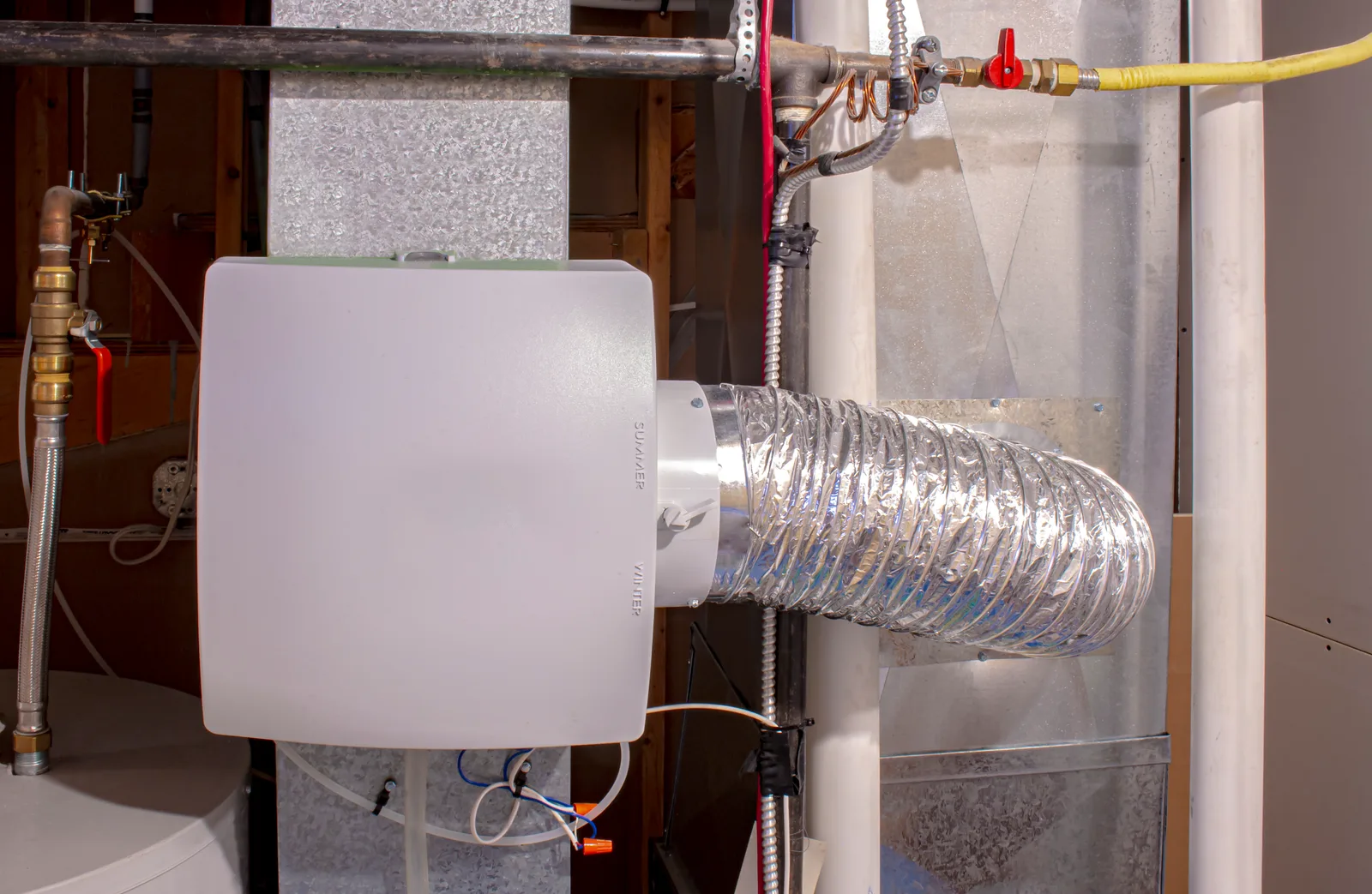
The humidifier in the photo is mounted on the supply plenum with a bypass duct to the return, plumbed to a permanent water line with a shut-off and to a drain, so there is nothing to fill. Output is matched to the house volume and air leakage rather than defaulting to whatever is on the truck. The humidistat is set to a level the windows can tolerate — roughly 35% in mild weather, dropped toward 25–30% when it is −20 °C outside — because pushing humidity too high in January moves the problem to condensation and mould on the coldest glass in the house.
- Whole-home humidifier
- Plenum connection and bypass duct
- Water supply and saddle valve
- Humidistat control
The result
Comfortable winter humidity through every room the ductwork reaches, with no daily involvement from anyone. Because moist air feels warmer on skin, rooms are comfortable at a slightly lower thermostat setting, which is a small and genuine saving on top of the comfort.
Is this your situation?
This kind of work is worth a conversation if any of these sound familiar:
- Winter brings constant static shocks, dry sinuses or split lips.
- Gaps have opened between hardwood boards since the heating season started.
- The house feels colder than the thermostat reading.
- Portable units are being refilled daily and only helping one room.
Questions about this kind of job
What humidity should the humidistat be set to in winter?
Low enough that the windows stay clear. In mild winter weather most houses are comfortable around 35 to 40 percent relative humidity; in a −20 °C cold snap the setting comes down to 25 to 30 percent, because the inside surface of a double-pane window drops below the dew point and runs with condensation. Water on the glass is the signal to turn it down.
Why is a bypass humidifier mounted on the supply plenum with a duct to the return?
A bypass unit has no fan. It uses the pressure difference the furnace blower creates between the supply and return sides to draw warm supply air through the wet pad and back into the return. Warm air absorbs far more moisture from the pad than cold air, so the supply side is where the pad works best. The bypass damper is closed for the summer.
What maintenance does a whole-home humidifier need?
A new evaporator pad each fall, since the old one clogs with mineral scale and stops wicking; a check that the drain runs free and the solenoid valve shuts off cleanly; and the bypass damper flipped closed in spring so the unit does not add moisture during air-conditioning season. A pad left in place for two winters is the usual cause of a unit that runs but does nothing.
Can a humidifier damage the house?
Only if it is set too high or left running with a stuck water valve. Excess humidity condenses on cold windows and inside exterior walls, which stains trim and feeds mould. A solenoid valve that fails open floods the drain continuously and can leak onto the furnace cabinet. The fix for both is a correctly set humidistat, a working drain, and the fall pad change.