
The problem
Adding central cooling to a house that already has forced-air heat is one of the more straightforward upgrades in this trade, and one of the easiest to do badly. Three things go wrong: a condenser sized off square footage instead of a cooling-load calculation, a unit placed where it is starved of airflow or discharges at a bedroom window, and a line set stapled across the brick as an afterthought. An oversized air conditioner cools the air before it has pulled the humidity out, so the house reads 22 °C and still feels clammy.
What we did
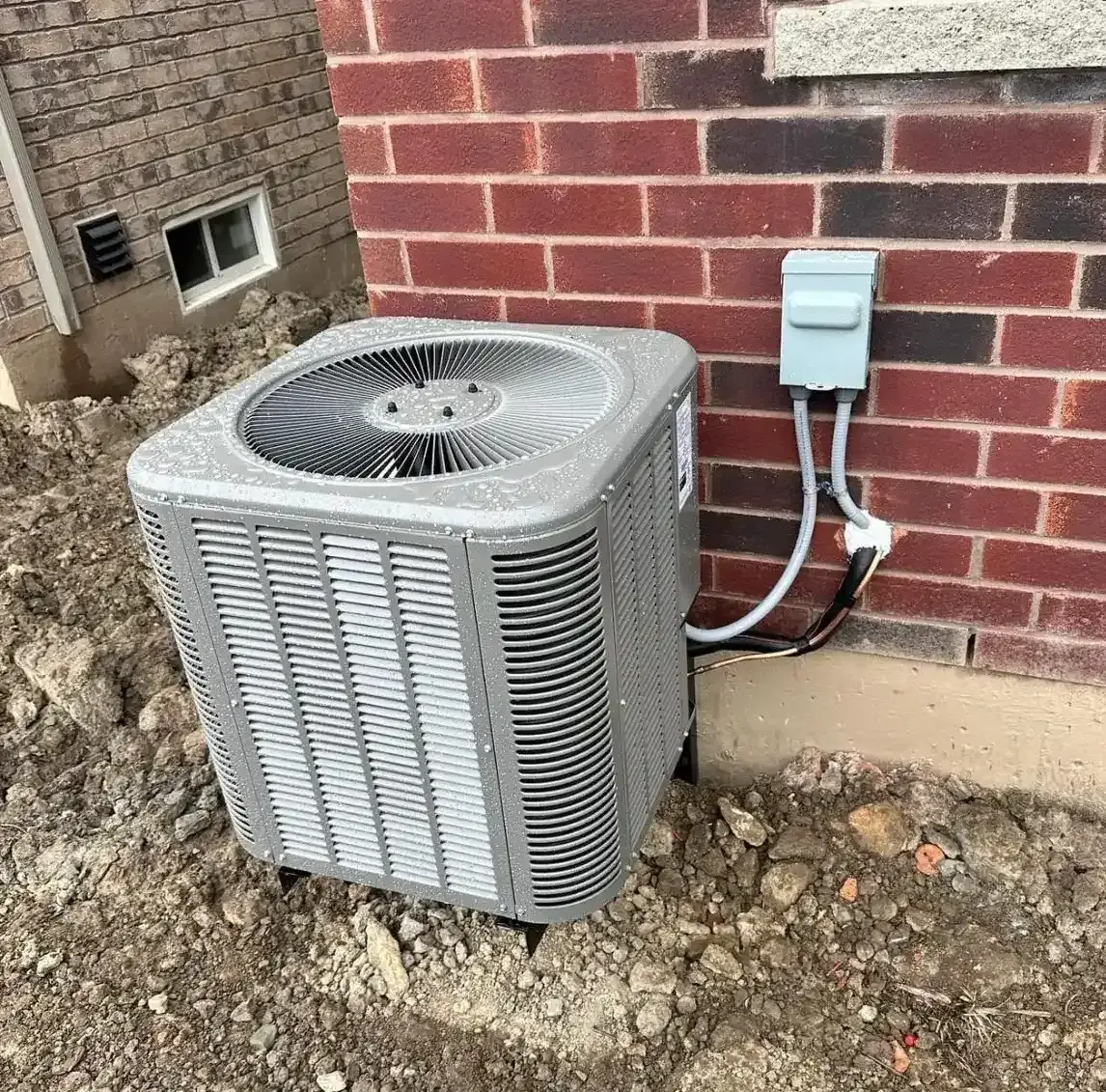
The condenser sits on a level pad with the clearances the manufacturer requires on every side, positioned with the neighbours and the bedroom windows in mind rather than the shortest pipe run. Capacity comes from a CSA F280 cooling-load calculation, which on most homes means a smaller unit than people expect. The insulated line set is run tight to the wall and sealed where it passes through the masonry, the evaporator coil goes into the existing supply plenum, and the new circuit gets a disconnect within sight of the unit and an ESA inspection.
- Central air conditioner condensing unit
- Evaporator coil in the existing plenum
- Refrigerant line set
- Level equipment pad and electrical disconnect
The result
Cool, dry air through the ductwork that is already there, delivered by a unit that runs longer, quieter cycles instead of short bursts. Longer cycles are what remove moisture, which is why a correctly sized system feels better at the same thermostat setting than an oversized one and why the sizing step matters more than the brand on the cabinet.
Is this your situation?
This kind of work is worth a conversation if any of these sound familiar:
- You have forced-air heat and no central cooling.
- The existing air conditioner is beyond economical repair.
- The house cools but never feels dry in July.
- You need the outdoor unit placed with the neighbours and bedroom windows in mind.
Questions about this kind of job
Why is a smaller air conditioner sometimes better than a bigger one?
An oversized condenser reaches the thermostat setpoint in a few minutes and shuts off before the evaporator coil has run long enough to condense moisture out of the air. The house ends up cool but humid, and the unit cycles on and off dozens of times a day, which wears the compressor and contactor. A load-calculated unit runs 15 minutes or longer per cycle and dehumidifies properly.
Where should the outdoor unit go on a brick house?
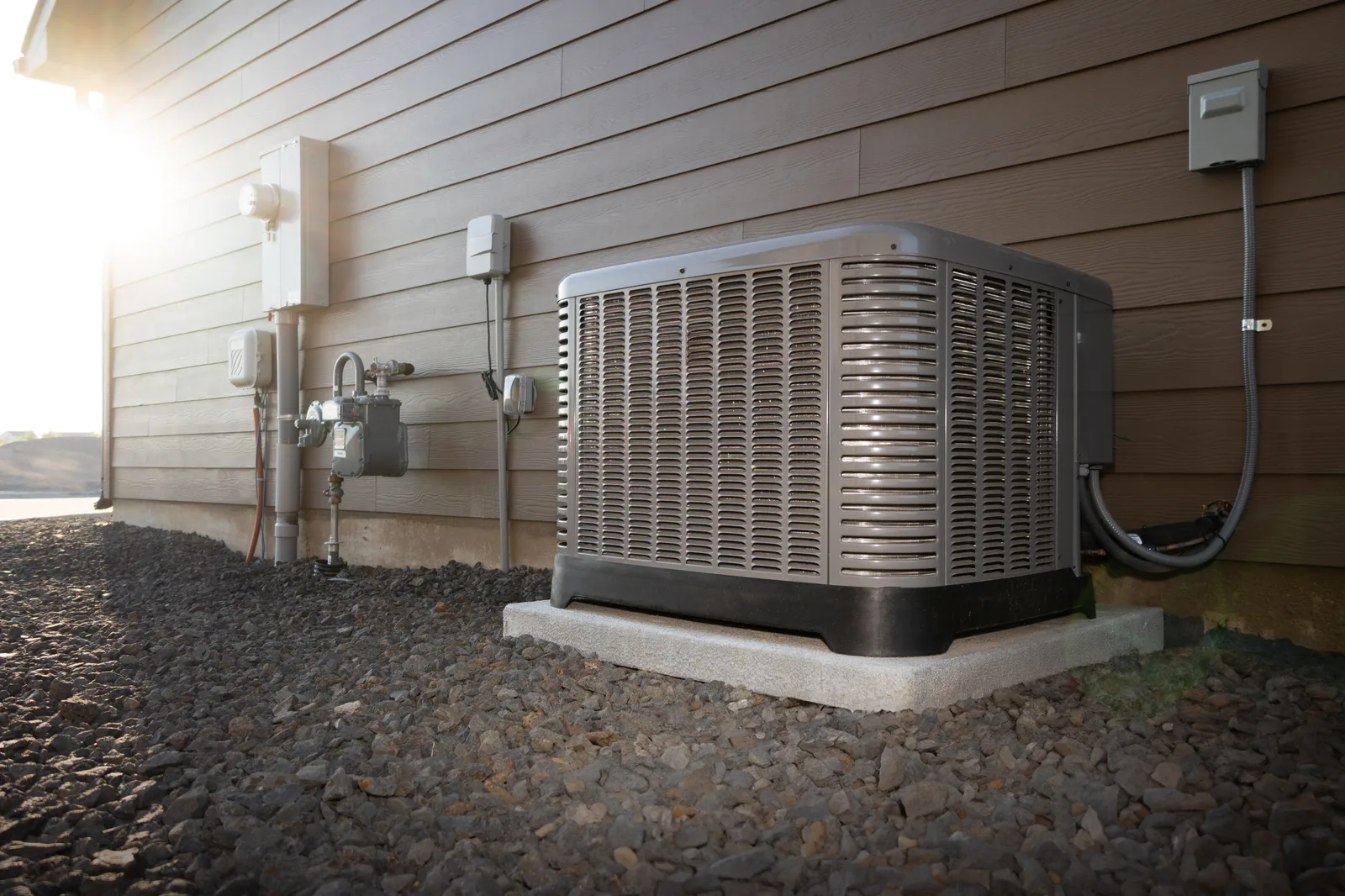
Somewhere with the manufacturer's clearance on the intake sides and above the fan, away from bedroom windows, dryer vents and the gas meter, and not under an eave where roof runoff or ice lands on it. Some municipalities regulate side-yard placement and noise, so the local zoning by-law is checked before drilling the wall. Shade helps a little; airflow and service access help far more.
Does a new central air conditioner need an electrical permit?
Yes. The condenser runs on its own 240-volt circuit from the panel with a disconnect mounted within sight of the unit, and that new circuit is filed with the Electrical Safety Authority and inspected. A licensed electrical contractor does that part of the work, and the inspection certificate is worth keeping with the equipment paperwork for warranty and resale.
What refrigerant does new residential equipment use?
Manufacturers are moving from R-410A to A2L refrigerants such as R-32 and R-454B, which have a lower global-warming potential and are mildly flammable, so they come with new handling rules and leak-detection requirements on some indoor equipment. Any technician charging or recovering refrigerant in Ontario must hold an ODP card. The refrigerant type is printed on the condenser nameplate.