
In short
An atmospheric vent water heater is a gas tank that relies on natural draft: hot exhaust rises through a draft hood and up a chimney with no fan and no power cord. It is the lowest-cost gas tank and works in a power outage, but it needs a sound, correctly sized chimney and enough combustion air, or it can spill carbon monoxide indoors.
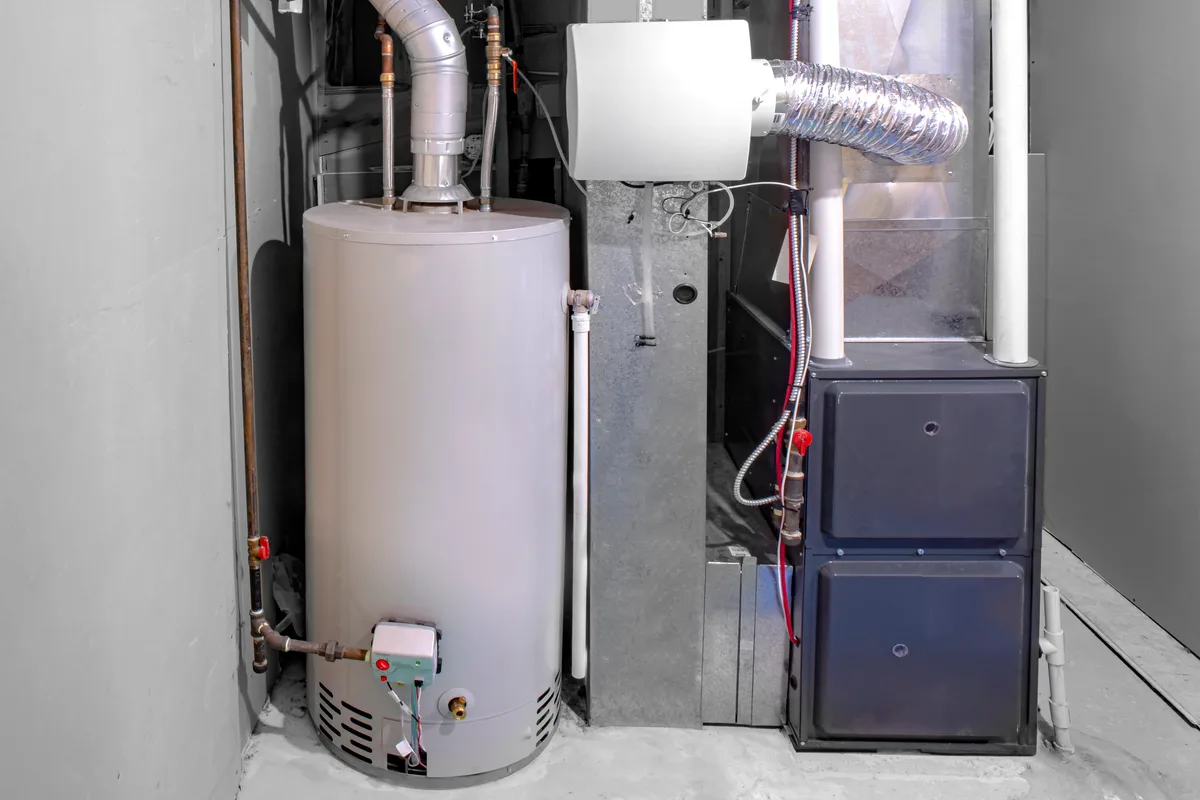
Stand beside a gas water heater and look at the top. If a metal cone sits on short legs over the centre of the tank, with a gap you can see through and a metal pipe rising from it, the heater is an atmospheric vent model. That cone is the draft hood, and the whole venting system runs on the plain fact that hot gas rises.
How an atmospheric vent water heater works
There is no fan anywhere in the system. The burner sits under the tank, the exhaust rises through a flue up the middle, and the draft hood lets room air mix in so the gases keep moving up the vent connector into a chimney or a vent through the roof. A standing pilot and a thermocouple or thermopile run the gas control, so the heater needs no electrical outlet.
That simplicity has a price. The heater takes all of its combustion and dilution air from the house, and its draft is weak compared with a fan, so anything that chills the chimney or depressurizes the basement can stall or reverse it.
The orphaned water heater problem after a furnace replacement
In 1950s–60s bungalows and 1970s–90s subdivisions across the GTA, the water heater originally shared a chimney with a chimney-vented furnace. When that furnace is replaced with a high-efficiency model vented through the side wall in plastic pipe, the water heater is left alone on a flue sized for two appliances. Installers call it an orphaned water heater.
The small volume of exhaust cannot warm an oversized masonry chimney, so it condenses, drafts poorly and slowly damages the flue. The fix is a correctly sized liner or a switch to a fan-assisted heater: our article on chimney liners after a furnace replacement covers the first, and power vent vs direct vent water heaters covers the second. Venting and combustion air for all of them are governed by the CSA B149.1 gas code.
Signs an atmospheric vent water heater is spilling exhaust
- Melted or deformed plastic rings around the hot and cold fittings on top of the tank
- Soot, scorch marks or rust streaks on the tank top and the draft hood
- Moisture, white deposits or corrosion on the vent connector
- Warm, humid air rolling out of the hood gap a few minutes after the burner lights
- A carbon monoxide alarm that sounds when the dryer, range hood or bathroom fans are running
Tight houses make this worse. A big range hood or several exhaust fans can pull the basement into negative pressure and draw the exhaust back down the vent, the problem make-up air exists to solve. Any Ontario home with a fuel-burning appliance must have working carbon monoxide alarms under the Hawkins-Gignac Act; if one sounds, get outside before you call anyone.
Should you buy another atmospheric vent tank?
An atmospheric vent heater is the lowest-cost gas tank to buy and install, and it delivers hot water through a power outage. It makes sense where the chimney or vent is sound and correctly sized and the mechanical room has adequate combustion air. A like-for-like tank replacement runs $1,200–$2,500 installed, depending on size and venting.
Choose a power-vent or direct-vent model when the chimney is failing or oversized, when the furnace has moved to side-wall venting, or when backdrafting has already shown up. ZK Mechanical looks at the vent and chimney before quoting water heater service, so the price reflects what the venting needs. Find related terms in the HVAC glossary or request a quote.
Questions people ask about Atmospheric vent water heater
Will an atmospheric vent water heater work during a power outage?
Yes, if it has a standing pilot. The gas control is powered by the pilot's thermocouple or thermopile and the exhaust leaves by natural draft, so nothing depends on household electricity. Power-vent heaters, tankless heaters and electric tanks all stop when the power does. An atmospheric tank keeps heating for as long as the gas supply is on.
Can an atmospheric vent water heater be vented out a side wall?
No. Natural draft needs a vertical rise through a chimney or an approved vent that ends above the roof; a draft-hood heater cannot push exhaust sideways through a wall. Side-wall venting takes a power-vent or direct-vent model built and certified for it, with the vent material and termination clearances that the manufacturer and the gas code specify.
How efficient is an atmospheric vent water heater?
It is the least efficient type of gas water heater. Heat escapes up the open flue through the middle of the tank whenever the burner is off, and the draft hood sends heated room air up the chimney all day. Condensing and tankless heaters carry a much higher UEF rating. The trade-off is a lower purchase price and the ability to run without electricity.