
In short
A hot water recirculation pump is a small pump that keeps hot water circulating between the water heater and the farthest fixture, so taps run hot in seconds instead of after a long wait. It needs a dedicated return line or a crossover valve at the last sink. Run it on a timer, aquastat or demand button; constant circulation wastes energy.
The wait for hot water at an upstairs ensuite is not the heater being slow. It is the cooled water sitting in a long run of pipe, all of which has to be pushed out before hot water arrives. A recirculation pump removes that wait by sending the cooled water back to the heater before anyone opens a tap.
How a hot water recirculation pump works
There are two layouts, and the house decides which one is possible.
- Dedicated return line: a third pipe runs from the farthest fixture back to the heater, and the pump moves water around that loop; it is the better system and is easiest to install during construction or a renovation with open walls
- Crossover valve: a thermostatic valve under the farthest sink links the hot and cold lines, and the pump pushes cooled water from the hot line into the cold line until hot water reaches the valve and closes it; no new piping is needed, which suits finished houses
The trade-off with a crossover valve is a cold tap that runs lukewarm for the first few seconds at that sink. In either layout a check valve keeps the water moving in one direction only.
Where recirculation makes sense in GTA homes
Long pipe runs are the reason to install one. Large two-storey homes in 2000s-and-newer subdivisions, where the mechanical room sits at one end of the basement and the main ensuite at the opposite corner upstairs, are the typical case.
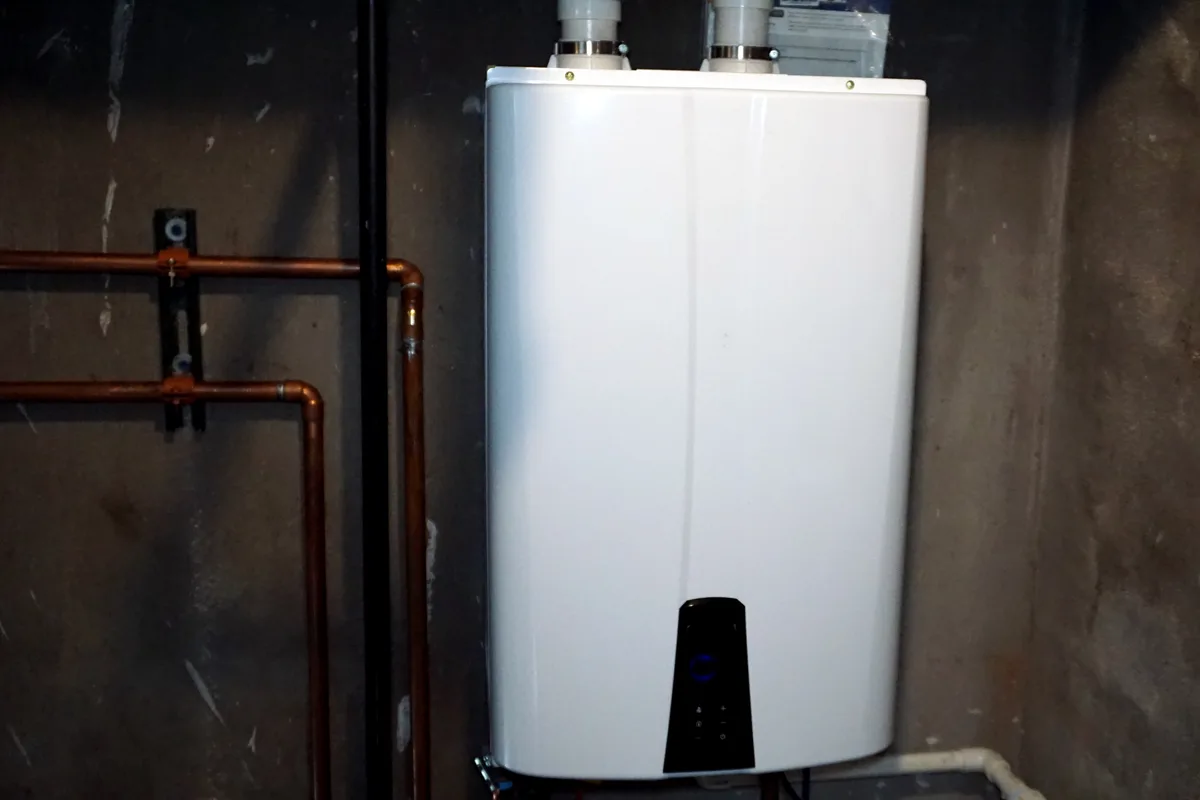
Owners who switch from a tank to tankless often notice the wait more, because a tankless unit takes a few seconds to fire and reach temperature before hot water even enters the pipe. Many condensing tankless models have a recirculation pump built in, and some, such as Navien's NPE-A series, add a small buffer tank. If the delay is the heater recovering and not the piping, see why is my water heater taking so long to heat.
Why a recirculation pump should not run all day
Control matters more than the pump. A loop that circulates around the clock turns the piping into a radiator: the heater fires to replace heat lost from the pipes, gas or electricity is wasted, and a tankless unit cycles on and off far more often than it was built to. Constant flow can also wear copper piping at the elbows over the years.
- Timer: runs through the morning and evening and stays off overnight and at midday
- Aquastat: stops the pump once the return water is warm, so it runs in short bursts
- Demand button or motion sensor: runs only when someone asks for hot water, the most efficient option
Insulating the hot and return lines wherever they can be reached cuts the heat loss further.
How recirculation pumps fail and what installation involves
Two failures account for most service calls. A pump that hums, rattles or has seized, often from hard-water scale or air trapped in the loop, simply brings the long wait back. A check valve stuck open lets cold water bleed into the hot side, giving lukewarm taps or a shower that drifts cool; a crossover valve stuck open does the same and warms the cold tap.
There is no single price for recirculation, because a crossover kit on an existing tank, a return line through finished ceilings and a tankless replacement with the pump built in are three different quotes. Tankless conversions run $3,500–$6,500 installed; where a built-in-pump model and its return piping land depends on the house, so the figure goes on a written quote.
ZK Mechanical quotes hot water recirculation pump installation and tankless water heater installation in writing. See the HVAC glossary for related terms, or tell us about your house.
Questions people ask about Recirculation pump
Does a recirculation pump increase my gas or hydro bill?
Yes, by an amount that depends almost entirely on the controls. The pump motor uses little electricity. The real cost is the heat lost from the piping while water circulates, which the heater has to replace. On a demand button or a tight timer with insulated lines the increase is small; left running around the clock on bare pipe it is noticeable. It also saves the water otherwise run down the drain while waiting.
Can a recirculation pump be added to an existing tankless water heater?
Often, but check the model first. Some tankless heaters have a built-in pump, or a connection and control logic for an external one, and their manuals specify the permitted pump, flow rate and loop length. Others are not approved for recirculation, and running a loop through them can shorten heat exchanger life and affect warranty coverage. A small buffer tank is sometimes added to stop short-cycling.
Is a recirculation pump the same as a boiler circulator pump?
They are similar machines doing different jobs. A boiler circulator moves heating water around a closed loop of radiators or in-floor tubing and can have a cast-iron body. A recirculation pump handles potable water, the water you drink and wash with, so it must be bronze or stainless steel and rated for domestic water. The two are not interchangeable.