
In short
A combi boiler is one gas appliance that does two jobs: it heats the water for radiators or in-floor loops and makes domestic hot water on demand, with no storage tank. It suits homes with one or two bathrooms in use at once. Beyond that, pair a boiler with an indirect tank, because a combi pauses space heating whenever a hot tap is open.
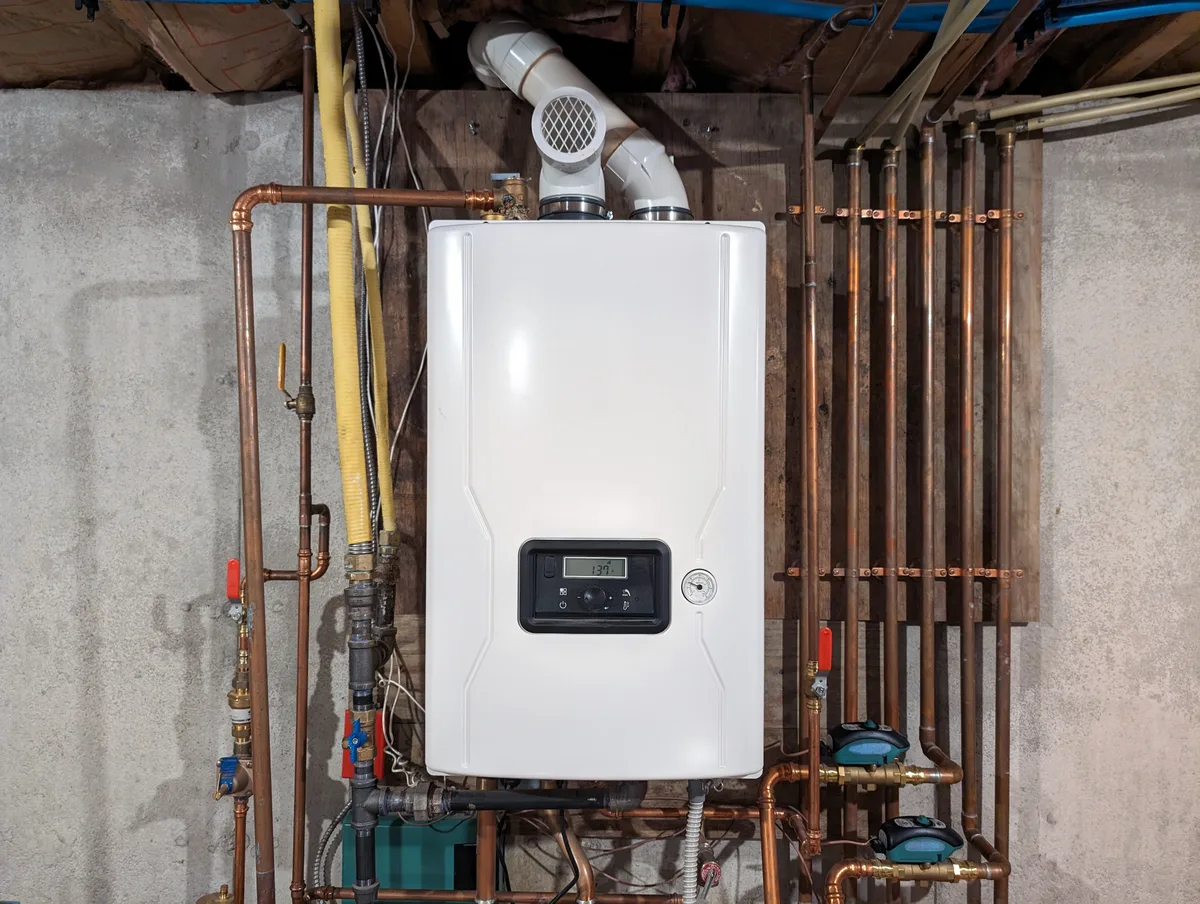
A combi boiler is a boiler and a tankless water heater sharing one cabinet. It replaces two appliances with one, which is the appeal, and it has one burner doing two jobs, which is the limit.
How a combi boiler heats the house and the taps from one burner
A combi does one job at a time. In heating mode the burner warms water that a built-in pump sends to the radiators or in-floor loops. When a hot tap opens, a flow sensor detects it and a diverter valve redirects the boiler water through a plate heat exchanger, which heats the domestic water on its way to the tap.
That hand-off is called hot-water priority. Space heating pauses for as long as the shower runs and resumes when the tap closes. In a house with radiators the pause goes unnoticed, because cast iron stays warm for a long while.
Why Ontario homes switch to a combi, and where it falls short
A combi is the usual replacement when an old cast-iron boiler and a rented water heater are retired together. It frees floor space and ends a rental fee that typically runs $25–$45 a month. The catch is sizing: the unit must be chosen for hot-water flow in February, when water entering the house is only a few degrees above freezing and needs the most heating.
- One or two bathrooms in use at once: a single combi handles it.
- Three showers at once, or a large soaker tub: pair a boiler with an indirect water heater instead.
- Small heating zones: check the unit's minimum firing rate, because a combi sized for showers can short-cycle on one small baseboard loop.
- Old radiator systems: flush the piping and fit a dirt separator so decades of sludge stay out of the new heat exchanger.
The trade-offs are laid out in combi boiler vs boiler and water heater.
What a combi installation needs that the old boiler did not
A combi usually needs new gas, drain and vent work, plus valves for maintenance. Look for each of them on the quote:
- A larger gas line, because the peak input for hot water is well above what the old boiler drew
- A condensate drain, since a condensing boiler produces acidic water that has to reach a drain or a pump
- New sidewall venting in plastic pipe; the chimney is no longer used
- Service valves on the domestic side for descaling, which hard water in Halton and Hamilton makes a routine job
Installed price depends on those items and on how much near-boiler piping is rebuilt. For figures, see how much a new boiler costs in Ontario; a combi cannot be priced properly without seeing the gas meter, the vent route and the radiators.
When a combi boiler needs repair
Most combi faults show up as one job working and the other not. Hot water with no heat often traces to the diverter valve or the heating pump, and hot water but no heat on a combi covers the checks. Heat with lukewarm taps points to a scaled plate heat exchanger. Both fall under our boiler repair service, and you can contact ZK Mechanical with the model and the code on the display.
Questions people ask about Combi boiler
What is the difference between a combi boiler and a tankless water heater?
A tankless water heater only makes domestic hot water. A combi boiler does that and also heats a sealed loop of water for radiators, baseboards or in-floor tubing. A house with a furnace and ducts needs a tankless unit, not a combi. A house with hydronic heat can use a combi to replace both the boiler and the water heater.
Will a combi boiler work with old cast-iron radiators?
Yes, with preparation. Old radiator systems hold a large volume of water and decades of iron sludge, so the piping is flushed and a dirt or magnetic separator is fitted to protect the new heat exchanger. The installer also checks that the big radiators let the boiler run at low water temperatures, which is where a condensing unit is most efficient.
Can a combi boiler run out of hot water?
It cannot run out the way a tank does, because it heats water as it flows. What it can do is fall behind: if more taps open than the burner can supply, the flow or the temperature drops. That is most likely in winter with cold incoming water. Sizing for the busiest morning in February prevents it.