
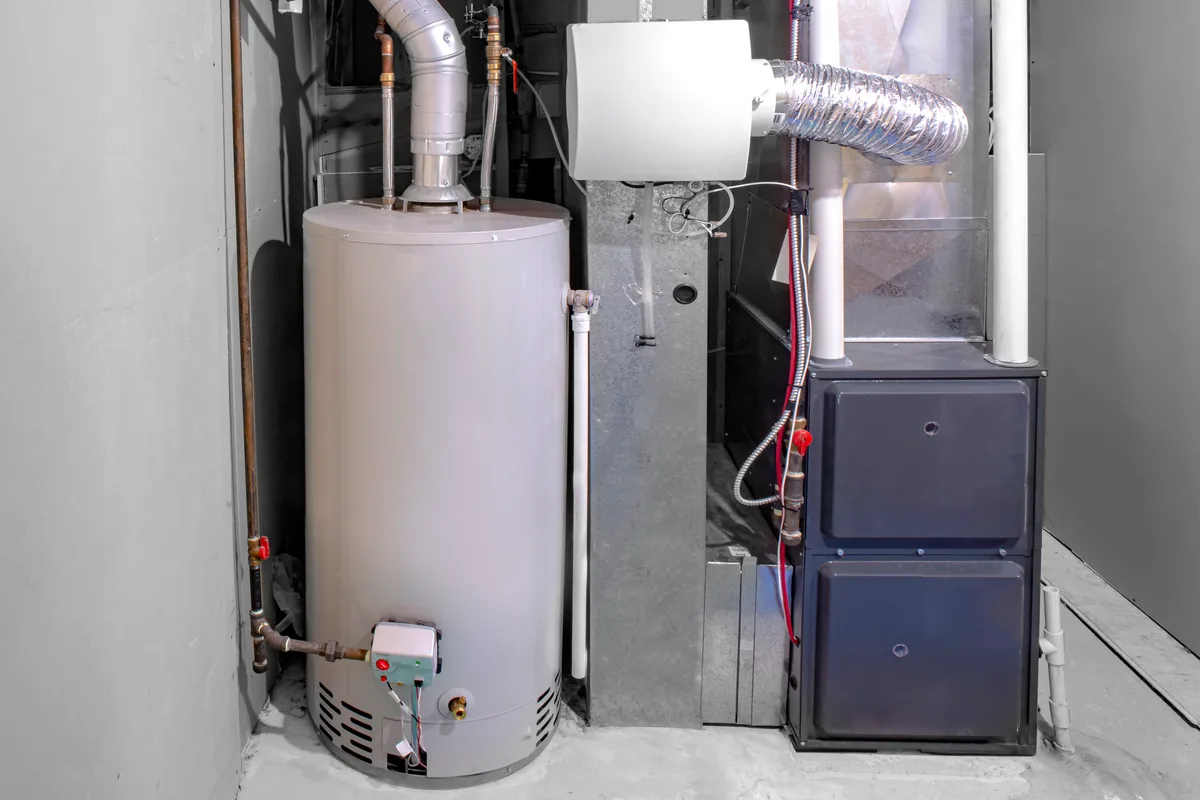
Selling a house with a rented water heater in Ontario comes down to a decision you make before the offer, not after: either the buyer assumes the rental contract on closing, or you buy the tank out and hand over an appliance you own outright. Both are completely normal and both close deals every week. What makes transactions wobble is a seller who does not know which contract they have, what the buyout costs, or that the rental was never disclosed in the agreement of purchase and sale.
Start the paperwork 30 to 60 days before closing. Rental providers are not quick, and a written buyout quote, a payment and a confirmation of ownership can easily take a few weeks to work through their process.
Step One: Find Out What You Actually Have
Pull the contract, not the bill. Ontario basements contain at least three arrangements that look identical from the top of the stairs — a straightforward monthly tank rental, a bundled HVAC rental that also covers the furnace and air conditioner, and a rent-to-own or deferred-purchase agreement with a fixed term. They carry different exit costs and draw different reactions from a buyer.
- Find the account number on the water heater bill — some older Ontario rentals still appear as a line on the Enbridge Gas bill rather than on a separate invoice.
- Read the sticker on the tank itself for the provider name, the model and, very often, the installation date.
- Call the provider and ask three questions: what is on this account, what is the monthly amount, and what is the buyout figure as of a date after my expected closing.
- Ask for that buyout quote in writing. Verbal figures expire and change, and your lawyer cannot work from a phone conversation.
- If the contract covers more than the tank, get a breakdown per item. A buyer will usually assume a tank rental, while a bundled furnace-and-air-conditioner contract at several times the monthly cost is a very different conversation.
- It is common for builder-installed tanks in the 2000s subdivisions of Alton Village and the Orchard to have been rentals from day one, so check the paperwork rather than assuming a tank you never signed for is yours.
How the Agreement of Purchase and Sale Handles It
Rental equipment goes into the contract explicitly, and the buyer either assumes it or you clear it before closing. The standard Ontario agreement of purchase and sale includes a rental-items clause listing equipment that is not owned — hot water tank, furnace, air conditioner, water softener, alarm system — which the buyer agrees to assume on closing. Anything left off that list you have effectively agreed to deliver free and clear, and your lawyer will resolve it on the closing date at your expense.
The listing should say it too. A buyer who first learns about a rental contract on the day of closing is a buyer phoning their lawyer, and the cheapest version of this problem is always the one disclosed up front.
The Notice on Title Question
Ontario banned new notices of security interest against consumer goods on residential title in June 2024 and moved to clear existing ones. For years, some rental and door-to-door HVAC contracts registered a notice of security interest against a homeowner's title, which then surfaced during a sale and had to be dealt with before the transaction could complete. The legislation changed that.
What has not changed is that title is a legal question with a legal answer. Have your real estate lawyer run a search and tell you what is actually registered against your property rather than assuming in either direction, because assumptions here are expensive on closing day.
Free quotes, written pricing.
Buy Out, Assume or Replace
The right move depends on the age of the tank and the size of the buyout. The long-run rental arithmetic is not subtle — at $25–$45 a month, a rented tank costs roughly $4,500–$8,000 across a fifteen-year life against $1,500–$3,000 to own the same unit outright. But you are not deciding for fifteen years. You are deciding for one closing date.
- Buyer will assume, the tank is reasonably new and the buyout is high: let them assume it, disclose it properly and move on.
- Buyer refuses to assume: you buy out before closing. This is not negotiable on the day, because the deal needs a clear appliance.
- Buyout is high and the tank is twelve years old or more: buying out leaves you owning equipment near the end of its life. Replacing it with an owned unit — a straight tank-for-tank swap typically runs $1,200–$2,500 installed — is often cleaner for the buyer's home inspection.
- You are moving to another Ontario house and keeping the same provider: ask about transferring the contract rather than paying a termination charge. Providers do not always volunteer that option.
- The tank is already leaking or failing: that is a repair and replacement conversation first, and a real estate conversation second.
What a Buyer's Home Inspector Will Flag
Age, venting and the relief valve drain, regardless of who owns the equipment. A rental provider maintains their own tank, but an inspector still writes up a fourteen-year-old unit, corrosion at the fittings, a missing or badly sloped discharge line on the temperature and pressure relief valve, and a naturally drafted water heater sharing a chimney that no longer has a furnace feeding heat into it.
That last one catches sellers in older Hamilton and Aldershot houses. When a mid-efficiency furnace was replaced with a high-efficiency unit, the chimney lost its main heat source, and a liner is often needed so the water heater still drafts safely. Do you need a chimney liner when replacing a furnace explains when it applies, and if it was skipped it will surface on the inspection rather than on the rental contract.
The rest of the mechanical system gets the same treatment, and an HVAC inspection before selling is worth doing while you still control the timeline instead of negotiating against someone else's report.
A Practical Sequence for the Selling Side
- Six to eight weeks out: identify the contract and request a written buyout quote valid past your expected closing date.
- At listing: disclose the rental, and give your agent the provider name and the monthly amount so it is answered before it is asked.
- At offer: confirm the rental is named in the rental-items clause of the agreement rather than assumed by everyone informally.
- On acceptance: tell the provider the closing date and ask exactly what they need, which is usually either a transfer form signed by the buyer or payment of the buyout.
- Two weeks out: get written confirmation from the provider that the transfer or the buyout has been processed, and send it to your lawyer.
- On closing: hand over the contract paperwork, the account number and the manuals with the rest of the house documents.
If you would rather get out of a rental before you list, or you inherited one you never signed up for, water heater rental buyout is the service to ask about, and Enercare vs Reliance compares the two providers most sellers around here are dealing with. We are in Burlington, Oakville and Hamilton basements most weeks — tell us what is on the sticker and we will tell you what your options look like.
Frequently asked questions
Can I sell my house with a rented water heater?
Yes, and it happens constantly in Ontario. The rental simply has to be disclosed and dealt with in the agreement of purchase and sale, either by the buyer assuming the contract or by the seller buying it out before closing. Problems arise only when it is not disclosed until the closing date.
Who pays the water heater buyout when a house sells?
Whoever the agreement says. If the buyer agreed to assume the rental, nobody pays a buyout. If the agreement requires the property to be delivered free of rental equipment, the seller pays it. This is one of the reasons the rental-items clause is worth reading carefully before signing an offer.
How do I find out my water heater buyout amount?
Call the rental provider with the account number from your bill and ask for a written buyout quote effective on a date after your expected closing. Buyout figures generally decline over the life of the contract, so the number depends on when the tank was installed and what type of agreement you signed.
Can the buyer refuse to take over the rental?
Yes, and it is a fairly common negotiating position, particularly on bundled contracts covering a furnace and air conditioner as well as the tank. If the buyer will not assume it, the seller has to clear the contract before closing, which is why knowing the buyout figure before you accept an offer is worth the phone call.
Is a rented water heater registered on my title?
It may have been historically. Ontario banned new notices of security interest against consumer goods on residential title in June 2024 and moved to clear the existing ones, but what is actually registered against your specific property is a question for your real estate lawyer's title search rather than for guesswork.