
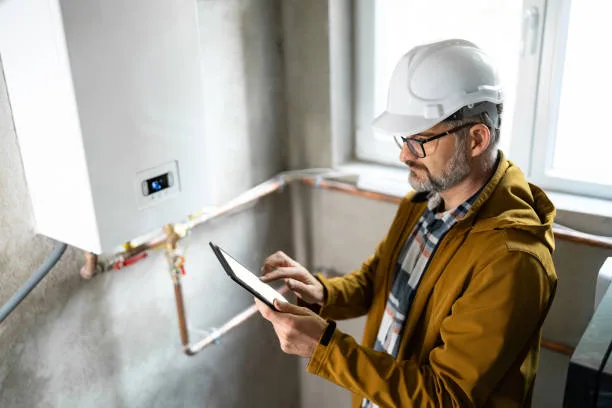
Four tasks decide whether a tank water heater reaches 12 years or quits at 7: flush the sediment out once a year, inspect the sacrificial anode rod every three to four years, test the temperature and pressure relief valve annually, and hold the thermostat at 49 °C. The anode is the one that actually determines the ending, and it is the one almost nobody checks. A tankless unit has a different list, headed by an annual descale at $150–$300.
The schedule, by how often each job comes round
- Every year — drain a few litres off the bottom until it runs clear, or do a full flush if it has been a while
- Every year — lift the lever on the temperature and pressure relief valve, let it discharge briefly, and confirm it reseats without dripping
- Every year — look at the floor, the fittings and the base of the tank under a bright light, checking for rust staining and dried mineral trails
- Every three to four years — pull the anode rod and replace it if more than half the core wire is exposed
- Every three to four years — on a gas unit, check the burner and the flue draught while it is firing
- Once, at install — insulate the first couple of metres of hot pipe leaving the tank, which is cheap and returns heat you already paid for
None of that takes an evening. What it prevents is the failure mode nobody sees coming: a tank that corrodes quietly from the inside and then empties itself onto a finished basement floor.
Flushing: what the sediment is doing down there
Municipal water across the GTA carries dissolved minerals that drop out of suspension as the water heats and settle on the tank floor. On a gas unit the burner sits directly underneath that layer, so it has to drive heat through a blanket of scale to reach the water above.
The result is overheating at the tank floor, which stresses the glass lining, and the popping or rumbling you hear during a heating cycle — that is steam forming under the sediment and pushing through. Flushing removes it. Attach a hose to the drain valve, run it to a floor drain, and let the tank push several litres out under supply pressure until it runs clear.
One practical note: the plastic drain valves fitted to most tanks seize or fail to reseat once they have been opened a few times. If yours is plastic and the tank is otherwise healthy, replacing it with a brass full-port ball valve at flush time makes every future flush a five-minute job.
The anode rod is what decides when the tank dies
The sacrificial anode is a magnesium or aluminium rod threaded into the top of the tank. It corrodes preferentially so the steel does not, and it is the only part of a water heater whose job is to be destroyed. When it is gone, the tank starts corroding, and from that point the clock is short.
Pull it every three to four years and look: heavily pitted with the steel core wire showing along most of its length means replace it. That is a straightforward job while the tank is healthy and an impossible one once corrosion has locked the fitting in place.
There is a variation worth knowing. If the hot water smells of rotten eggs, the usual cause is a reaction between a magnesium rod and bacteria in the tank rather than anything wrong with the water supply. Switching to an aluminium-zinc or powered anode normally clears it — the diagnosis sits alongside the others in why a water heater stops producing hot water.
The T&P valve, and the drip that is not its fault
The temperature and pressure relief valve is the one safety device on the tank that has to work. Test it annually by lifting the lever, letting water discharge into the drain line, and releasing it — it should stop cleanly. A valve that keeps weeping after the test has debris on the seat and needs replacing.
But a T&P valve that drips intermittently and reseats fine is usually reporting a different problem. In a house with a pressure-reducing valve or a backflow preventer at the meter, the plumbing is a closed system: water expands as it heats and has nowhere to go, so pressure climbs until the relief valve lifts. The fix is a properly charged thermal expansion tank, not a new relief valve, and swapping the valve without addressing it just repeats the fault.
Free quotes, written pricing.
Two failures that look like a dead water heater and are not
The first is a broken dip tube. That is the plastic tube carrying incoming cold water down to the bottom of the tank; when it cracks near the top, cold water mixes straight into the hot outlet. The symptom is hot water that runs out much faster than it used to, with no leak, no noise and no error — and it can happen on a tank with years of life left.
The second, on an electric tank, is a burnt-out lower element. Water at the bottom stops being heated, the upper element carries on, and you get a short supply of properly hot water followed by lukewarm. Neither of those is a reason to replace a tank — that decision is worked through in water heater repair vs replacement.
Setting the temperature
Hold the thermostat at 49 °C (120 °F). That is hot enough to keep the tank inhospitable to bacteria, cool enough to reduce scalding risk and standby loss, and the setting almost every manufacturer specifies. Running at 60 °C instead adds standby losses for hot water you then mix back down at the tap.
If there are young children or older adults in the house, install anti-scald mixing valves at the fixtures rather than dropping the tank below 49 °C. Lowering the tank temperature to solve a tap-temperature problem creates a different one inside the tank.
Tankless maintenance is a different job
A tankless unit has no tank to flush and no anode to replace. What it has is a narrow heat exchanger that scales up, and once flow through it drops the unit starts throwing error codes and short-cycling. The service is a descale: a pump circulates a mild acid solution through the exchanger for about half an hour, which costs $150–$300 in the GTA.
- Descale the heat exchanger once a year — twice if the unit serves a large household or runs on well water
- Pull and rinse the cold-water inlet screen filter at the same visit
- Check the exhaust termination outside is clear of leaves, nests and drifted snow
- Note any error codes the unit has logged, because they often precede the fault by months
- Confirm the condensate drain still runs freely and the trap has not dried out
The descale takes minutes if the installer fitted isolation valves with service ports, and turns into a plumbing exercise if they did not. A blocked vent, meanwhile, locks the unit out on a fault code that reads far more serious than it is.
When maintenance stops being worth it
Past 10 years on a tank, the return on the work falls away. Replacing an anode on a 12-year-old tank whose lining has already been through years of overheating is chasing a unit that will fail on its own schedule. At that age the money goes further as a replacement, and the details are in how long a water heater lasts in Ontario.
Any water on the floor from the body of the tank ends the conversation immediately: a perforated steel tank cannot be repaired, and the next stage is not a slow drip. Shut the water and the fuel off and get it replaced.
ZK Mechanical services and replaces water heaters across the GTA and Hamilton, and our maintenance plans fold the annual flush and inspection in with the furnace and air conditioner visits so nothing gets forgotten in a busy year. If yours is making noise, running short, or simply old enough that you have started wondering, book a look.
Frequently asked questions
How often should I flush my water heater?
Once a year for most GTA homes on municipal water, and more often on a private well in Caledon or rural Flamborough where mineral content runs higher. The job is short: hose on the drain valve, water to a floor drain, and let it run under supply pressure until it comes out clear. If you have never done it and the tank is past 8 years, drain a few litres rather than doing a full flush — a heavy sediment bed can unseat and block the valve.
What temperature should my water heater be set to?
49 °C, which is 120 °F, and it is the setting almost every manufacturer specifies. It is hot enough to keep the tank inhospitable to bacteria and cool enough to limit scalding and standby losses. If you need cooler water at a specific tap for children or older adults, fit anti-scald mixing valves at the fixtures rather than turning the whole tank down.
How long should a water heater last in Ontario?
A tank water heater lasts 8 to 12 years here, and a tankless unit 15 to 20. The single biggest variable on a tank is the sacrificial anode rod: inspect it every three to four years and replace it once more than half the core wire is showing, and the tank keeps being protected. Skip that and the steel starts corroding as soon as the rod is spent, regardless of how well everything else has been maintained.
Does flushing a water heater really extend its life?
Yes, and the mechanism is specific rather than general. Sediment on the tank floor insulates the water from the burner underneath it, so the steel at the base runs hotter than it was designed to. That thermal stress crazes the glass lining, which exposes bare steel to water, which is where corrosion begins. Removing the sediment each year removes the overheating that starts the sequence.
What are the signs my water heater is failing?
Rusty or discoloured hot water, rumbling or popping during a heating cycle, hot water running out sooner than it used to, temperature swinging at the tap, and mineral trails or rust staining on the fittings and the base. Any water pooling from the body of the tank means the steel has perforated and it needs replacing — that is not a repairable failure, and the leak does not stay small.