
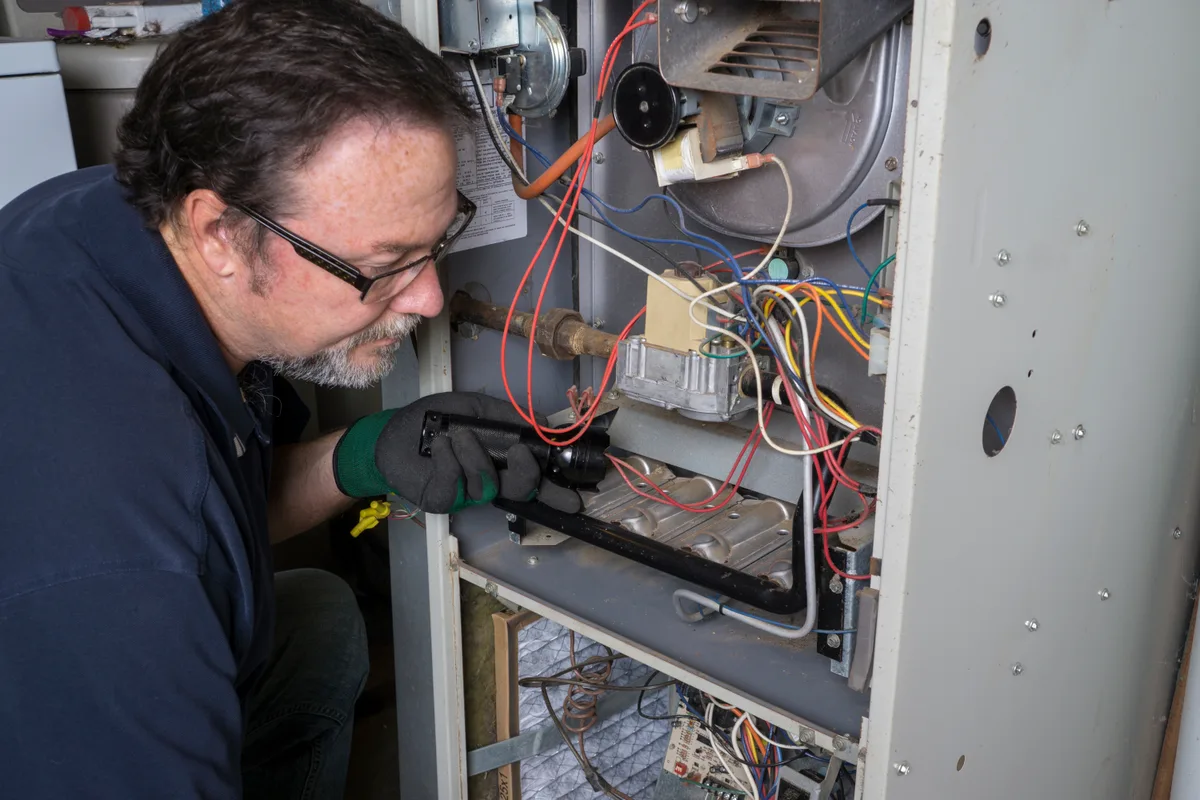
Napoleon vs KeepRite furnaces compared at the same tier come out close on heat, noise and gas use; where they differ is parts. KeepRite shares its components with several sister brands that GTA wholesalers stock every day. Napoleon is built in Barrie, Ontario and supplied through its own channel. Our verdict: pick KeepRite if fast repairs by any contractor matter most, pick Napoleon if an Ontario-built furnace matters to you and your installer supports the brand, and in both cases buy the two-stage tier with a real variable-speed blower.
Who Builds Each Furnace, and Where
Napoleon gas furnaces are made by Wolf Steel in Barrie, Ontario, the same company known for fireplaces and grills. The warranty is with Wolf Steel, and the rating plate inside the door says where the furnace was built. The same cabinets are also sold under the Continental badge.
KeepRite started as an Ontario company in Brantford and has been part of International Comfort Products, a Carrier company, for more than two decades. ICP sells the same furnace platforms as Tempstar, Heil and Comfortmaker. The Canadian part of KeepRite today is its history and its dealer network: it is the ICP badge Ontario wholesalers carry.
What Ownership Means for Parts Lead Time in the GTA
KeepRite parts are easier to get on short notice. Every ICP component carries one part number whichever badge is on the door, so a Tempstar-boxed or Heil-boxed inducer fits a KeepRite, and igniters, flame sensors, pressure switches and common control boards are shelf stock at supply houses along the QEW corridor.
Napoleon parts come through Napoleon's own distribution. Universal items are no different from any other furnace: a hot surface igniter, a flame sensor or a capacitor is on the truck. A model-specific control board, a two-stage gas valve or an ECM blower module is usually ordered, and a factory up Highway 400 in Barrie does not put that part on a counter in Burlington tonight.
None of this makes Napoleon a poor furnace. It makes the installer the deciding factor. Before you sign, ask which parts for the exact model they carry, where a board comes from in January, and what they do for heat while you wait.
Tier Map: Napoleon 9500, 9600 and 9700 Against KeepRite
Both makers sell a single-stage entry furnace, a two-stage middle and a top tier, and the fair comparison is tier against tier.
- Entry: Napoleon 9500, a single-stage condensing furnace, against KeepRite's Performance series, which KeepRite describes as single-stage operation (N96 models).
- Middle: Napoleon 9600, a two-stage furnace, against KeepRite QuietComfort, where the G96VTN and G97VTN two-stage variable-speed models sit.
- Upper: Napoleon 9700, two-stage with a variable-speed blower, against the top QuietComfort models and the two-stage Ion furnaces.
- Communicating: KeepRite Ion, including the modulating G97CMN, runs with the Ion System Control. It is the tier to price only if you want a fully communicating system.
The middle of each range is where most two-storey houses should shop. The entry models are sound furnaces for a small, tight house, and the communicating tier only pays when the air conditioner or heat pump and the wall control are bought as a matched set. Mixing a communicating furnace with a conventional outdoor unit leaves most of that capability unused.
A note on names. KeepRite furnaces and Ontario quotes also carry the ProComfort and ProComfort Deluxe labels, while KeepRite's own product pages now group gas furnaces as Performance, QuietComfort and Ion. Compare by model number, not by series name. Our posts on the Napoleon 9500, 9600 and 9700 and on KeepRite ProComfort and Ion take each lineup on its own.
Free quotes, written pricing.
Blower Type by Tier: Constant-Torque vs Variable-Speed ECM
The blower motor is the part of this comparison most quotes leave out. Both are ECM motors and both beat the old PSC design on electricity, but they do different jobs.
- Constant-torque ECM: a set of fixed taps, like speeds on a fan. It holds its torque, so when the filter loads up or the ducts are restrictive, airflow drops. Typical of single-stage and entry two-stage furnaces from both brands.
- True variable-speed ECM: programmed to deliver a set airflow and to push harder as resistance rises. It ramps up and down quietly, runs a slow continuous fan for filtration and lets an air conditioner or heat pump pull more moisture. Found on Napoleon's 9700 and on KeepRite's variable-speed QuietComfort and Ion models.
The Napoleon 9600 is where to look closely. It is the two-stage tier, and whether the unit quoted has a constant-torque or a variable-speed motor should be read off the spec sheet for that model number. In a 1970s to 1990s subdivision house with a one-inch filter and a single return, the variable-speed motor is worth its premium because the ducts are the weak point.
Heat Exchanger and Replacement Warranty Terms
Both brands tie their longest terms to registration, and both write the terms per model. KeepRite lists a No Hassle Replacement limited warranty as a per-model feature, so the term on a Performance furnace is not the term on an Ion. Napoleon's coverage is set out on the certificate that ships with the furnace.
- Ask for the warranty certificate for the exact model number, not the brochure.
- Check the heat exchanger term, the parts term and whether any unit-replacement provision applies to that model.
- Find the registration deadline and get the confirmation email before the final payment.
- Ask for the installer's labour warranty in writing. A manufacturer's parts warranty does not pay for the visit.
What Either Furnace Costs Installed
High-efficiency furnace installs run $4,500–$7,500 for a straightforward replacement, and the tier moves the price more than the badge does. A two-stage variable-speed Napoleon and a two-stage variable-speed KeepRite should be within a few hundred dollars of each other from the same installer. If two quotes are far apart, they are probably quoting different tiers.
Rebates will not settle it. No current Ontario program pays for a gas furnace on its own, Napoleon or KeepRite. The furnace rebates page explains what does qualify when a heat pump is added.
Verdict: KeepRite for Parts, Napoleon for the Right Installer
- Choose KeepRite if you want the widest choice of contractors for future repairs, same-day parts on most failures, or a communicating system at the Ion tier.
- Choose Napoleon if buying an Ontario-built furnace matters to you and the installing contractor stocks parts for it and will be around to honour the labour warranty.
- Choose by tier first: two-stage with a variable-speed ECM in a two-storey house, single-stage only for a small bungalow, a townhouse or a rental.
- Walk away from either if the quote has no model number, no heat-loss calculation and no labour warranty term.
ZK Mechanical services both brands across Burlington, Oakville, Milton and Hamilton, so we see how each one ages. Our furnace installation service prices the tiers side by side, the KeepRite furnace repair page shows what fails and what it costs, and you can ask for a written quote with the model numbers spelled out.
Frequently asked questions
Are Napoleon furnaces made in Canada?
Yes. Napoleon gas furnaces are built by Wolf Steel in Barrie, Ontario, and the rating plate inside the furnace door confirms the place of manufacture. That does not mean every component is Canadian: gas valves, inducers and blower motors come from the same specialist suppliers other furnace makers use. It does mean the cabinet, heat exchanger and assembly are local.
Is a KeepRite furnace the same as a Carrier?
No. KeepRite belongs to International Comfort Products, which Carrier owns, but ICP furnaces are their own platforms shared with Tempstar, Heil and Comfortmaker. Carrier-branded furnaces use different cabinets and different fault-code tables. The practical link is ownership and parts supply, not identical equipment under two labels.
Which is quieter, Napoleon or KeepRite?
At the same tier, neither has a clear edge. Noise comes from the burner stage and the blower: a two-stage furnace on low fire with a variable-speed motor is quiet in either brand, and a single-stage furnace is louder in either brand. Undersized return ducts make any furnace noisy, so have static pressure measured before blaming the equipment.
Can any technician repair a Napoleon furnace?
Any TSSA-licensed gas technician can diagnose and repair one; the controls follow the same principles as other condensing furnaces. The difference is supply. A contractor who does not deal with Napoleon regularly may wait longer for a model-specific board or motor, so ask about parts access before booking a repair in mid-winter.