
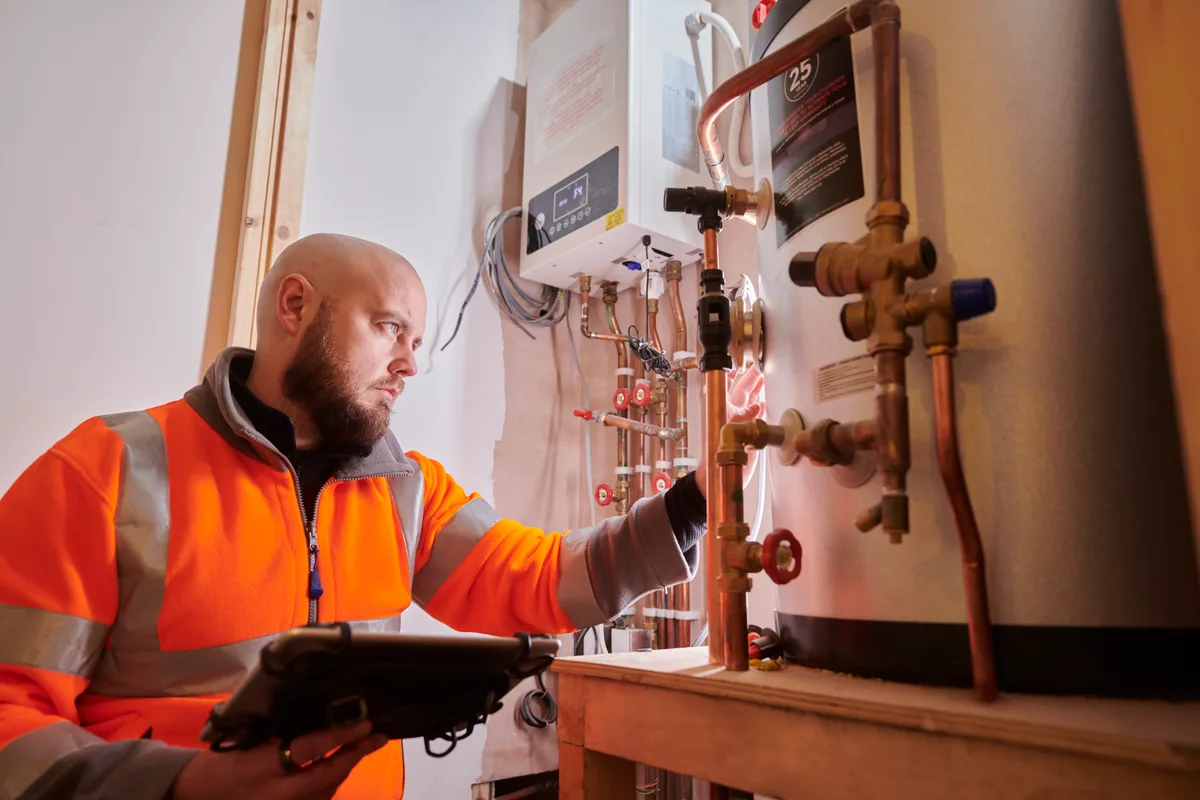
HVAC upgrades worth buying at the builder design centre are the ones that end up behind drywall: extra return-air runs, supply rough-ins for the top floor and the basement, gas rough-ins, and conduit and panel space for a future heat pump. Buy those before the walls close, because each one costs far more to add to a finished house. Leave the air conditioner, the humidifier and the thermostat until after closing, when you can choose the model and compare written quotes.
The rule: pay the builder for what goes inside the walls
One test sorts the whole options list. If adding the item later means cutting drywall, fishing through finished floors or opening a ceiling, buy it from the builder. If it bolts on in the mechanical room or sits outside on a pad, wait.
Design-centre prices are set by each builder and vary by project, so ask for the mechanical price list before your appointment. Appointments are short, and the HVAC lines tend to get less attention than the countertops.
Cheap now, costly later: the rough-ins to buy
- Extra return-air runs: the standard package is often one return grille per floor. A return in the primary bedroom and a high return in the top-floor hall keep temperatures even with doors closed, and they run in wall cavities you cannot reach later.
- Top-floor supply runs: a loft, a third storey or a bonus room over the garage needs a larger or second supply run. Ask for it on the mechanical drawing.
- Basement supply and return rough-ins: if you will finish the basement, have supply drops placed for the future rooms and a low return installed.
- Gas rough-ins for the range, dryer and BBQ: the piping is sized from the meter. Adding a line later means running pipe across a finished basement ceiling and sometimes upsizing the main run, by a TSSA-licensed gas fitter in either case.
- Conduit and panel space for a future heat pump: take the 200-amp service if it is offered, keep spare breaker spaces, and ask for a conduit from the panel to the outdoor unit location.
- Air-conditioning rough-in: the refrigerant line set, thermostat wire and wall sleeve. Confirm it is included even if you do not buy the air conditioner.
- Thermostat cable with spare conductors, including a C-wire, so any smart thermostat or heat pump control works later.
The panel question deserves a second look if an EV charger or an induction range is also on your list, because all three compete for the same service. Our guide to electrical panel upgrades for a heat pump explains the load side.
Often better done after closing: AC, humidifier and thermostat
Equipment that sits in the mechanical room or outside can be installed any time, so the builder's convenience is the only thing you pay extra for. Three items are usually better bought once the house is yours.
- Air conditioner: the builder's option is typically one base model, and its price is rolled into the mortgage, where you pay interest on it for decades. After closing, a central air conditioner on existing ducts runs $3,500–$7,500 installed, and you choose the efficiency tier or a heat pump instead.
- Humidifier: a new house is damp for its first year or two while the concrete, lumber and drywall compound dry out. You are more likely to need to remove moisture than add it, so wait a winter. A bypass humidifier is $500–$900 installed when you do want one.
- Thermostat: the builder supplies a basic one. Pick your own after closing, and check the rebate program page to see whether a smart thermostat in your house qualifies for an incentive.
- Air cleaners and UV lights: decide after you have lived in the house and seen what the filter collects.
There is one exception. If the builder's air conditioner price names the brand and model and matches what a contractor would quote, take it and move in with cooling. If you close in July without it, book the installation for the week after you get the keys.
Rental equipment written into the purchase agreement
Free quotes, written pricing.
Read the schedules of the agreement of purchase and sale for rental items before you sign. Builders commonly supply the water heater as a rental, and in some subdivisions the HRV or a tankless-and-air-handler heating package is rented as well. On closing you take over that contract with the rental company.
- Ask which items are rented, from which company, at what monthly rate and with what annual increase.
- Ask for the buyout price in the first year.
- Ask whether the builder will sell you the equipment outright instead.
- Remember that a rented item is not yours to modify or replace without the rental company's agreement.
The numbers are not small. A rented tank at $25–$45 a month adds up to $4,500–$8,000 over 15 years, against $1,500–$3,000 to own the same tank installed. The reasoning is set out in rent or buy a water heater in Ontario.
How after-closing changes interact with Tarion warranty coverage
Adding equipment after closing does not cancel your statutory warranty, and the warranty does not cover what you add. The coverage Tarion backs applies to the builder's work and materials; alterations and additions made by the owner, and damage they cause, are excluded. The builder stays responsible for the furnace, ducts and venting they installed, and your contractor is responsible for the air conditioner or humidifier they add.
The grey area is work that touches the builder's system: a coil set on the furnace, a humidifier cut into the plenum, ducts moved when the basement is finished. A later complaint about airflow or a leak can turn into an argument over whose work caused it. These steps keep that argument short.
- List every heating and airflow complaint on your 30-day and year-end forms before anyone alters the ducts.
- Photograph the furnace, ductwork and venting before after-market work starts.
- Use a licensed contractor and keep the invoice with model and serial numbers.
- Have the contractor follow the furnace manufacturer's installation instructions, so the equipment warranty is not put in doubt.
- Remember that heating delivery and distribution falls under the two-year coverage, so the second-year form matters for ducts and airflow.
The forms and deadlines are laid out in Tarion warranty and HVAC in a new Ontario home.
Verdict: what to buy, what to skip and what to ask
- Buy at the design centre: bedroom and top-floor returns, basement supply and return rough-ins, gas rough-ins, the 200-amp service, a conduit for a future heat pump and the air-conditioning rough-in.
- Wait until after closing: the air conditioner unless the builder's price names a model and is competitive, the humidifier, the thermostat and any air cleaner.
- Ask before signing: which equipment is rented, the buyout price and whether you can purchase it instead.
- Skip: any upgrade described only as premium or deluxe with no brand, model or drawing attached.
If the house is already built, the same priorities apply in a different order, and builder-grade HVAC upgrades in Waterdown and north Oakville ranks them. If you have a mechanical options sheet from a builder in Milton, Oakville, Brampton or Caledon, send it with your question and we will tell you which lines we would pay for. For the work left until after closing, see new construction HVAC or request a written quote from us.
Frequently asked questions
Should I buy air conditioning from the builder or after closing?
After closing, in most cases. You choose the brand, the size and the efficiency tier, you can compare written quotes, and the cost is not added to the mortgage. Buy from the builder only if the price names a specific model and holds up against a contractor's quote. Always make sure the air-conditioning rough-in is part of the house.
Can my own HVAC contractor work in the house before closing?
Generally not. The house belongs to the builder until closing, and builders rarely allow outside trades on site because of liability and warranty responsibility. Plan after-market work for the days after you take possession, and use the pre-delivery inspection to confirm that the rough-ins you paid for are in place.
Is the 200-amp panel upgrade worth buying from the builder?
Yes, if you expect to add a heat pump, an EV charger or an induction range during the years you own the house. Upgrading the service later involves the utility, an electrician and an ESA inspection, and it costs more than the builder's upgrade in most projects. A 100-amp service fills up quickly once two of those loads are connected.
Do I need a humidifier in a brand-new house?
Usually not in the first winter. Fresh concrete, framing lumber and drywall compound release moisture for a year or more, and most new homes show condensation on the windows in January, which signals excess humidity. Run the HRV as designed and watch the windows. If the second winter brings static shocks and dry air, add a humidifier then.