
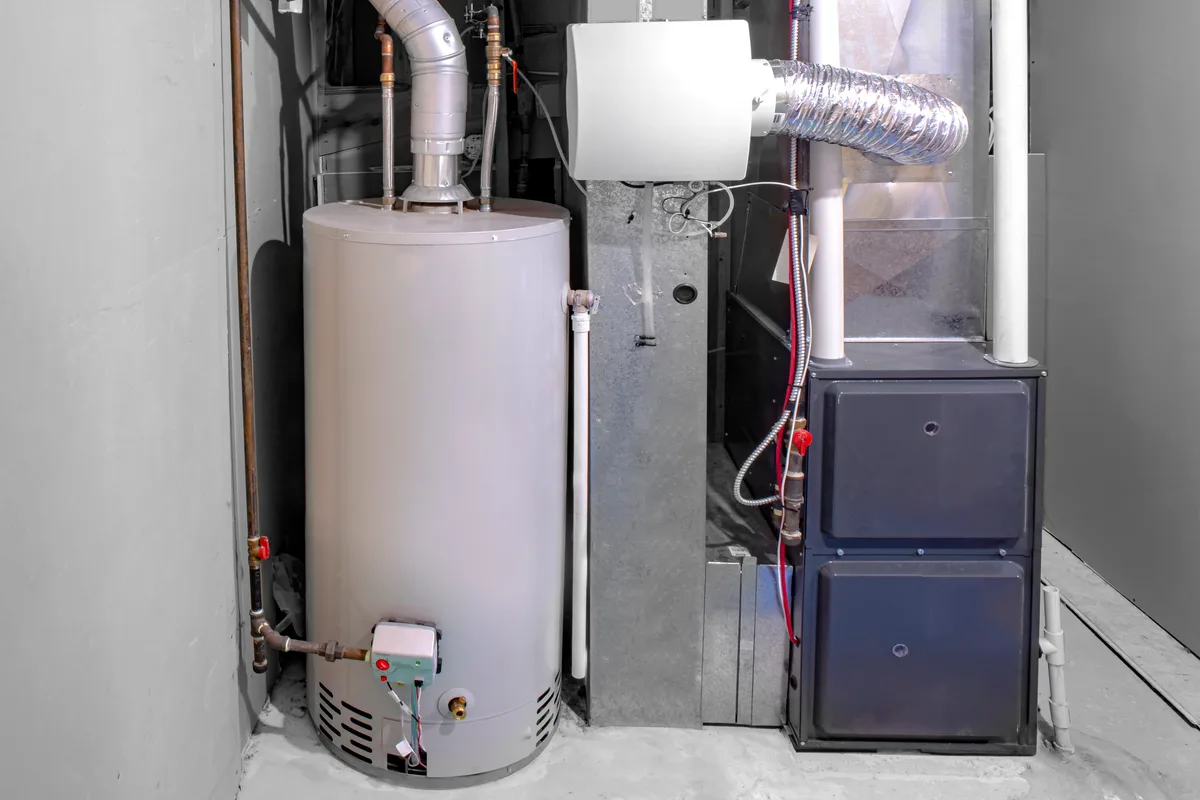
40 vs 50 gallon water heater: which size to buy is settled by first-hour rating and household, not by the extra 10 gallons. Buy the 40 for one or two people and one bathroom. Buy the 50 for three or more people, back-to-back showers, a soaker tub or a basement apartment. The price gap between the two sizes is small next to the labour of installing either, so when the 50 fits, it is usually the safer choice.
What 10 Extra Gallons Actually Gives You
A 50 gallon tank holds 189 L against 151 L for a 40, and you can use about 70% of either before the outlet water turns lukewarm. That is roughly 132 L of usable hot water against 106 L. The 26 L difference is a little more than half of one winter shower.
The reason only 70% is usable is the way a tank refills. Cold water enters through the dip tube at the bottom as hot water leaves the top, and the incoming cold dilutes what is left. A cracked or shortened dip tube makes that mixing worse, which is one reason an old 40 can feel smaller than it is.
First-Hour Rating Is the Number to Compare, Not Tank Volume
First-hour rating adds the usable stored water to what the burner reheats in an hour, and it is the only fair way to compare a 40 with a 50. Find it on the manufacturer's specification sheet, or on the EnerGuide label where the tank has one; the label is voluntary on water heaters in Canada. A typical 40 gallon gas tank publishes a first-hour rating around 65–75 US gallons and a typical 50 around 80–90.
Notice that both numbers are well above the tank size. A gas burner puts a lot of water back during the hour, so the stored volume is less than half the story. Two tanks of the same size with different burners can sit 15 gallons apart on first-hour rating.
When Burner Input Matters More Than the Extra 10 Gallons
A bigger burner on a 40 can out-deliver a standard 50. Recovery is set by gas input: through a 50 °C rise, a 40,000 BTU burner reheats roughly 155 L an hour and a 50,000 BTU burner roughly 195 L. That 40 L gain is more than the 26 L you gain from the larger tank.
- 40 gallon, 40,000 BTU: about 106 L stored and usable plus 155 L recovered, roughly 260 L in the hour.
- 50 gallon, 40,000 BTU: about 132 L plus 155 L, roughly 285 L.
- 40 gallon, 50,000 BTU high-input: about 106 L plus 195 L, roughly 300 L.
- 50 gallon, 36,000 BTU: about 132 L plus 140 L, roughly 270 L.
These are arithmetic estimates for a cold Ontario winter supply, not published ratings. Published first-hour ratings are tested with inlet water near 14 °C, so they read higher than a January morning delivers. The point stands: read the BTU input on each quote, because a 50 with a small burner and a 40 with a large one are closer than the stickers suggest.
Will a 50 Fit Where the 40 Sits?
Usually, but measure before you order. A 50 gallon tank is typically about 5 cm (2 in) wider than a 40 from the same line and anywhere from the same height to several centimetres taller, and most makers sell short and tall versions of each.
Free quotes, written pricing.
- Diameter: check the width of the closet or alcove and the gap to the furnace. The tank needs the clearances on its rating plate and enough room to reach the burner door and gas control.
- Height: on an atmospheric tank the draft hood sits on top and the vent connector must rise from it all the way to the chimney. A taller tank under a low basement ceiling can leave too little rise.
- Vent connector: a taller tank raises the connection point, which can mean re-cutting and re-sloping the vent pipe, not just reconnecting it.
- Drain pan: if the tank sits in a pan, the pan has to be wider than the tank, and its drain outlet has to clear the wider jacket. A new tank size often means a new pan.
- Water connections: the inlet and outlet on a 50 are spaced differently, so expect new flex connectors or some re-piping.
- The route in: measure the narrowest door and the turn at the bottom of the basement stairs.
Power-vent tanks add a blower on top, so the overall height grows again. In a mechanical room under a low bulkhead, that blower is often what decides between a tall 40 and a short 50.
Decision Rule by Household
- One or two people, one bathroom, showers at different times: 40 gallon.
- Three or four people, or two showers back to back most mornings: 50 gallon.
- A soaker tub that gets used: 50 at minimum, and more likely 60; the tub alone can take most of a 50.
- A basement apartment on the same heater: 50 or 60, because two households peak in the same hour.
- Planning to sell within a couple of years: match what the house has, unless it runs out now.
If you are between two rows, go up. An undersized tank annoys you every morning, and an oversized one costs a little standby heat.
What the Size Difference Costs
The tank itself is the small part of the bill. A straight tank-for-tank swap runs $1,200–$2,500 installed, and much of that is labour, venting, fittings, disposal of the old tank and the gas work, which are the same for either size. The step from a 40 to a 50 of the same model line is a modest difference on the equipment line.
Running cost barely moves. A 50 loses slightly more standby heat through its larger jacket, and the gas used to heat the water you draw is the same in either tank. If you rent, the monthly fee is the bigger lever: at $25–$45 a month the tank is paid for several times over, as our answer on renting or buying a water heater in Ontario shows.
Verdict: 50 Unless the Household Is Small or the Space Is Tight
Buy the 50 gallon tank if three or more people live in the house or will soon, and it fits. Buy the 40 if there are one or two of you, or if the mechanical room cannot take the wider tank without moving pipes and vent.
- Tight closet and a household of three or four: ask for a 40 with a high-input burner and compare its first-hour rating with a standard 50.
- Running out on a 40 that used to be enough: have it checked before you size up, because sediment or a failed dip tube may be the cause. See why hot water runs out so fast.
- Considering 60 or larger: the general sizing method is in what size tank water heater do I need.
We measure the space, read the vent and gas line, and put the first-hour rating of both sizes on the quote so you can see the difference in gallons instead of guessing. Our water heater installation and repair service is run from Burlington; send a photo of your tank and its rating plate and we will tell you which size fits.
Frequently asked questions
Does a 50 gallon water heater cost more to run than a 40?
Slightly. The gas used to heat the water you actually draw is the same, because that depends on your usage, not the tank. The 50 has a bit more surface area and so a bit more standby loss. On a modern insulated tank the difference is small, and it is outweighed by not running out of hot water.
Can I replace a 40 gallon tank with a 50 without changing the gas line or vent?
Often, yes. Many 40 and 50 gallon tanks share a similar burner input, so the gas line is normally adequate. The vent is different: the connection height changes, and the installer must confirm the vent size against the new tank's input and manual. Expect some vent re-work and new water connectors even when the brand stays the same.
How long does a 40 gallon gas water heater take to reheat?
About an hour from fully cold in winter with a 40,000 BTU burner, and a 50 gallon tank with the same burner takes about a quarter longer. In practice the tank is rarely emptied completely, so usable hot water returns in 20 to 30 minutes after a couple of showers. An electric tank takes roughly twice as long.
Is a 40 gallon tank enough for a family of four?
It can be, if showers are short and spread out and the tank has a strong burner. Most families of four are better served by a 50, because two back-to-back showers plus a dishwasher will reach the limit of a standard 40. If space forces a 40, choose a high-input model and check its first-hour rating.