
Quick answer
A furnace that smells like burning plastic or hot electrical insulation usually has an overheating blower motor, a failing capacitor, melted wiring or a scorched control board, or a plastic object has dropped through a floor register into the ductwork. Dust burn-off fades in 20 to 30 minutes; this smell does not. Turn the furnace off at its switch or breaker, and call 911 if you see smoke.
When a furnace smells like burning plastic or electrical burning, something that should stay cool is running hot: a motor winding, a wire, a circuit board, or an object that was never meant to be in the ductwork. The smell is sharp and acrid, closer to a scorched kettle cord than to dust. Switch the furnace off at the wall switch beside it or at its breaker and leave it off until the source is found. If there is any smoke, get out and call 911.
Burning plastic versus first-start dust: the 20 to 30 minute rule
Dust that settled on the heat exchanger over the summer burns off the first time the furnace fires in the fall. That smell is dry and dusty, it comes from every register at once, and it is gone in 20 to 30 minutes. Our guide to whether a burning smell from the furnace is normal covers that case.
An electrical or plastic smell behaves differently. It is acrid enough to sting the nose, it is often strongest at the furnace cabinet or at one register, and it comes back every cycle or gets stronger the longer the blower runs. A smell that is still there after half an hour, or that returns on the second day, is not dust.
Which furnace parts give off an electrical burning smell
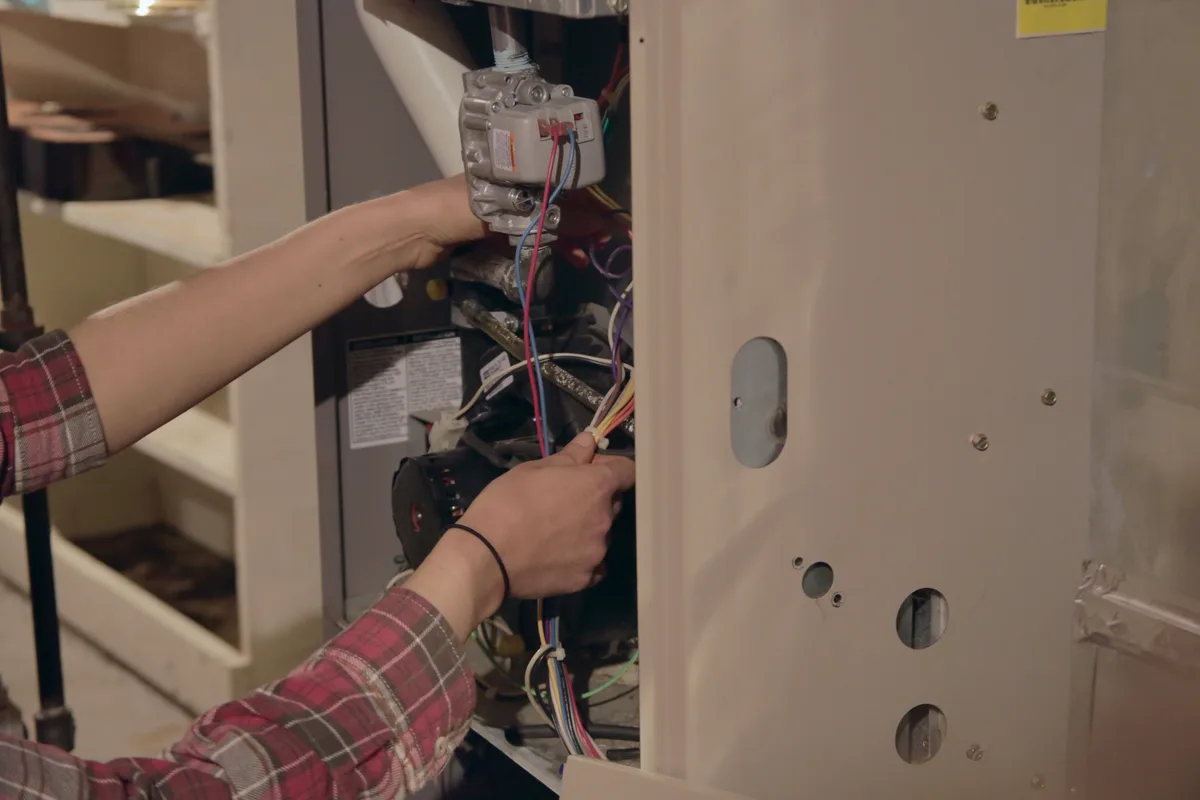
- Blower motor windings. Worn bearings make the blower motor drag, the windings overheat and the varnish on them cooks. The motor's thermal overload cuts it out, it cools, restarts, and the smell comes and goes with it.
- A failing run capacitor. On older furnaces a small metal can helps the blower start and run. When it weakens the motor hums, starts slowly and runs hot; a capacitor with a bulged top or an oily film has failed.
- Melted wire insulation. A loose spade connector at the board, the door switch or the limit switch arcs and heats until the insulation softens. Wires that have slipped against the hot burner compartment do the same.
- A scorched control board. The relay that switches the blower pits with age and overheats, leaving a brown or black mark on the board or a discoloured plastic connector.
- The transformer or inducer motor. Either can overheat and smell before it quits, usually with the furnace locking out soon after.
The cause nobody expects: plastic in the ductwork
Floor registers lift out, and things fall in: toy blocks, crayons, bottle caps, a bread-bag clip. In a bungalow where the register boot sits a short run from the furnace, a small object can slide into the supply plenum and, on a furnace with no cooling coil above it, land on the heat exchanger. It softens and stinks every time the burners fire.
Renovations cause the same thing on a larger scale. Scraps of vapour barrier, flooring underlay, plastic sheeting and packing foam get swept or dropped into open registers, and plastic film can be pulled against the return side of the furnace. If the smell started the week the trades left, look in the ducts before you suspect the motor.
What you can check yourself with the power off
- Turn the furnace off at its switch or breaker first, and set the thermostat to Off.
- Lift each floor register and look down the boot with a flashlight for anything plastic, especially in rooms where children play.
- Pull the filter. A filter that is collapsed, or still in its plastic wrap, starves the blower and makes it run hot.
- Look through the cabinet louvres, without removing the burner door, for a scorch mark, a drooping wire or a haze of smoke.
- Check the furnace breaker. If it has tripped, leave it tripped: a breaker that trips with a burning smell has found a real fault.
Call now, and leave the furnace off, if
- You see smoke or a glow anywhere in the cabinet: leave the house and call 911.
- The smell is still sharp after 30 minutes or returns on every cycle.
- The blower hums, starts late, or stops and restarts on its own.
- The breaker tripped, or the switch plate or cabinet feels hot.
- You found nothing in the registers and the smell is strongest at the furnace.
What fixing an electrical burning smell costs
- Diagnostic visit: $90–$150, folded into the repair if you proceed.
- Capacitor: $250–$500 installed.
- Blower motor: $500–$1,500, with variable-speed ECM motors at the upper end.
- Control board: $500–$1,200.
A retrieved toy costs the visit and nothing more. The wiring between your electrical panel and the furnace switch is a separate matter: that circuit belongs to a licensed electrician working under ESA rules. Published ranges for other repairs are on our pricing page, and every job gets a written price before work starts.
A burning-plastic smell is one of the few furnace symptoms that should not wait for a convenient day. If it has turned into visible haze, read why smoke is coming from a furnace; a sour combustion smell is a different fault, covered under a furnace that smells like exhaust. ZK Mechanical takes these calls on its 24/7 emergency service line at (647) 801-1252, with no overtime or weekend surcharge, or you can send the details online.