
Quick answer
A burning smell from an air conditioner is always a fault, because nothing in cooling mode is supposed to get hot enough to scorch. The usual sources are an overheating blower motor, a burnt capacitor or contactor, or melted wire insulation. Turn the system off at the thermostat and the breaker. If you see smoke or the smell continues with the power off, call 911.
If your AC smells like something is burning, switch it off before you do anything else. Set the thermostat to Off, then turn off both the air conditioner breaker and the furnace breaker or switch, because the indoor blower and the outdoor unit are on separate circuits. A hot electrical smell means a part is overheating right now, and it stays a fire risk for as long as it has power.
A burning smell in cooling mode is never dust burn-off
In the fall, a furnace gives off a scorched-dust smell for the first hour of the season because dust has settled on the heat exchanger and burns away when the burners light. That explanation does not carry over to summer. In cooling mode the burners are off, the heat exchanger is cold, and the evaporator coil above it is the coldest surface in the house. Nothing in the airstream should be warm enough to burn anything, so the smell is coming from a motor, a wire or an electrical part that is failing.
If the smell showed up on the first cold night with the heat on, that is a different question, covered in is a burning smell from the furnace normal.
Where an AC burning smell comes from, by what it smells like
- Hot, sharp electrical smell at the vents: the blower motor in the furnace or air handler is overheating. Seized or dry bearings make the motor drag, the windings run hot, and the varnish on them starts to cook. You often hear a hum or a slow, laboured start alongside it.
- Burnt plastic or a fishy smell near the furnace: wire insulation or a connector is melting at the control board, usually at a loose spade terminal or a relay that has been arcing. Overheated plastic and electrical insulation often give off a fish-like odour before any smoke shows.
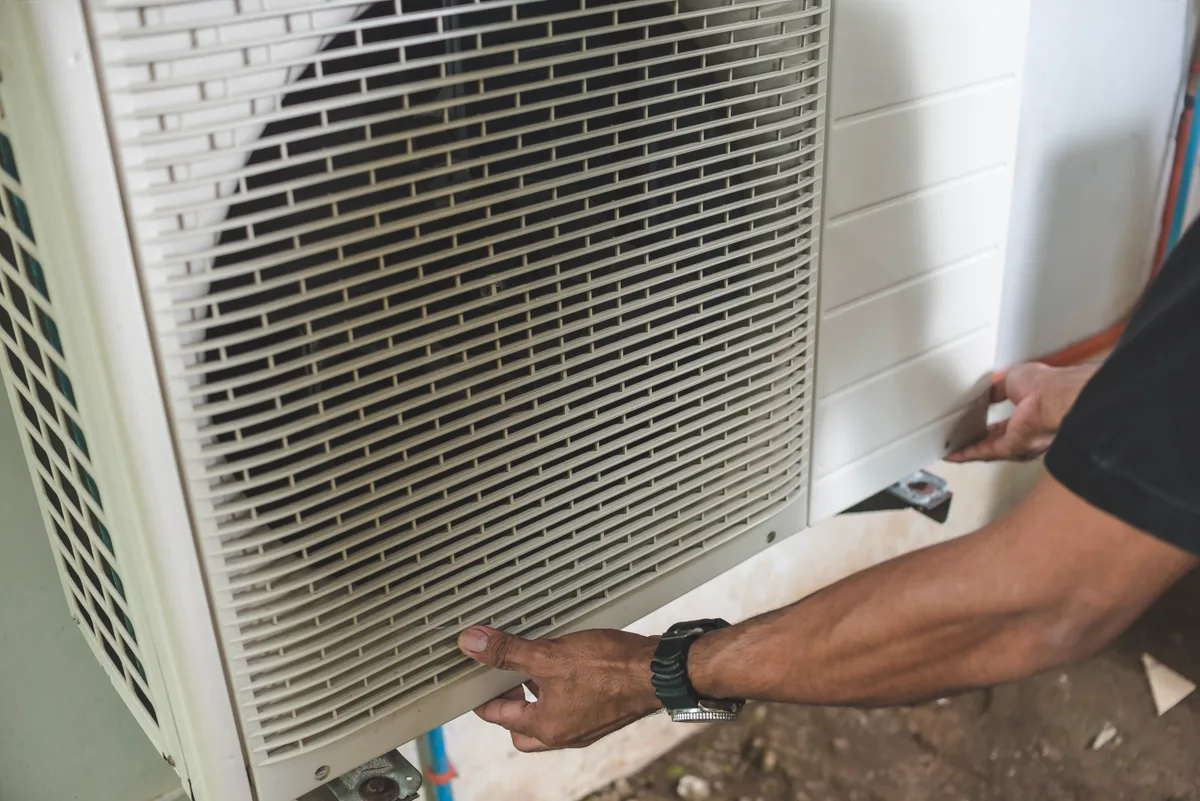
- Acrid smell at the outdoor unit: a run capacitor has failed and vented, or the contactor's contacts have pitted and are arcing each time the unit starts. Both sit behind the service panel on the condenser.
- Scorch marks or a melted smell at the grey box on the wall beside the condenser: the outdoor disconnect has a loose lug or a corroded pull-out, and the connection is heating under load.
- Burnt-rubber smell with a squeal: a slipping or seized belt on an old belt-driven blower. This one is rare, since residential furnaces have used direct-drive blower motors for decades.
What to do right now, and when it is a 911 call
- Set the thermostat to Off, not just to a higher temperature, and switch the fan from On to Auto.
- Turn off the double-pole breaker marked AC or condenser, and the furnace breaker or the switch beside the furnace.
- Look without touching: check the furnace cabinet, the outdoor unit and the disconnect for smoke, discolouration or a panel that is radiating heat.
- If there is visible smoke, a glow, or an electrical smell that keeps going after the power is off, get everyone out and call 911. That is a fire call, not a service call.
- If the smell fades once the power is off, leave everything off and book a repair. Do not turn it back on to see whether it happens again.
A clogged filter is worth pulling while you wait, because a starved blower runs hotter, but a new filter does not undo heat damage to a motor. Leave the panels on. The capacitor inside the outdoor unit holds a charge with the power off, and the disconnect has live lugs on the line side even with the pull-out removed.
What an AC burning-smell repair costs
Most of these faults come down to a single part, and the price depends on which one burned. The diagnostic visit is $90–$150 and is folded into the repair if you go ahead. Other common prices are listed on the pricing page.
- Run capacitor: $150–$350, the most common failed part in an outdoor unit.
- Contactor: $150–$350, replaced when the contacts are pitted or welded.
- Condenser fan motor or indoor blower motor: $300–$700, depending on the motor type.
- AC control board with heat-damaged terminals: $400–$800.
- Melted disconnect or damaged wiring from the panel: priced on a written quote. The feed between the electrical panel and the disconnect is electrical work under Electrical Safety Authority (ESA) rules and may need a licensed electrical contractor.
When a burnt part means a bigger decision
A burnt capacitor or contactor is a routine fix on a unit of any age. A burnt compressor, or a blower motor on a system past 12 to 15 years, is where the math changes, and it is fair to ask for the repair price and a replacement price on the same visit. A technician should show you the failed part and the reading that condemned it. If the smell came with a tripped breaker, read why an AC trips the breaker before resetting anything.
ZK Mechanical takes burning-smell calls on the 24/7 line at (647) 801-1252, with no overtime, weekend or holiday surcharge. We find the overheated part, check the wiring around it for heat damage, and give you a written price before any work starts. See AC repair for how a visit runs, or send us the details and keep the system off until it has been looked at.