
Quick answer
If your outdoor AC unit was flooded, do not restart it. Switch off its breaker, let it dry, and have a technician test the contactor, capacitor, fan motor and compressor terminals for shorts to ground before power goes back on. Brief standing water at the base is usually harmless; water that rose above the electrical compartment is not. Photograph the waterline for your insurer.
If your outdoor AC unit was flooded, the flood itself often leaves it salvageable; what finishes it off is being restarted wet. The coil and the compressor shell are sealed and built to live outdoors. The electrical parts are not built to be submerged, and powering them up with water or silt inside turns a modest repair into a replacement.
Why you should not restart a flooded AC unit
Wet or silted electrical parts short to the metal cabinet the moment they are energised. A compressor that starts against a short can burn its windings, and a burnt compressor on an older unit usually ends the unit. Do this instead:
- Set the thermostat to Off so nothing calls for cooling.
- Switch off the air conditioner's breaker at the panel indoors. It is a double-pole breaker, usually labelled AC or condenser.
- Once the water has gone down and the ground is dry, pull the disconnect in the grey box on the wall beside the unit. Do not touch that box while you are standing in water.
- Photograph the unit and the debris line on the cabinet before rinsing anything.
- Let it dry, and leave the power off until it has been tested. A dry-looking unit can still hold silt and moisture inside the electrical compartment and under the compressor terminal cover.
How high did the water get? The base versus the electrical compartment
A condenser sits in the rain all its life, and its base pan has drain holes. A few centimetres of water across the pad that drains away the same day usually does no harm. The decision rule is the debris line: if it sits below the electrical compartment (the corner panel where the wires enter) and below the compressor terminals, the unit needs a check and a rinse; if it reached either one, nothing gets powered until each part is tested.
What the water carried matters as much as how high it rose. Clean rainwater that drains off is one thing; muddy overland water or sewer backup leaves conductive silt on every surface it touched. How long the unit sat submerged counts too, since hours under water give it time to work into motor bearings and connectors.
What a technician tests before the power goes back on
- Contactor: the contacts and the low-voltage coil are inspected for silt and corrosion. A flooded contactor is replaced, at $150–$350.
- Capacitor: checked for swelling and measured against its rating. Replacement is $150–$350.
- Condenser fan motor: the windings are tested to ground with an insulation tester and the bearings are spun by hand. A new motor is $300–$700.
- Compressor terminals: the cover comes off, the terminals are cleaned and dried, and resistance to ground is measured before any start. A compressor that fails this test is not started.
- Control board, on newer and inverter units: $400–$800 if the board was under water.
- Disconnect and wiring: a disconnect box that filled with water is replaced along with any damaged whip.
Then the coil. Floodwater packs silt between the fins from the bottom up, which blocks airflow and drives up operating pressure even when every electrical part passes. The top comes off and the coil is rinsed from the inside out at low pressure, since a pressure washer flattens the fins; our AC coil cleaning page shows the method.
The visit starts with a $90–$150 diagnostic, and most post-flood repairs land inside the usual $150–$800 range covered in how much AC repair costs. When the compressor has shorted on a unit past the middle of its life, the comparison is a new central air conditioner at $3,500–$7,500 installed.
Insurance after overland flooding, and raising the replacement
The July 2024 storms flooded yards and basements across Burlington, Mississauga and Toronto, and condensers in low side yards and beside window wells went under with them. Overland water coverage is an optional add-on to many Ontario home policies, not a standard inclusion, so read yours before assuming either way.
- Photograph the debris line on the unit and on the house wall behind it, with something for scale.
- Photograph the rating plate so the model and serial number are on record.
- Note the date, and how long the water stayed.
- Ask the technician for the findings in writing: which parts failed, the test readings, and the repair or replacement price.
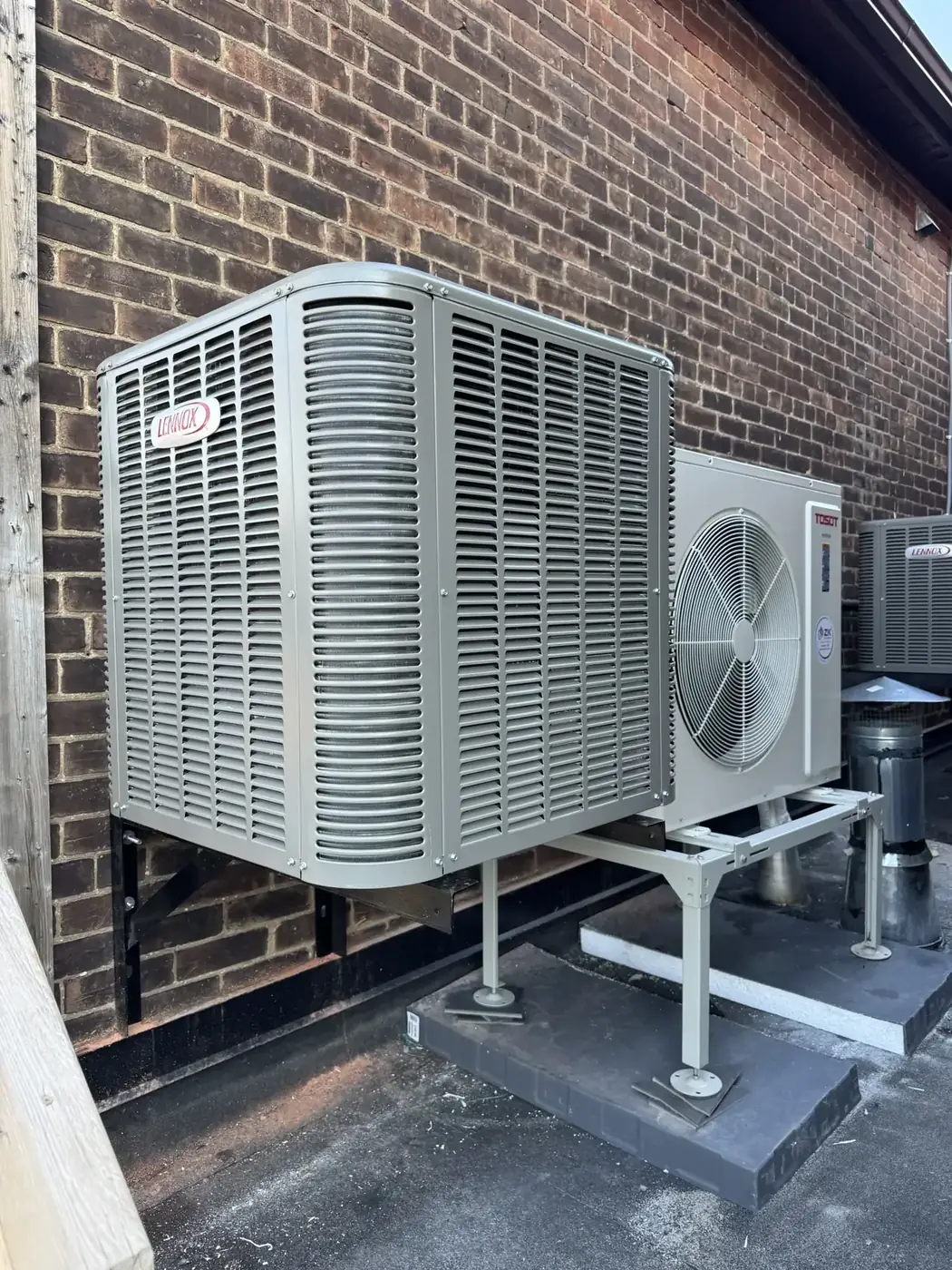
If the unit is replaced, the new one does not have to go back at the same height. It can sit on a raised stand, wall brackets or a taller pad above the level the water reached, the way heat pumps are already mounted to clear snow; see AC condenser pad replacement. Redirecting a downspout that empties beside the pad costs little and helps as much.
If the basement took water in the same storm, the furnace and the indoor coil need their own inspection, described in what to do if your furnace was flooded. ZK Mechanical tests flooded condensers and puts the findings and the price in writing for you and your adjuster. For AC repair in Burlington, Mississauga, Oakville or west Toronto, call (647) 801-1252 or send photos of the unit and the waterline.