
Quick answer
Replacing a furnace heat exchanger costs $1,500–$3,000 in parts and labour on most furnaces. The part itself is often free under a 20-year or lifetime manufacturer warranty, but the labour is not: the furnace is stripped almost to the cabinet. On a furnace over 12 to 15 years old, that money is usually better put toward a new furnace at $4,500–$7,500 installed.
A furnace heat exchanger costs $1,500–$3,000 to replace on most residential furnaces, parts and labour together. That number surprises people who have just been told the part is under warranty, and both statements are true. The heat exchanger is the most heavily warrantied part of the furnace and the most labour-heavy one to change. Whether the job makes sense depends on the furnace's age and on which heat exchanger has failed.
What a heat exchanger replacement costs in Ontario
- Diagnostic visit to confirm the failure: $90–$150, folded into the repair if you proceed.
- Heat exchanger replacement, parts and labour: $1,500–$3,000 on most furnaces.
- The same job with the part supplied under warranty: you pay the labour, the gaskets and any freight or handling the distributor charges. Ask for that figure in writing before the part is ordered.
- A new high-efficiency furnace instead: $4,500–$7,500 installed.
Nobody can price this job properly over the phone, because the labour differs widely from one cabinet to the next. A written quote off the model and serial number is the only number that counts. Our pricing page lists the published bands for the other furnace repairs.
Why the part is often free and the job still is not
Most manufacturers warrant the heat exchanger for 20 years, or for the lifetime of the original registered owner, which is far longer than the 5 or 10 years on the other parts. That warranty covers the part. It does not cover the technician's time, and the installer's own labour coverage usually ends after the first year or two unless you bought an extended plan.
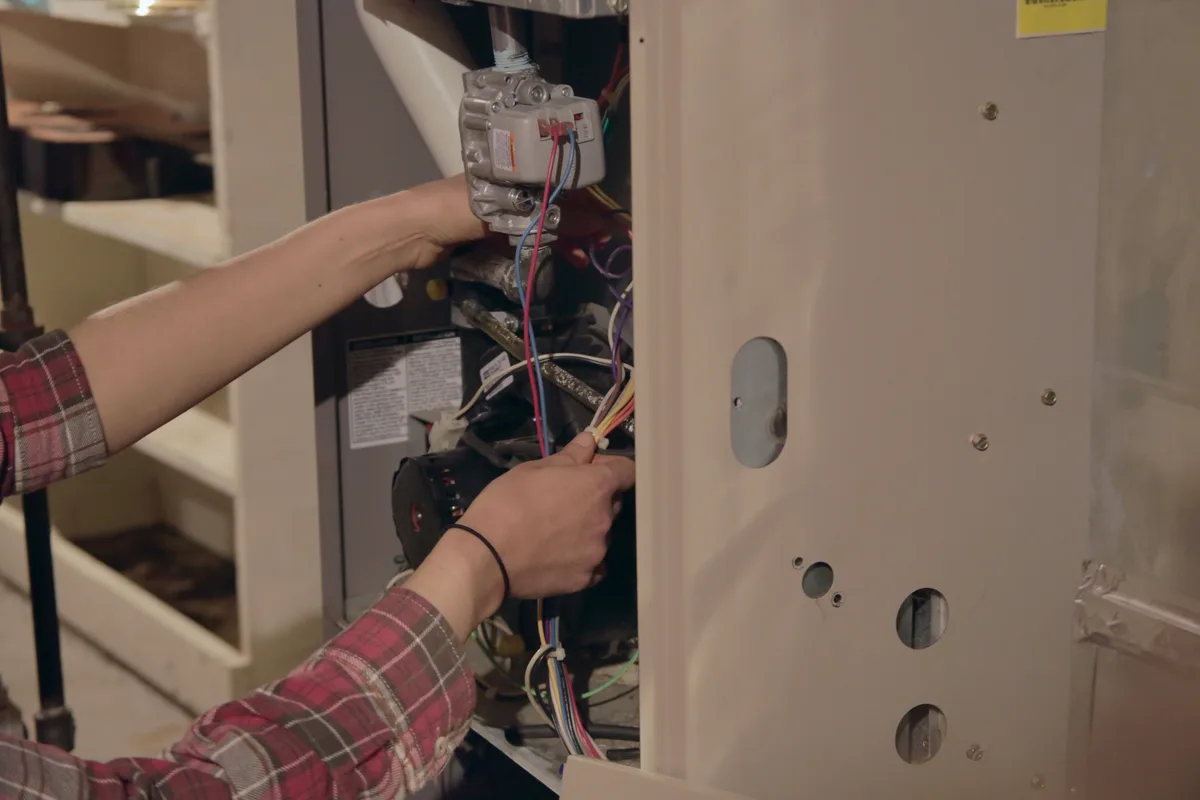
The labour is where the money goes. To reach the heat exchanger, a technician disconnects the gas line and the venting, then removes the burner assembly, gas valve, inducer, collector box, limit and rollout switches, and often the blower and control board. The exchanger slides out of the cabinet, the new one goes in with fresh gaskets, and everything is reassembled, leak-tested and set up with a combustion analyser. That is most of a working day, on a part that can take days to arrive because warranty exchangers are ordered against your serial number and are not carried on a truck.
Check two things before you count on the warranty. Lifetime coverage usually applies only to the original owner who registered the furnace; a second owner often gets a shorter term, which is covered in whether a furnace warranty transfers when a house sells. The manufacturer can also ask for proof of the failure, so keep the technician's written report and photos.
Primary or secondary: which heat exchanger failed changes the labour
A condensing furnace has two heat exchangers, and the quote depends on which one is gone. The primary is the set of steel tubes or clamshells directly above the burners; it fails by cracking after years of heating and cooling, usually sped up by overheating behind a dirty filter or in a furnace too large for its ducts. The secondary heat exchanger is the finned coil downstream, where the flue gas cools enough to condense. It fails by corroding through, or by plugging with deposits until the pressure switch can no longer prove draft.
On some models the secondary can be changed without disturbing the primary; on others the two come out as one assembly and the blower has to come out first. A plugged secondary on an otherwise sound furnace can sometimes be cleaned instead of replaced. A cracked primary cannot be welded, patched or sealed: it is replaced, or the furnace is. A mid-efficiency furnace vented into a chimney has a primary only.
When to replace the furnace instead of the heat exchanger
The rule we use at the kitchen table: under about 10 years old with the part covered, replace the heat exchanger; over 12 to 15 years, replace the furnace. At that age the labour alone can reach a third or more of the $4,500–$7,500 that a new high-efficiency furnace costs installed. It buys a new heat exchanger surrounded by an old inducer, blower motor and control board, each near the end of its own life.
A cracked heat exchanger also tends to be a symptom. If the crack came from overheating, the cause is still in the house: a starved return duct, a furnace sized too large, a filter nobody changed. The new part will face the same conditions unless that is corrected in the same visit.
Can you keep running the furnace while you decide?
No, not with a confirmed crack in the primary. A cracked heat exchanger can let combustion gases, including carbon monoxide, mix into the air blown through the house, and a TSSA-licensed technician who confirms one has to tag the furnace as unsafe. With an immediate hazard, the gas to the appliance is shut off as well. If the diagnosis came without photos, a camera image or combustion readings, you are entitled to see the evidence, and a second opinion on a cracked heat exchanger is reasonable before you spend this much.
ZK Mechanical shows you what was found, with photos and combustion readings, and prices both routes in writing: the warranty repair and the replacement. Start with a furnace repair visit anywhere from Burlington and Oakville to Hamilton and Mississauga, or send us the model and serial number so the warranty status is known before anyone quotes.