
Quick answer
A modern variable-speed heat pump is typically rated somewhere around 50–65 dB(A) outdoors at full speed, and it is quieter at the part-load speeds it runs most of the time — roughly the level of a normal conversation or a dishwasher heard through a wall. Older single-stage air conditioners commonly run 70 dB(A) or more, so a new heat pump is usually quieter than the AC it replaced.
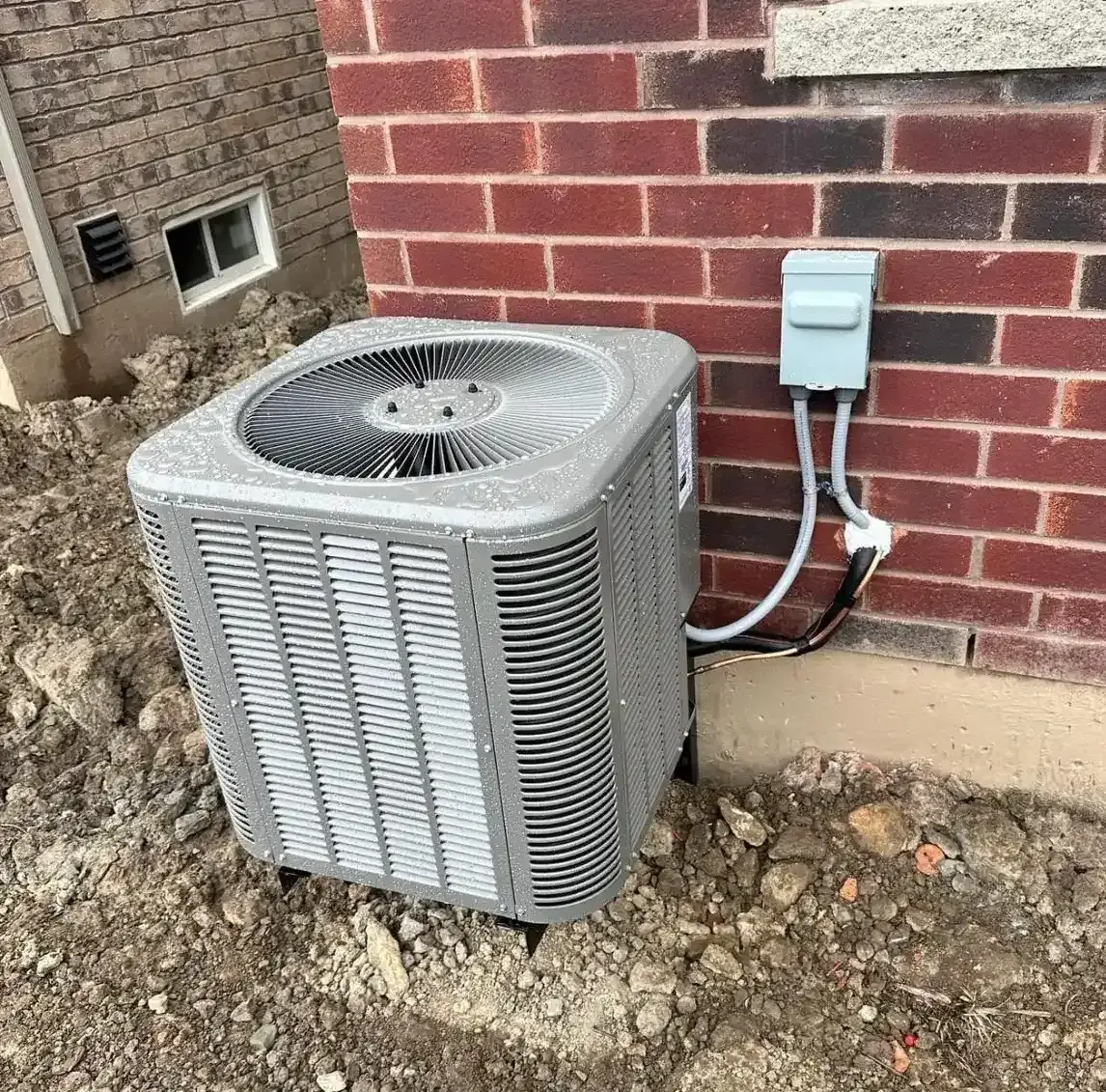
How loud a heat pump is comes down to a spec-sheet number — roughly 50–65 dB(A) outdoors at full speed for a variable-speed unit, less at the speeds it runs most of the day — and to where it is placed. People ask for two reasons: they will live beside it year-round instead of just in July, and it will be running at night in January when the neighbourhood is silent. The equipment is quiet by rating; whether it stays quiet depends on placement, mounting and a couple of settings.
Outdoor unit: roughly 50–65 dB(A) at full speed
- Quiet bedroom at night: about 30–40 dB(A)
- Refrigerator hum: about 40–45 dB(A)
- Normal conversation at one metre: about 60 dB(A)
- Variable-speed cold-climate heat pump at rated conditions: roughly 50–65 dB(A) on the spec sheet, and less at the low speeds it uses for most of the day
- Older single-stage central AC condenser: roughly 70–80 dB(A)
- Gas lawn mower: about 90 dB(A)
The published rating sits on the manufacturer's spec sheet next to capacity and efficiency, but brands do not all measure it the same way — some list sound power, others sound pressure at a set distance — so compare like with like when weighing quotes. The scale is logarithmic, so 60 dB(A) sounds roughly twice as loud as 50 dB(A), which is why the gap between a budget single-stage unit and a variable-speed one is obvious from a patio chair.
Indoor noise comes from the blower, not the outdoor unit
In a ducted system the outdoor unit is not what you hear inside — the air handler or furnace blower is. A variable-speed ECM blower ramping up gradually is barely audible. A single-speed blower in a 1970s furnace that has been paired with a new heat pump is the noise you notice, because it now runs for longer stretches. Ductless indoor heads are rated as low as roughly 19–25 dB(A) on their quietest fan setting, quieter than most bedrooms at night.
Noises a heat pump makes that an air conditioner never did
- Defrost whoosh. Several times a day in frosty weather the reversing valve shifts and the unit makes a brief rushing sound, sometimes with a thunk. It is normal and lasts seconds.
- Fan and compressor sound in a silent season. The same 55 dB(A) that vanished into July traffic and cicadas is noticeable on a still -10°C night, especially through a bedroom window that faces it.
- Low hum through the wall. A unit hung on a bracket bolted to a bedroom wall sends vibration into the framing or the brick; rubber isolation pads or a ground stand stop it.
- Rattling panel screws, or a fan blade carrying a bit of ice after freezing rain. Worth a look, not an emergency.
Placement rules that keep it quiet in a narrow side yard
Side yards in 1980s–90s subdivisions such as Millcroft, Glen Abbey and River Oaks are often only a couple of metres wide, with the neighbour's bedroom window directly across from where the old air conditioner sat. Heat pumps run in winter with the windows shut, which helps, but the placement still deserves more thought than the AC got.
- Face the fan discharge away from any bedroom window, yours or the neighbour's.
- Prefer a ground stand on isolation feet over a wall bracket on a bedroom wall. On pre-war brick in Old Oakville or Aldershot, a bracket can turn the wall into a soundboard.
- Keep the manufacturer's clearance so the fan is not straining against a fence or a cedar hedge.
- Ask whether the unit has a quiet or night mode — many variable-speed models do — which caps compressor and fan speed for a set period overnight.
- Burlington, Oakville and Hamilton each have a noise by-law. A properly placed variable-speed unit is rarely the problem; the one tucked under a neighbour's window is the one that draws the complaint.
When a loud heat pump means something is wrong
Grinding or screeching is a fan motor bearing on its way out. A loud buzz with the fan not spinning is usually a capacitor or contactor, among the cheaper repairs at $150–$350. A rattle that appeared after a windstorm is often a loose panel or a branch against the cabinet; the same sorting logic applies as in why is my air conditioner so loud. A compressor that has become noticeably louder over one season is worth a heat pump repair visit before it fails in February.
If you are choosing between quotes, ask each contractor for the outdoor sound rating and where exactly they plan to put the unit. ZK Mechanical walks the side yard with you before we quote heat pump installation in Oakville, Burlington or Hamilton — book a free assessment and we will show you the placement options on site.