
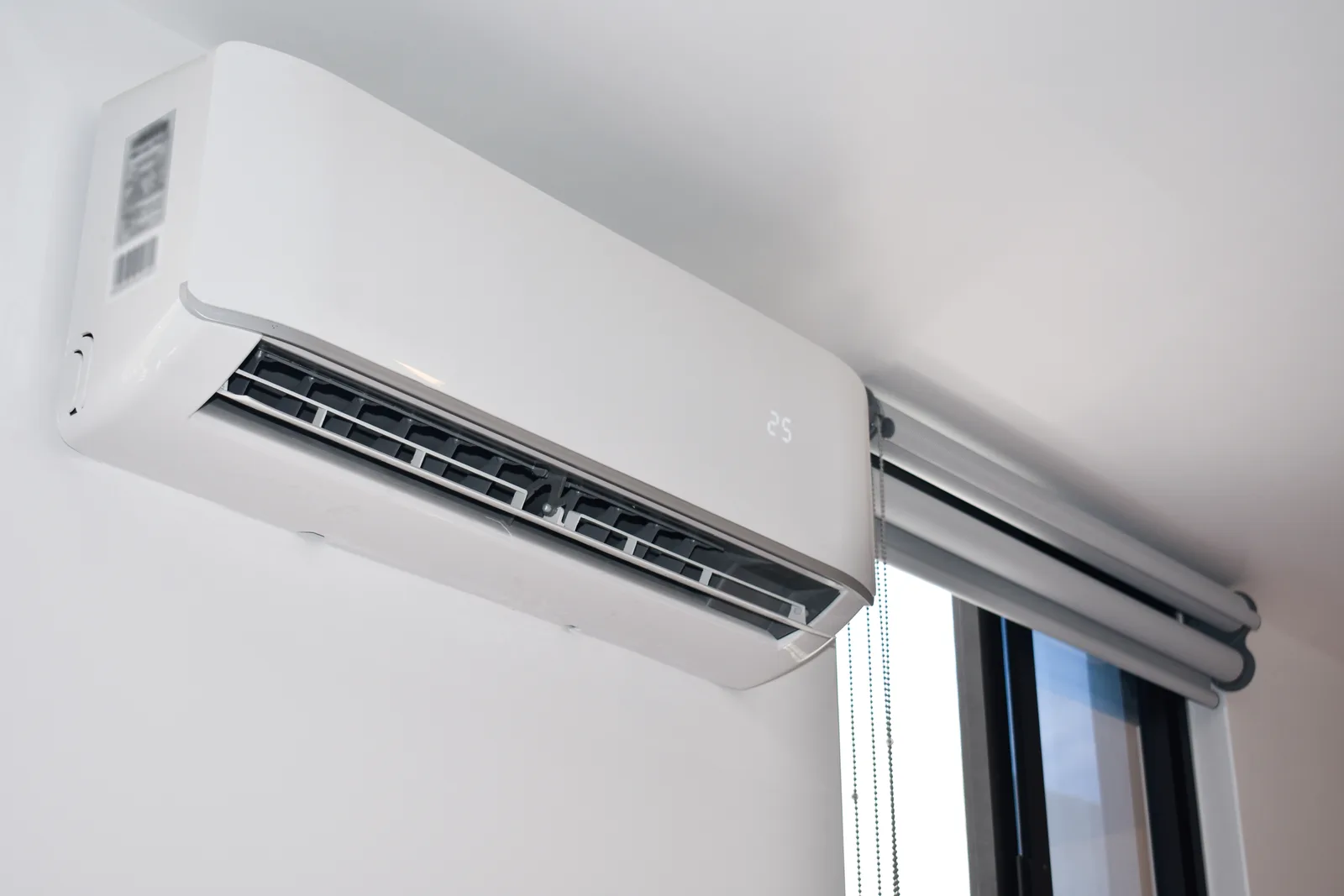
Daikin vs Mitsubishi heat pumps for Ontario is a comparison between two well-engineered inverter systems that differ more in service details than in whether they will keep a Burlington house warm in February. Mitsubishi Electric's Hyper-Heating INVERTER line has one of the longest cold-climate track records in Canada and the deepest ductless catalogue. Daikin brings a single-component refrigerant in R-32, a strong ducted option in the Daikin Fit, and the parts reach of the group that also owns Goodman and Amana. Both hold useful output well below -15 °C, so choose on house type, on how the system gets zoned, and on who can service it in five years.
Where Each Brand Is Strongest
- Mitsubishi Electric: the M-Series ductless line, the P-Series for larger loads, and the Hyper-Heating INVERTER (H2i) versions built for cold winters. Wall heads, floor consoles, ceiling cassettes and slim ducted air handlers all run off the same outdoor units.
- Daikin: the Aurora ductless series for cold climates, the Daikin Fit side-discharge system for houses that already have ductwork, and conventional ducted air handlers. Daikin owns Goodman and Amana, so its ducted equipment sits in a wide North American parts channel.
- Both: inverter-driven compressors that ramp instead of cycling, base pan heaters to clear defrost meltwater, and published capacity tables reaching down to -25 °C on their cold-climate models.
R-32 vs R-454B: The Difference Shows Up on Service Day
Daikin standardized on R-32 across its lineup. Mitsubishi Electric's North American equipment is moving to R-454B, as most other manufacturers have. Both are A2L refrigerants, both are mildly flammable, and both carry the handling and leak-detection expectations set out in our A2L refrigerant guide.
The practical difference is that R-32 is a single compound while R-454B is a blend. A single-component refrigerant can be topped up as vapour after a small leak. A blend has to be charged as liquid so the mixture stays correct, and after a larger loss many technicians prefer to recover and weigh in a fresh charge. That is not a reason to choose a brand by itself, but it is a fair question to ask a contractor: what do you carry on the van, and are you equipped for the refrigerant in this quote?
What -15 °C and -25 °C Actually Mean on a Spec Sheet
Cold-climate ratings are two different numbers and homeowners routinely blend them together. The first is the operating floor — the lowest outdoor temperature at which the machine will run at all, commonly -25 °C on H2i and Aurora equipment. The second is capacity retention: how much of the nameplate heating output is still available at a given temperature. Mitsubishi publishes 100% of rated capacity at -15 °C on many H2i models, and that is the figure worth arguing about, because it decides how often backup heat runs.
Ask for the manufacturer's extended capacity table for the exact model and size being quoted rather than a marketing headline. It will show output in BTU at -8 °C, -15 °C and -25 °C. Set the -15 °C row against your home's calculated heat loss and you have your balance point: the outdoor temperature below which something else has to help, whether that is electric backup or a gas furnace in a hybrid setup.
Ducted, Ductless and the Multi-Zone Trap
The house decides this far more than the brand does, and both companies can cover most of it.
- A pre-war brick house in Kerr Village or Westdale with radiators and no ducts is ductless work: one outdoor unit feeding wall heads or floor consoles in the rooms that matter. Both are strong here, and Mitsubishi has the wider selection of indoor styles.
- A 1970s–90s subdivision house in Millcroft or River Oaks with sound ductwork is ducted work. The Daikin Fit's slim side-discharge cabinet fits tight side-yard setbacks better than a conventional square unit, which matters on narrow older Oakville lots.
- A finished attic or a bonus room over the garage usually does best on a single slim ducted head hidden in the ceiling — available from either brand, and quieter over a bed than a wall unit.
The trap is the multi-zone system. One outdoor unit feeding three or four small heads sounds efficient, but the compressor has a minimum output, and when only the smallest zone calls the system runs above the load and short-cycles. The result is weak dehumidification in July and hunting in the shoulder seasons. Multi-zone suits several similarly sized rooms; it is the wrong tool for one large living space plus two tiny bedrooms.
Controls, Wi-Fi and Thermostats
Mitsubishi runs on its kumo cloud app with the MHK series wireless thermostat as the wall-mounted option. Daikin ducted systems use the Daikin One+ smart thermostat, and its ductless equipment has its own app. Both give you scheduling, per-zone control and remote access, and both are considerably more useful than the infrared remote that ships in the box.
Free quotes, written pricing.
Settle one thing before you sign: whether every head gets a wall control or only the handheld remote. A remote left on a sunny windowsill or lost behind a couch is one of the most common reasons a ductless system is reported as broken. A wall control also stops the head from judging the room by its own return air, which is what makes a high-mounted unit in a stairwell run warm.
Where the Outdoor Unit Sits Matters More Than the Badge
Both brands fail the same way when the outdoor unit is placed badly. A heat pump works all winter, and a unit sitting on a low slab ends up buried in a drift or frozen into its own defrost meltwater by January.
- Mount the outdoor unit on a stand or wall bracket well above the local snow line rather than on a pad at grade.
- Keep it clear of an eave or roof valley where meltwater drips onto the top of the coil and refreezes.
- Give the defrost water somewhere to go — gravel or a drain, not the side walkway of a narrow Kerr Village lot.
- Leave clearance on the discharge side. A unit crammed against a fence recirculates its own cold air and defrosts more often than it should.
Defrost itself is normal on both brands and looks alarming the first time: steam off the coil, a pause in heating, water pooling under the unit. It should be brief and occasional. If your system is defrosting every twenty minutes in mild weather, that is a commissioning or placement problem, not a brand problem.
Warranty, Parts and What Each Costs
- Both offer their longest parts and compressor terms — up to 12 years on current lines — only when the unit is registered inside a short window after installation, and Mitsubishi's longest term is also tied to installation through its contractor program. Ask for the confirmation.
- Mitsubishi parts move through its own distribution network and contractor programs. Daikin ducted parts overlap with the Goodman and Amana channel, which is broad in Ontario.
- Neither manufacturer's standard warranty pays for labour, and labour is the expensive half on ductless work: a compressor swap on a wall-head system is a day of work.
- Ask who will service it in five years. A brand nobody nearby stocks is a brand you wait on in February.
We service both, and the faults we see most often on each are listed on our Mitsubishi heat pump repair and Daikin heat pump repair pages.
- Single-zone ductless from either brand: $4,000–$7,000 installed
- Two zones: $7,500–$11,000 installed
- Three to four zones: $10,000–$16,000+ installed
- Cold-climate models add roughly $500–$1,500 per zone over standard-efficiency equipment
- A ducted whole-home cold-climate system: $6,000–$16,000 installed before rebates, depending on capacity and electrical work
Neither brand is systematically cheaper than the other at a matched capacity and feature level. Line-set length, the number of heads, electrical work and the state of the existing ducts move the number far more than the logo does. Ontario's rebate is decided by the model number rather than the brand, so confirm eligibility on the Home Renovation Savings Program page before you commit.
Verdict: Who Should Choose Which
Both are top-tier equipment. If we had to state a default, it is Mitsubishi for ductless and for exposed sites, Daikin when the job is ducted or when parts breadth matters most.
- Go Mitsubishi if the house has no ducts, if you need several indoor head styles, if the property is exposed — an Escarpment-top lot in Waterdown or Flamborough — or if you want the longer Canadian cold-climate history behind the equipment.
- Go Daikin if the system is ducted, if the Fit's slim footprint solves a tight side yard, if a single-component refrigerant simplifies future service, or if the house already carries Daikin, Goodman or Amana equipment.
- Weigh the contractor heavily either way. Heat pumps are far more sensitive to line-set length, charge accuracy and commissioning than a furnace is, and a poorly commissioned premium unit underperforms a carefully installed mid-tier one every winter.
We size heat pumps from a heat-loss calculation rather than from the tonnage of the old air conditioner, and we will quote both brands where both fit the house. See how we approach the work on our heat pump installation service page, or ask for a heat-loss assessment.
Frequently asked questions
Is Mitsubishi or Daikin better for Ontario winters?
Neither is meaningfully better at holding heat. Mitsubishi H2i and Daikin Aurora equipment both operate to about -25 °C and both publish strong capacity at -15 °C. Mitsubishi has the longer Canadian track record and more indoor head options; Daikin has the stronger ducted story. Compare the capacity table for the exact model quoted rather than the brand reputation.
Can one outdoor unit run heads in four rooms?
Physically yes, but it is often the wrong design. Multi-zone outdoor units have a minimum compressor output, so when only a small bedroom calls, the system runs above the load and short-cycles, which hurts dehumidification in summer and comfort in shoulder season. Multi-zone works best when the rooms have similar loads. Otherwise, separate single-zone systems or a ducted head serve better.
Does R-32 make a Daikin cheaper to service?
Marginally, in one scenario. Because R-32 is a single compound rather than a blend, a small leak can be topped up as vapour instead of recovering and recharging the full charge, which can save labour. It is a minor factor next to whether your contractor stocks parts for the brand and is set up to work on A2L refrigerants at all.
How long do ductless heat pumps last in this climate?
With annual filter and coil cleaning and a proper install, we expect 15 to 20 years from either brand's cold-climate equipment. Inverter compressors dislike two things: running dirty, and running at the wrong charge. A system that is cleaned each spring and was commissioned with measured line-set length and charge weight tends to reach the top of that range.