
Quick answer
To relight a water heater pilot light, turn the gas control knob to Off and wait five minutes for any gas to clear. Turn the knob to Pilot, press and hold it, and click the igniter button until you see the flame through the sight glass. Keep holding for 30 to 60 seconds, release, then turn the knob to On. If it fails twice, stop and call a licensed technician.
Knowing how to relight a water heater pilot light is a ten-minute skill that saves a cold shower and, often, a service call. The sequence is the same on nearly every standing-pilot gas tank sold in Ontario, and the label on the front of your heater is the final word if it differs from what follows. Before you start, sniff around the base of the tank — if you smell gas, do not relight anything; leave the house and call Enbridge Gas from outside.
First, confirm you actually have a pilot light
Not every gas water heater has one. If your tank has a blower motor on top and a power cord plugged into a wall outlet, it is a power-vent unit with electronic ignition, and there is nothing to relight; check the outlet, the breaker and the status light instead. Tankless units from Navien, Rinnai and Bosch are electronic as well. A standing-pilot tank has a round gas control knob near the bottom, a small igniter button, and a sight glass on the burner door you can peer through.
Step-by-step relighting sequence
- Turn the gas control knob to Off. Wait at least five minutes so any unburned gas in the chamber drifts away. Skipping this wait is how eyebrows get lost.
- Set the temperature dial to its lowest mark so the main burner does not try to fire the moment the pilot catches.
- Turn the knob to Pilot. Press it in and hold it — on some controls there is a separate red or black pilot button instead.
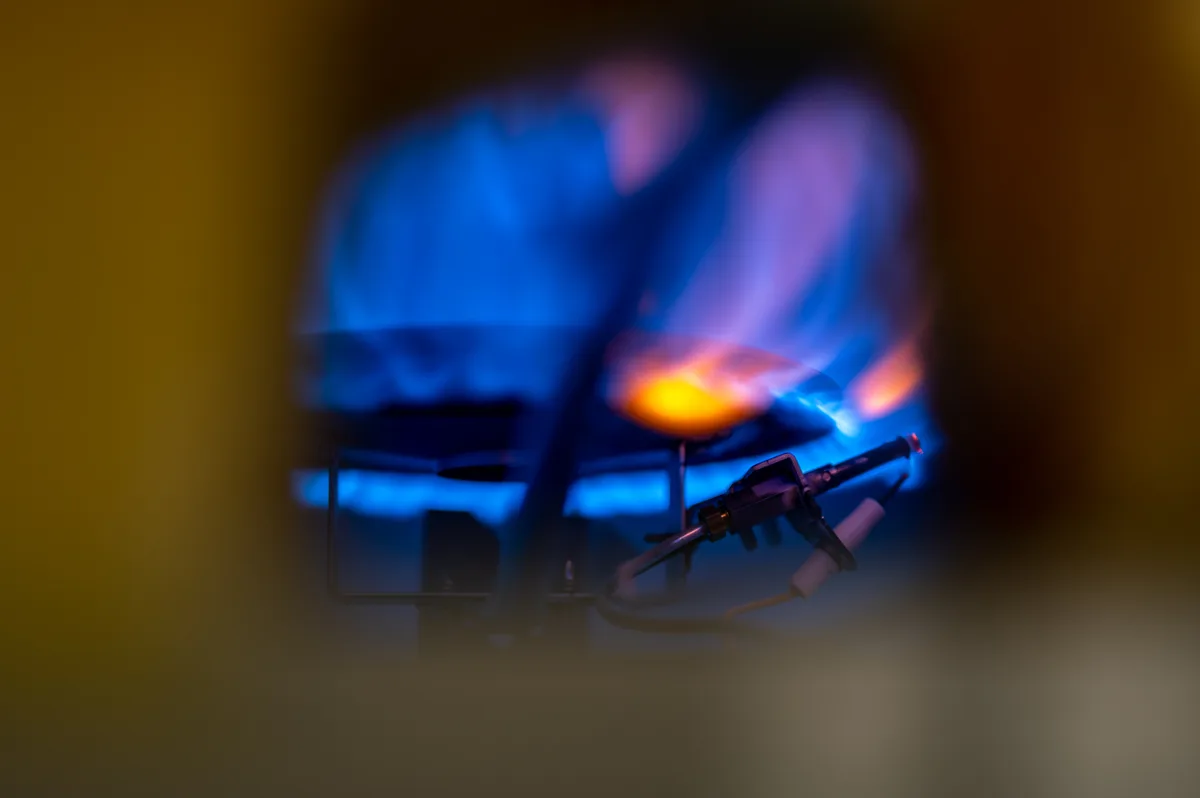
- While holding, press the piezo igniter button once a second and watch the sight glass. You should see a spark, then a small steady blue flame within a few clicks.
- Keep the knob pressed for 30 to 60 seconds. This heats the thermocouple or thermopile enough to hold the valve open on its own.
- Release slowly. If the flame stays, turn the knob to On and set the temperature back to the 60°C mark. The main burner should light within a few seconds and you will hear it.
- If the flame dies when you release, wait five minutes and try once more, holding longer. Two failures is the signal to stop.
Reading the status light on newer gas controls
Tanks with a Honeywell-style electronic gas valve have a small LED beside the knob that blinks a code, and reading it tells you whether relighting will hold. The blink chart is printed on the label, and it wins over any list, including this one.
- No light — the pilot is out or the thermopile is producing nothing; relight.
- One blink, repeating — the pilot is lit and the control is happy.
- Two blinks — the thermopile is producing too little voltage to keep the valve open, which is why the pilot keeps dying; a new thermopile is the usual fix.
- Four blinks — the high-temperature limit tripped, often because the flame-arrestor screen is clogged; let it cool and clear the screen before relighting.
- Seven blinks — the gas control itself has failed and needs a licensed technician.
Why it will not light at all
- The gas is off — check the shut-off valve on the supply pipe; the handle should run parallel to the pipe. If you just moved in or Enbridge Gas was working on the street, other gas appliances will be out too.
- Air in the line after a gas interruption — it can take several minutes of holding the knob and clicking before gas reaches the pilot.
- No spark — the igniter wire has come off or the electrode is cracked. On older tanks without a piezo igniter you light the pilot with a long lighter through the access opening, which is why we suggest calling if you have never done it.
- A clogged flame-arrestor screen at the base of the tank, common in basement laundry rooms and in 1950s–60s bungalows in Aldershot and Roseland where the tank sits in a dusty utility corner.
When relighting is the wrong move
Relighting fixes a pilot that went out once — a gas interruption, a windy day, a door slammed near the tank. It does not fix a pilot that goes out weekly, and repeating the cycle lets unburned gas accumulate in the chamber before each attempt. If you are relighting more than once a month, read our answer on why a water heater pilot keeps going out and get the thermocouple, screen or venting looked at. A rental tank from Enercare or Reliance comes with repair coverage, so call them before paying anyone.
If the pilot will not catch after two careful attempts, ZK Mechanical's TSSA-licensed gas technicians can have it diagnosed and running in a single visit — the diagnostic visit is $90–$150 and folded into the repair if you proceed. We cover water heater repair across Hamilton, Burlington, Oakville and the GTA; request service here and mention that the pilot is out so we bring the right parts.