
Quick answer
No municipal building permit is needed for gas piping in Ontario. Gas lines are regulated by the TSSA under O. Reg. 212/01 and the CSA B149.1 code, so the work must be done by a TSSA-registered fuel contractor with a G2 or G1 licensed technician, who pressure-tests and tags the line. A permit can still apply to the appliance, the trench or the electrical work.
Do I need a permit to install a gas line in Ontario? Not from city hall. Natural gas and propane piping sits outside the building permit system and is regulated provincially by the Technical Standards and Safety Authority (TSSA). What replaces the permit is a licence requirement, and that part is not optional: this is not a job for a handyman, a plumber without a gas ticket or a weekend with a pipe wrench.
Who is allowed to install gas piping in Ontario
Gas piping must be installed by a TSSA-registered fuel contractor whose technician holds a G2 or G1 gas licence. O. Reg. 212/01 (Gaseous Fuels) sets the rules and adopts CSA B149.1, the natural gas and propane installation code, as the technical standard. A G2 technician can work independently on piping and appliances up to 400,000 BTU/h, which covers any house; a G3 works only under supervision.
Ask for two things before you book: the company's TSSA contractor registration number and the technician's licence card. On rural lots with no gas main, such as Kilbride, Lowville, Carlisle and rural Caledon, the line runs from a propane tank, and the same code and licence classes apply.
What the installer does in place of a permit inspection
- Sizes the line to the total connected load. Every appliance's BTU input is added up (furnace, water heater, range, dryer, fireplace, plus the new one) and the pipe diameter is taken from the B149.1 sizing tables for the length of the run. An undersized branch starves the appliance furthest from the meter.
- Checks the meter and regulator. If the new total is more than the meter can deliver, Enbridge Gas has to upgrade the meter or the delivery pressure before the appliance is commissioned. The contractor makes that request, and it adds lead time.
- Pressure-tests the new piping with air or an inert gas before it is connected, at a pressure and for a hold time the code sets for that pipe size and length.
- Leak-tests every joint once gas is on, purges the line and fires the appliance to confirm it gets full pressure with everything else in the house running.
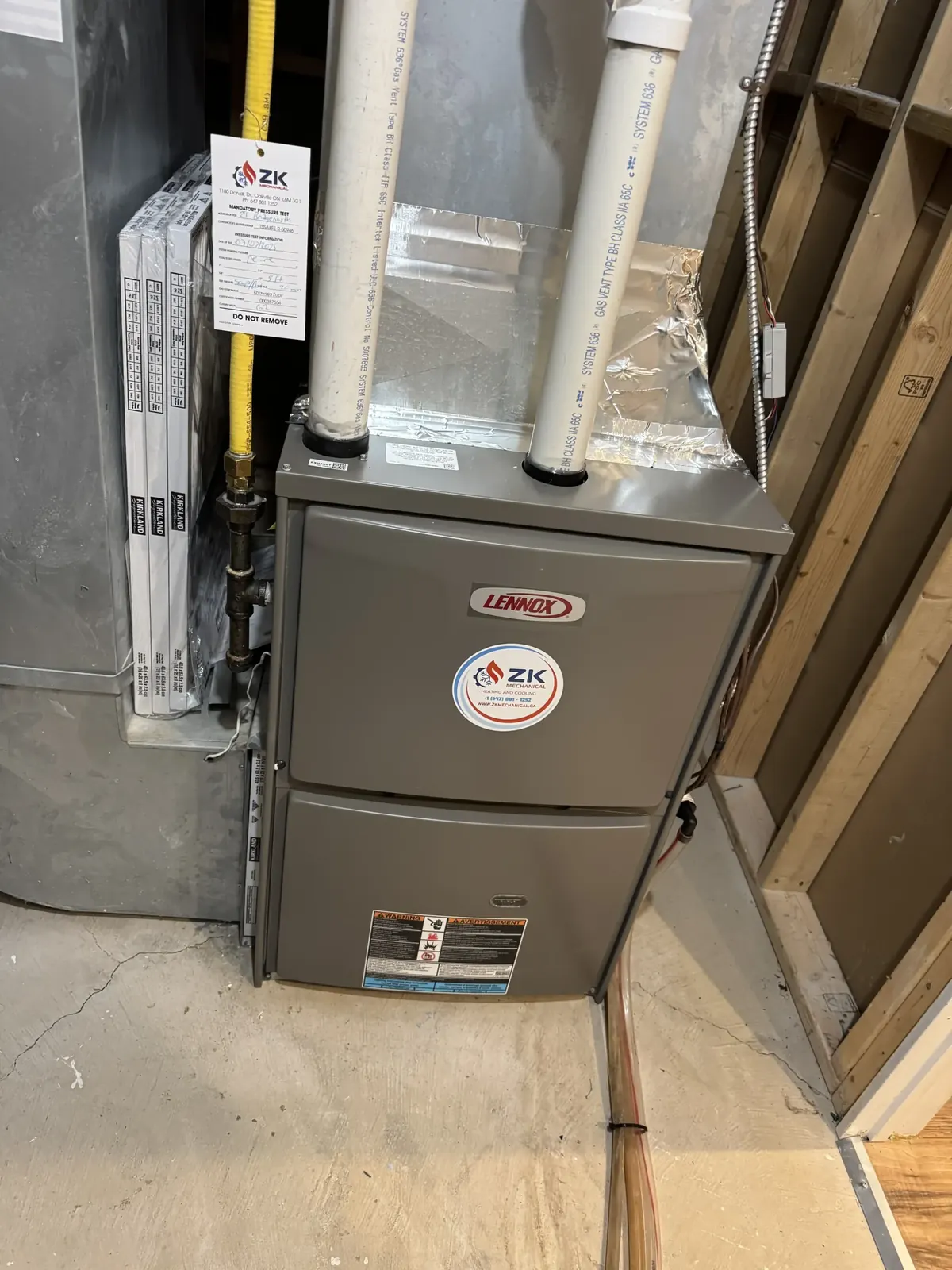
- Tags the line with the contractor's name, the test and the date. Keep a photo of that tag with the house papers: it is what a buyer's inspector or an insurer will ask to see.
Where a municipal or electrical permit can still come into it
The pipe never needs a building permit, but the project around it sometimes does. The appliance on the end of the line is where to check.
- Pool heater: the gas connection is TSSA work. A new pool needs an enclosure permit from the municipality, and the heater's position has to respect vent clearances to windows and property lines.
- Standby generator: the transfer switch and wiring need an Electrical Safety Authority (ESA) notification filed by a licensed electrical contractor, and municipalities set placement and noise rules.
- Garage heater or gas fireplace: the vent penetration, and any change to the fire separation of an attached garage, can fall under the Ontario Building Code. Ask the building department before the wall is cut; fireplaces have their own page on permits for a gas fireplace.
- Trenching for a buried line to a pool heater, fire pit or detached garage: request locates through Ontario One Call before anyone digs. It is free and it is the law.
- Condos and townhouse complexes: the corporation's written approval, because the piping usually crosses common elements.
What a gas line costs and what drives the price
Price follows length, pipe size and difficulty, not a flat rate. A short branch off an exposed basement trunk to a range or dryer is the small end. Long runs above finished ceilings, buried lines to the back of the lot and jobs that need a meter upgrade are the large end.
One published reference point: upsizing the gas run for a tankless water heater typically adds $400–$1,200 to that install. For anything else, the number comes from a site visit and a written quote; how gas line installation is priced explains the line items.
What happens when a gas line was installed without a licence
Unlicensed gas work has no permit record to catch it, so it surfaces later, usually when a licensed technician services an appliance and finds piping that does not meet code. That technician is required to tag it, and for an immediate hazard the gas to that line is shut off until it is corrected. If you bought a house with a doubtful line to a barbecue box or a garage heater, a pressure test by a licensed contractor settles the question in one visit.
A gas smell is a different situation: leave the house and call Enbridge Gas or 911 from outside before calling anyone about piping.
ZK Mechanical's technicians hold TSSA gas licences, and every gas line installation is sized, pressure-tested and tagged before the appliance is lit. Call (647) 801-1252 or send the details of your project for a written quote in Burlington, Oakville, Milton, Hamilton or Mississauga. Related buying questions sit in the costs and buying answers.