
Quick answer
Gas line pricing comes down to length, pipe size and how hard the route is to run, not a flat per-appliance rate. The one figure we publish is the most common case: upsizing an undersized run for a tankless water heater conversion typically adds $400–$1,200. A new run to a garage, BBQ or range is quoted after a technician measures the route and checks the meter capacity.
Gas line installation cost is quoted by the run, not by the appliance. The price is set by how far the pipe travels, what diameter it needs in order to carry the load, and how hard the route is to get through. The one number we publish covers the most common job in this area: upsizing an undersized run for a tankless conversion typically adds $400–$1,200. Everything else gets measured first.
What decides the price of a gas line
- Length of the run from the meter to the appliance, and how many fittings and direction changes it takes to get there.
- Pipe size — set by the CSA B149.1 sizing tables from the total connected load and the developed length, not by whatever fits the appliance connector.
- Material — black iron is cheaper per length and slower to install; corrugated stainless tubing is faster in a finished house but has to be bonded to the electrical grounding system.
- The route — an open joist bay in an unfinished basement is quick work. Fishing through a finished ceiling, coring a foundation wall, or trenching under a driveway to a detached building is not.
- Shut-offs, sediment traps and a sleeve where pipe passes through masonry. These are code items, not optional extras.
- Whether the meter can carry it — Enbridge Gas owns the meter and regulator, so if the added load exceeds what the existing meter is rated for, that upgrade is Enbridge's work and is requested separately.
The cheapest run we do is a short black-iron branch off an existing basement main to an appliance a few metres away in an unfinished basement, with the shut-off and sediment trap at the appliance. Add distance, a finished ceiling, a foundation wall or a trench and the price climbs; add enough load to outrun the meter and Enbridge's schedule enters the project.
Who is allowed to run gas pipe in Ontario
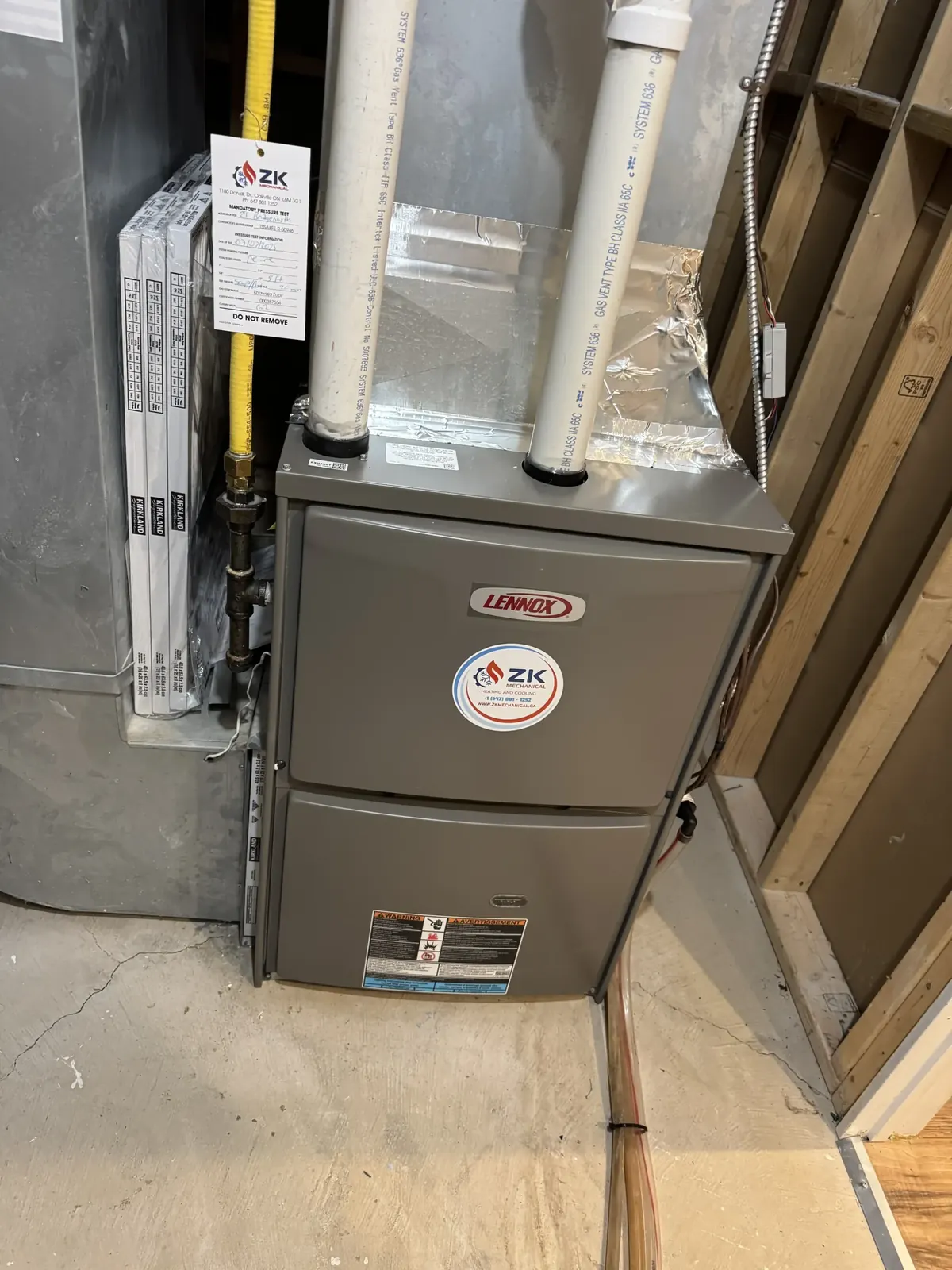
Only a TSSA-registered contractor using certified gas technicians. The installation code is CSA B149.1, and it governs pipe sizing, joint materials, clearances, the sediment trap and the pressure test. The technician pressure-tests the new pipe before anything is connected and leaves that test on record.
This is the one trade where saving money on a cash job is a bad idea. Uncertified gas work is illegal, it is the first thing an insurer looks for after a loss, and a home inspector can flag it when you sell. If a quote arrives without a licence number, walk away — how to verify a TSSA licence walks through the check.
The gas line jobs we are asked to price most
- Tankless water heater conversion — the most common one in Burlington and Oakville. A 199,000 BTU tankless draws far more gas at once than the tank it replaces, so a line sized for the old tank usually has to be upsized: budget $400–$1,200 on top of the install. Does a tankless need a bigger gas line explains the arithmetic.
- A garage heater — a run to an attached garage is short; a detached garage in Ancaster or Aldershot means trenching and sleeving from the house. See garage heater costs.
- A gas range during a kitchen renovation, where the price is mostly about the route from the basement up to the range location.
- A BBQ or fire table line to the back yard, which on a bungalow with a front-of-house meter means crossing the entire footprint.
- A gas fireplace — a fireplace quote normally covers both the venting and the gas run, so the line is rarely priced on its own.
- A pool heater or standby generator, where the connected load is often the thing that forces a meter conversation.
Why the meter matters more than people expect
Every appliance in the house shares one meter and one regulator. A 1970s Millcroft home sized for a furnace, a range and a tank water heater has a meter chosen for exactly that load. Add a tankless, a garage heater and a pool heater and the arithmetic stops working — not because the pipe is too small, but because the meter is. That is a call to Enbridge Gas, it runs on their schedule, and it is worth confirming before the rest of the project is booked.
Common questions about gas line cost
- Can you quote it over the phone? Not honestly. Sizing depends on total load and developed length, and both have to be measured.
- Can I run a flexible line to the BBQ myself? No. Plugging a barbecue into an existing quick-connect is fine; adding or extending the pipe that feeds it is licensed work, all the way from the meter.
- Will you connect an appliance I supplied? Yes, provided it carries a Canadian certification mark and its rating plate matches the fuel — a natural gas unit, not a propane model with the wrong orifices.
- How long does it take? A short run in an open basement is a half-day; a trenched run to a detached building takes longer.
- Do you cap unused lines? Yes — capping the line left by a removed appliance is standard on any replacement, and the cap goes at a fitting behind a shut-off, not as a plug on a pipe left live under the floor.
ZK Mechanical holds TSSA gas licences and pressure-tests every line we install. See gas line installation and our tankless water heater page for the pairing this comes up with most. Phone (647) 801-1252 and we will measure the route before quoting, or send us the details.