
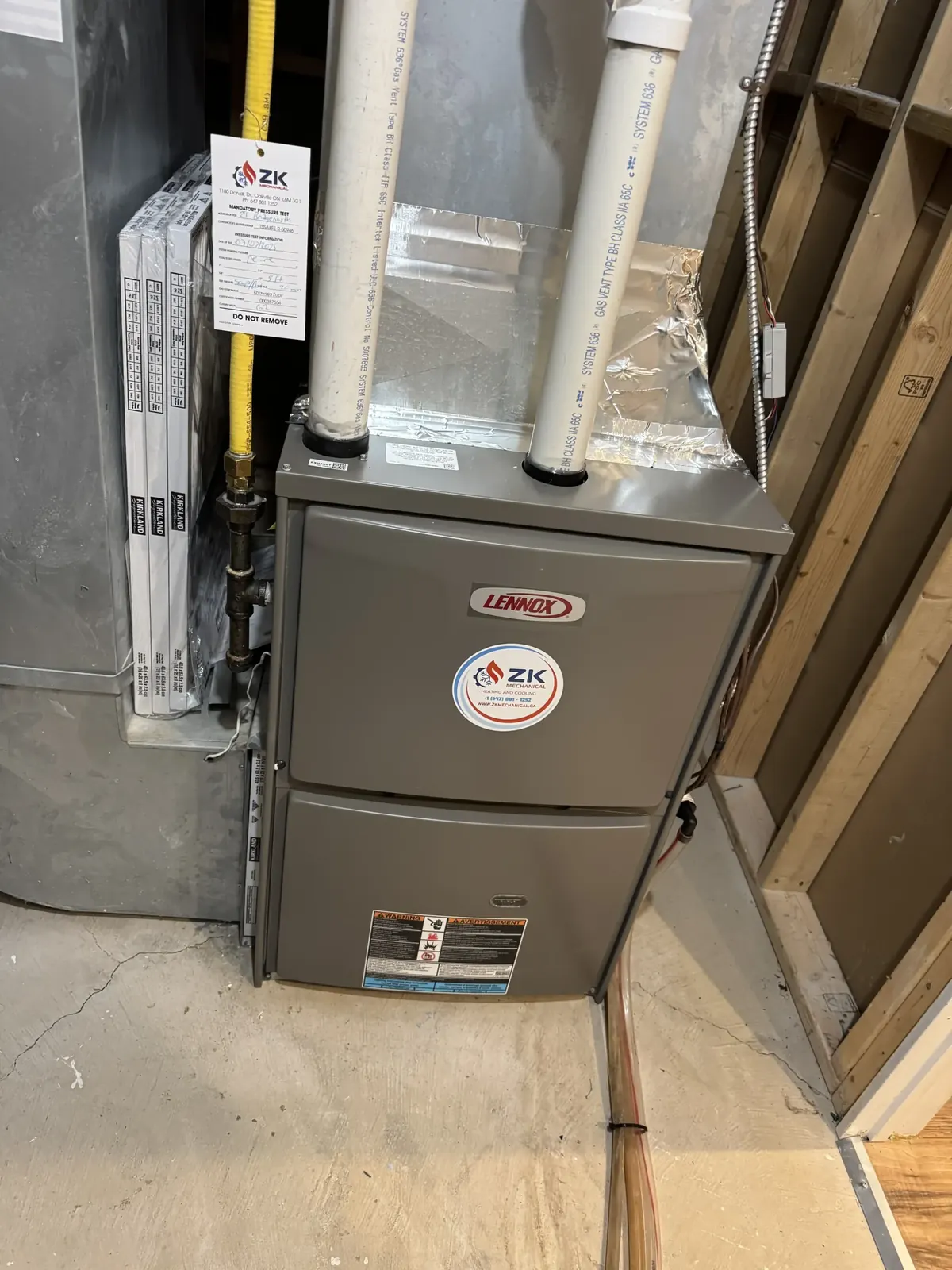
HVAC permits in Burlington are issued by the City of Burlington's Building Department at City Hall, 426 Brant Street — not by Halton Region and not by TSSA. The City's own list says a like-for-like replacement of a furnace, air conditioner or heat pump in a house does not need a building permit. New ductwork, a first-time installation or a change of fuel is construction and does. In every case the gas work is done by a TSSA-licensed technician, and any new circuit is filed with the Electrical Safety Authority (ESA). A contractor who works in Burlington regularly sorts out which of these applies and folds it into the written price.
Who Controls What on a Burlington HVAC Job
Four different bodies touch a typical furnace, AC or heat pump installation in Burlington, and homeowners often mix them up. Here is the split.
- City of Burlington Building Department (426 Brant Street): issues the building permit under the Ontario Building Code where one is required, and sends the inspector who signs off that work.
- TSSA (Technical Standards and Safety Authority): does not issue your building permit. It certifies the gas technicians (G1, G2, G3) and registers fuel contractors, and the gas piping and venting must follow the CSA B149.1 gas installation code.
- ESA (Electrical Safety Authority): a new 240-volt circuit and disconnect for a condenser or heat pump, or a new furnace circuit, is filed with ESA by a licensed electrical contractor and inspected separately from the City's visit.
- Enbridge Gas: owns the meter and the service to the house. If a new appliance pushes the total gas load past what the meter delivers, Enbridge upsizes it — that is a utility request, not a permit.
- Halton Region: has no role in HVAC permits. The Region runs water, wastewater, waste collection and regional roads; building permits in Burlington, Oakville, Milton and Halton Hills come from each local municipality.
Which Jobs Need a Building Permit in Burlington
The short version: swapping a furnace, air conditioner or heat pump for the same kind of equipment in a house is on the City of Burlington's list of projects that do not need a building permit, and so are routine repairs and maintenance. Work that adds a system, changes the ducts or changes the fuel is treated as construction. Other cities draw the line differently, as our Toronto furnace permit guide shows, so the answer here is specific to Burlington and was checked against the City's page on October 1, 2026.
- Like-for-like furnace replacement in a house: no building permit under the City's exemption list; the gas connection is still made by a TSSA-licensed technician. A boiler is not named on that list, so we confirm with the Building Department before quoting one.
- Replacing an existing air conditioner or heat pump with the same kind of unit: no building permit. Adding central AC or a ducted heat pump where there was none: ESA notification for the new circuit, and we confirm with the City whether the added equipment or duct changes need a building permit.
- Ductless mini-split: the ESA filing always applies to the new circuit; whether the City also wants a building permit depends on the scope, so we confirm with the Building Department before quoting.
- New or rerouted ductwork, or adding a return: building permit.
- Fuel conversion (propane to natural gas in rural north Burlington, or gas to a heat pump): not a like-for-like replacement, so we confirm the permit requirement with the City; the gas side is TSSA-licensed work either way.
- Like-for-like water heater swap, capacitor, igniter, blower motor, thermostat, duct cleaning, filters: no building permit, but any gas connection still has to be made by a TSSA-licensed technician.
Burlington Specifics That Change the Job
Burlington's housing runs from pre-war brick near downtown and the lake, through 1950s–60s bungalows in Aldershot and Roseland, to the 1970s–80s streets of Tyandaga and Brant Hills, and the 1980s-to-2010s subdivisions of Millcroft, Orchard and Alton Village. Each era brings a different permit wrinkle.
Free quotes, written pricing.
- Narrow side yards in Millcroft, Orchard and Alton Village: the two-pipe PVC venting on a high-efficiency furnace has to terminate at code clearances from your neighbour's windows and the gas meter, and the zoning by-law governs where a condenser may sit in a side yard. On a side yard barely over a metre wide, this drives the layout before anything else.
- Chimney-vented homes in Aldershot, Roseland and Tyandaga: when a new condensing furnace leaves the water heater alone on a masonry chimney, the chimney usually needs a liner or the water heater needs to change to a power-vent unit. The inspector looks for this.
- Downtown and lakefront condos with fan coils: the corporation's approval comes first, then the permit. Fan coil swaps are usually a like-for-like replacement, but any change to the electrical feed goes to ESA.
- Rural north Burlington (Kilbride, Lowville, Mount Nemo): homes beyond the gas main run on propane, so the gas code clearances for the tank and regulator apply, and the permit still comes from the City.
What the Inspector Checks After a Furnace or AC Install
Where a building permit applies, the City inspector is confirming that the installed system matches the permit and the Building Code. On a furnace, that means vent slope and termination, condensate drainage, the gas drip leg and shut-off, combustion air, clearances to combustibles, and that a carbon monoxide alarm is present near the bedrooms, which Ontario requires in any home with a fuel-burning appliance. On an AC or heat pump, the visit is mostly about the indoor coil, the drain and the ductwork; the ESA inspector covers the disconnect, wiring and breaker.
A like-for-like replacement has no City inspection, which puts the weight on the installer: the same checks are the technician's job under the gas code. Where an inspection does apply, it is booked after the install, and the technician does not need to be there if the equipment is accessible. If something is flagged, the contractor corrects it and a re-inspection is booked — you should never be the one chasing that.
How the Permit Runs on a ZK Mechanical Job
- The quote says whether the job needs a building permit. Where it does, we apply in our name as the contractor of record; our TSSA registration number appears on the quote and invoice either way.
- Any permit and inspection costs are included in the written price — there is no separate line that appears on install day.
- The electrical contractor files the ESA permit for any new circuit before the condenser is powered up.
- On permitted work you get the permit number and, after the inspection, the passed record. Keep both with the equipment warranty; a buyer's lawyer can request a compliance letter from the City on resale and open permits show up there.
Why Skipping the Permit Costs More Than It Saves
Where a permit is required, a quote that comes in lower because it leaves the permit out is not cheaper, it is deferred. Unpermitted work gives an insurer grounds to question a claim after a fire or CO event, the City can require an after-the-fact inspection at your expense, and home inspectors flag unpermitted mechanical work on a sale. When you are comparing bids, ask each contractor to state on the quote whether a permit applies and who pulls it — our guide to choosing an HVAC company in Burlington and Oakville walks through the other questions worth asking.
If you are planning a furnace installation in Burlington or adding AC or a heat pump, we handle the City, TSSA and ESA side end to end. Contact us for a written quote that states which permits apply, or read the companion guide on HVAC permits in Oakville if your home is on the Oakville side of Burloak Drive.
Frequently asked questions
Do I need a permit to replace my furnace in Burlington?
Not for a like-for-like swap. The City of Burlington lists replacement heating and cooling equipment for a house, including furnaces, air conditioners and heat pumps, among the projects that do not need a building permit. The gas connection must still be made by a TSSA-licensed technician, and a change of fuel, new ductwork or a first-time installation is a different project that we confirm with the Building Department.
Does Halton Region issue HVAC permits for Burlington?
No. Halton Region handles water, wastewater and public health. Building permits for Burlington homes come from the City of Burlington at 426 Brant Street; Oakville, Milton and Halton Hills each issue their own.
Do I need a permit just to add central air conditioning?
Adding a condenser always needs an ESA filing for the new circuit and disconnect. The City's exemption covers replacing existing equipment, so a first-time installation with a new coil or duct changes is confirmed with the Building Department before the quote. Your installer should state both on the quote.
How long does a Burlington HVAC permit take?
The Building Code gives a municipality 10 business days to review a complete application for a house, and that clock only starts once the application is complete. A straightforward furnace or AC replacement rarely holds up the install; fuel conversions, new duct systems and heritage or condo properties take longer because more parties sign off.
The previous owner replaced the furnace without a permit. What now?
Call the City's Building Department and ask about a permit for existing work. An inspector will look at the installation as it stands; a licensed contractor can correct anything that fails, which is far cheaper than discovering the problem during a sale or an insurance claim.