
Quick answer
Code 33 on a Carrier furnace is a limit circuit fault: the limit, draft safeguard, flame rollout or blocked-vent switch is open. The burners shut off and the blower runs to cool the furnace. Replace the filter and open all supply and return registers. If the switch stays open more than 3 minutes the code becomes lockout 13; scorching or soot means a same-day call.
When a Carrier furnace shows code 33, one of the switches in its limit circuit has opened: the main limit, the draft safeguard, a flame rollout switch or a blocked-vent switch. Carrier lists it as limit circuit fault. The burners go off at once and the blower keeps running to pull heat out of the furnace. Three short flashes and three long ones on the status light is how it appears.
Why a dirty filter is the usual reason for code 33
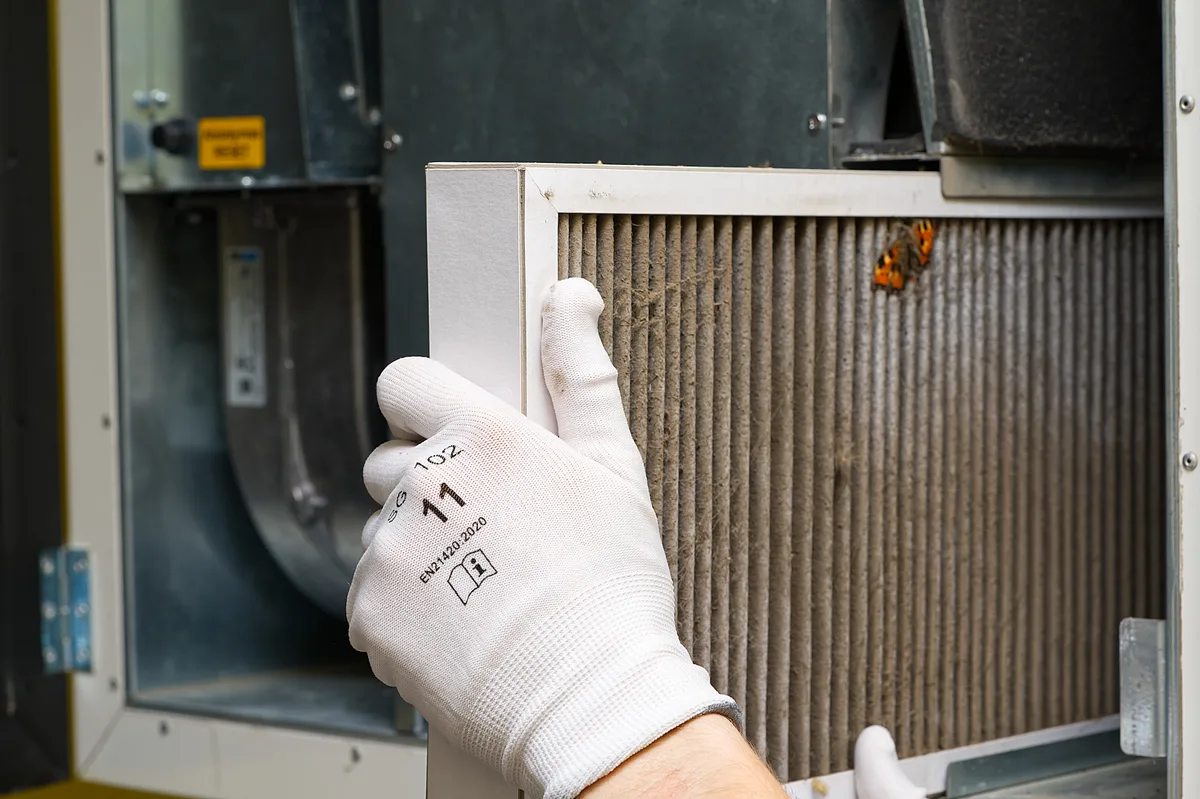
The main limit switch senses the air temperature around the heat exchanger and opens when that air gets too hot. The air gets too hot when not enough of it is moving. A filter loaded with dust, a thick pleated filter the ductwork was never sized for, or half the registers shut will all starve the furnace of air, and the limit opens a few minutes into the cycle. The furnace cools, the switch closes, the burners relight, and the pattern repeats.
That cycle is hard on the furnace and easy to miss, because the house still gets some heat. If your furnace runs in short bursts with the fan carrying on between them, look at the light on the control board. The code chart on the back of the door is the reference for your model and takes priority over any general description.
Is it safe to run a furnace that keeps showing code 33?
For a short time with an airflow cause, yes: the limit is protecting the furnace each time it opens. It is not something to live with. If the switch stays open more than 3 minutes the control moves to lockout, code 13, and the heat stops for 3 hours.
One switch in this circuit is different. A flame rollout switch opens when flame or hot gas escapes the burner box, it stays open until it is reset by hand, and a homeowner must not reset it. Scorch marks, melted wire insulation or soot around the burner compartment mean the furnace stays off and the visit happens the same day.
The safe fix to try: new filter, every register open
- Turn the thermostat down so the furnace is idle, then replace the filter with the size printed on the old one. The arrow points toward the furnace.
- If you use a high-MERV 1-inch filter, try a less restrictive one; a furnace filter can be too restrictive for older ductwork.
- Open all supply registers and return grilles, upstairs and down. Closing vents in spare rooms raises the temperature inside the furnace instead of saving gas.
- Check that nothing is stacked against the return-air grille or the furnace itself.
- Turn the heat back up and watch two or three full cycles.
What opens the limit circuit, in order of likelihood
- A dirty filter or restricted ductwork. By far the most common, and the only one a homeowner can fix.
- Closed or blocked registers. Finished basements in 1950s–60s bungalows are frequent offenders, because the original return ducts were small to begin with and renovations tend to cover some of them.
- A loose blower wheel that slips on its shaft and moves a fraction of the air it should.
- A restricted vent, which opens the draft safeguard or blocked-vent switch instead of the main limit.
- Inadequate combustion air, which is what the rollout switch responds to. It turns up after a furnace room has been closed in tightly.
- A defective switch. Possible, but assume the switch is telling the truth until measurements say otherwise.
What a technician does when code 33 returns with a clean filter
They find out which switch opened and why. A meter across each switch identifies the open one. If it is the main limit, the technician measures temperature rise and duct static pressure, inspects the blower wheel and its set screw, and looks at the air-conditioning coil above the furnace for a mat of dust. If it is the rollout or vent side, the heat exchanger, burners, vent and combustion air supply are inspected before the furnace is allowed to fire again.
- Diagnostic visit: $90–$150, which comes off the repair bill if you proceed.
- Typical furnace repairs, including a limit switch: $150–$800.
- Blower motor, if that is what failed: $500–$1,500.
- A standalone tune-up that catches a dirty blower and coil before winter: $120–$250.
Code 33 with a fresh filter is a reason to call, and soot or scorching is a reason to call today. ZK Mechanical handles furnace repair with TSSA-licensed gas technicians and written pricing before any work starts. More Carrier codes are in the Carrier furnace error code guide; reach us at (647) 801-1252 or through the contact page.