
Quick answer
Code 13 on a Carrier furnace is a limit circuit lockout: a limit, draft safeguard, flame rollout or blocked-vent switch stayed open longer than 3 minutes, or the limit tripped 10 times in a row in high heat. There is no heat until the control resets itself after 3 hours. Change the filter, open every register, and call if it locks out again.
Code 13 on a Carrier furnace means the control has locked the burners out because the furnace overheated, or a vent or rollout safety opened, and did not recover. Carrier's wording is limit circuit lockout: a limit, draft safeguard, flame rollout or blocked-vent switch stayed open for more than 3 minutes, or the limit tripped 10 times in succession on high heat. The control resets itself after 3 hours. The status light shows it as one short flash followed by three long ones.
How code 13 differs from code 33
Code 13 is what code 33 turns into. Code 33 is the first warning: a switch in the limit circuit has opened, the burners are off and the blower is cooling the furnace down. If the switch closes again quickly, the furnace relights and carries on. If it stays open past 3 minutes, or keeps tripping cycle after cycle in high heat, the control stops trying and posts 13.
So a 13 on the board means the cause of a 33 was never dealt with. The furnace did not develop a new fault; the same overheat or venting problem went on long enough for the control to quit. The label inside the blower door lists the codes for your exact model, and where it disagrees with any general list, go by the label.
Is it safe to clear code 13 and keep heating?
No heat is available until the 3-hour timer runs out or power is cycled, and clearing it once is reasonable. Clearing it over and over is not. Every time an overheating furnace is forced back on, the heat exchanger is driven past the temperature the limit switch is there to prevent, and that repeated stress is how heat exchangers crack. A furnace that returns to 13 after one reset should stay off until someone finds out why.
If the rollout switch is the one that opened, the situation is more serious than airflow. That switch trips when flame leaves the burner area, it is manual-reset by design, and it is not a homeowner's button to press. Ontario's Hawkins-Gignac Act requires working carbon monoxide alarms in homes with fuel-burning appliances; test yours while the furnace is down.
The safe homeowner step: filter, registers, one power cycle
- Slide out the furnace filter and hold it up to a light. If you cannot see through it, replace it.
- Open every supply register and return grille in the house, including the ones in rooms nobody uses and the ones behind furniture.
- Either wait out the 3 hours or switch the furnace power off for a minute and back on. Do this once.
- Stay near the furnace for the first cycle. If the burners light, run a few minutes and shut down again while the blower keeps going, the limit is still tripping.
Do not open the burner compartment, and do not push the reset button on any switch mounted near the burners.
What causes a limit lockout, in order of likelihood
- Severe airflow restriction. A plugged filter is first, followed by closed registers, a matted air-conditioning coil above the furnace and return ducts that are too small. Our note on how long a furnace lockout lasts explains the timers involved.
- A failed blower. A motor that has quit, or a wheel packed with dust, leaves the heat sitting in the furnace.
- A restricted vent or intake. Snow, ice, a nest or a sagging vent pipe holding water opens the draft safeguard or blocked-vent side of the circuit.
- Flame rollout from a blocked heat exchanger or a lack of combustion air. Least common, most serious.
What a technician checks on a code 13 call, and typical costs
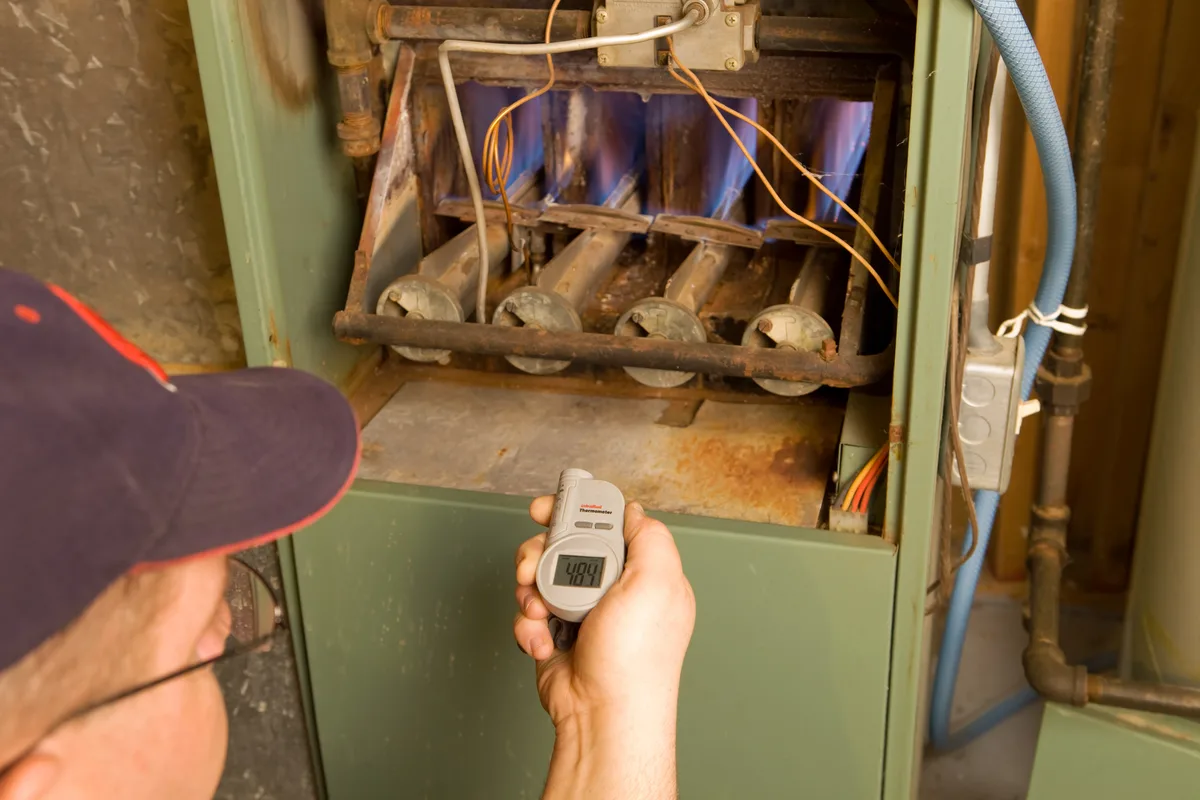
The key measurement is temperature rise: the difference between the air going into the furnace and the air leaving it, compared with the range printed on the rating plate. A rise above that range proves the furnace is short of airflow, and the technician then works out whether the filter, coil, blower or ductwork is responsible. Static pressure in the ducts, blower speed settings, the vent run and each switch in the limit circuit are checked in turn. Finding the overheat is the job; swapping the switch that reported it is not.
- Diagnostic visit: $90–$150, credited toward the repair if you proceed.
- Most furnace repairs, a limit switch among them: $150–$800.
- Blower motor replacement: $500–$1,500, depending on the motor type.
- Duct or return-air changes: quoted in writing after the static pressure readings.
A lockout that comes back is a repair call, not a reset problem. ZK Mechanical's TSSA-licensed technicians handle furnace repair across Burlington, Oakville, Milton and Hamilton, and can replace a failed limit switch once the real cause is fixed. The full code list is in our Carrier furnace error code guide; to book, call (647) 801-1252 or request a visit.