
The problem
There is always one room: an addition, a converted garage, a third-floor loft, a sunroom, or the bedroom over the garage that runs several degrees off the rest of the house. Extending the existing ductwork to reach it usually means a soffit through a finished ceiling or robbing air from rooms that are currently fine. In a house whose return is already marginal, the second option makes the whole system worse and pushes the furnace toward its high limit.
What we did
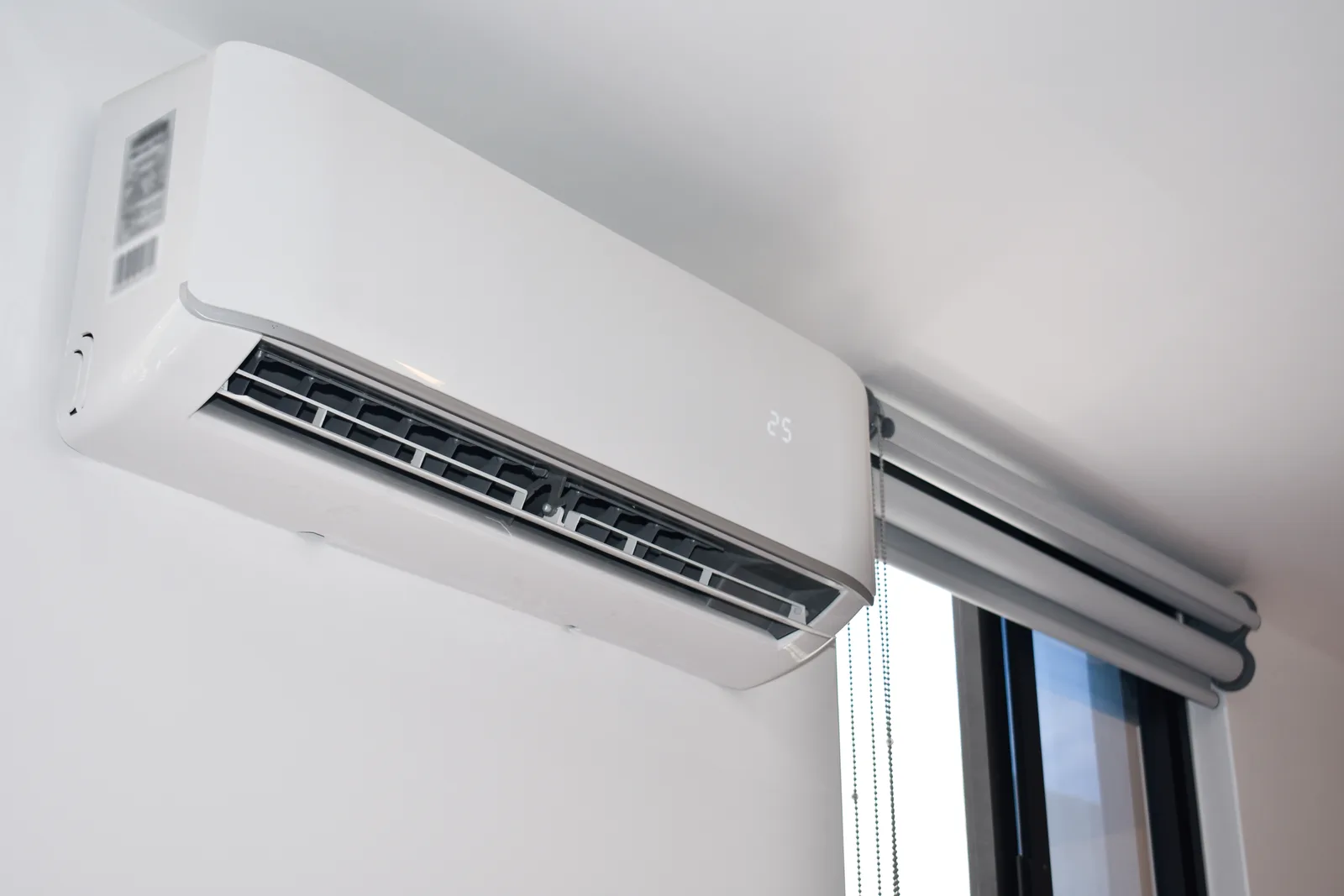
A ductless head handles that room on its own refrigerant circuit, with nothing more invasive than a single hole about 65 mm across through the exterior wall for the line set, the control cable and the condensate drain. The indoor head in the photo is mounted high on the wall for throw across the room and a gravity condensate route to the outside, rather than on whichever wall was easiest to drill — a badly placed head blows across a bed or drains into a wall cavity. The outdoor unit is an inverter, so it modulates against the room's load instead of cycling on and off.
- Ductless indoor air handler
- Outdoor inverter condenser
- Line set through an exterior wall
- Condensate drain
The result
One problem room brought to the same comfort as the rest of the house, heating and cooling both, without touching the existing ductwork. A single zone typically runs $4,000–$7,000 installed, and it is usually the cheapest honest answer when the alternative is re-engineering the whole duct system.
Is this your situation?
This kind of work is worth a conversation if any of these sound familiar:
- One room is consistently several degrees off the rest of the house.
- You have an addition, a converted garage or a finished attic with no practical duct route.
- Extending the existing ductwork would mean a soffit through a finished space.
- The bedroom over the garage is unusable in either January or July.
Questions about this kind of job
Will a single-zone mini-split heat the room in winter, or only cool it?
Most single-zone units sold now are heat pumps, and a cold-climate model keeps heating usefully at −15 °C and below, so a bedroom or addition can be carried year-round on the head alone. A standard model loses much of its heating output near freezing. Check the manufacturer's capacity table at the temperatures the room will actually see, not just the nameplate rating.
Where does the condensate from the indoor head go?
In cooling mode the indoor coil pulls water out of the air, and it drains by gravity through a small tube bundled with the line set to the outside. That is why the head is mounted where the drain can fall continuously to the wall penetration. Where gravity is not possible, a small condensate pump lifts it, and that pump needs cleaning as part of annual service.
How big a head does one room need?
Residential heads come in fixed sizes, commonly 9,000, 12,000 and 18,000 BTU per hour, and the right one comes from the room's heat gain and loss, not just its floor area. A sunroom with a wall of west-facing glass needs far more than a bedroom of the same size. Oversizing causes short cycling and poor dehumidification, exactly as it does with central air.
Does a mini-split need its own electrical circuit?
Yes. The outdoor unit runs on a dedicated circuit from the panel, usually 240 volts, with a disconnect mounted within sight of the unit, and the indoor head is powered from the outdoor unit through the interconnect cable. The new circuit is filed with the Electrical Safety Authority and inspected, so a licensed electrical contractor is part of the job.