
In short
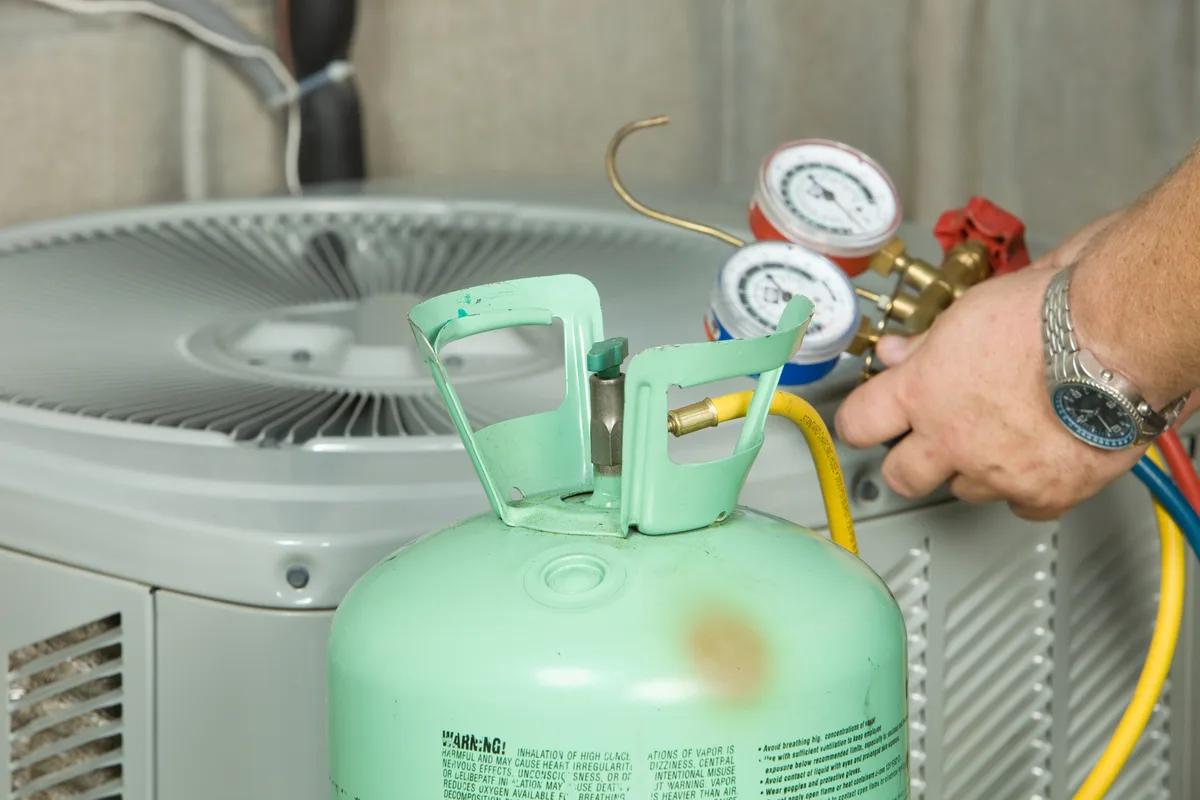
R-410A is the refrigerant in most Ontario air conditioners and heat pumps installed between about 2010 and 2025. It is being phased down because of its high global warming potential, and new equipment now uses R-454B or R-32. Existing R-410A systems stay legal to run and repair, but they cannot be topped up with the newer refrigerants.
R-410A is what circulates in the copper lines of most central air conditioners put in around here over the past fifteen years. If a technician has told you the system is low, or a quote mentions the refrigerant phase-down, this is the substance in question. Related terms are in the glossary index.
What R-410A is and why it replaced R-22
R-410A is a blend of two HFC refrigerants that took over from R-22, which damaged the ozone layer. It runs at considerably higher pressure than R-22, so the equipment, gauges and oil are all different. It is non-flammable and low in toxicity.
Its drawback is a global warming potential of about 2,088, meaning one kilogram released traps as much heat as roughly two tonnes of carbon dioxide. Canada is cutting the supply of HFCs in steps under its federal halocarbon regulations. Manufacturers moved new residential equipment to R-454B and R-32 during 2025, and both are covered in our guide to the A2L refrigerant transition.
What the phase-down means if your system runs on R-410A
Nothing forces you to replace a working R-410A system. The phase-down limits how much new refrigerant enters the country; it does not outlaw the equipment already installed.
- It remains legal to own, run and service an R-410A air conditioner or heat pump
- The refrigerant type and factory charge weight are printed on the outdoor unit's nameplate
- R-410A cannot be mixed with or topped up by R-454B or R-32, because each system is built for the one refrigerant named on its nameplate
- Only a technician holding an Ozone Depletion Prevention (ODP) card may handle refrigerant in Ontario, and releasing it to the air is illegal
- As supply shrinks, expect the price of a large recharge to trend upward
Low on R-410A always means a leak
Refrigerant is not fuel and is not used up. It travels around a sealed loop for the life of the system, so a low charge means some of it escaped. The usual leak points are the indoor evaporator coil, brazed and flared joints on the line set, and the service valves. Symptoms are ice on the copper line, weak cooling and long run times.
A top-up without a leak search means paying for the same refrigerant twice. What goes into the bill is laid out in how much an AC refrigerant recharge costs.
What an R-410A leak repair costs and when to replace instead
- Diagnostic visit with a leak check: $90–$150, credited to the repair when you proceed
- Refrigerant leak repair and recharge: $300–$800+, with finding and sealing the leak costing more than the refrigerant
- Leaking evaporator coil or failed compressor: priced by written quote, since the part and the size of the recharge vary by model
A small leak at a valve or joint on a unit under ten years old is worth fixing. Replace instead when the repair is more than half the cost of a new unit and the system is over 12 years old. On an older system a leaking coil plus a full R-410A recharge often crosses that line, and the new equipment will run on a refrigerant with a longer supply horizon.
ZK Mechanical's technicians find the leak before adding refrigerant and give you the repair price and the replacement price side by side. Book AC repair or describe the symptoms, and have the model number from the outdoor nameplate ready.
Questions people ask about R-410A
Is R-410A banned in Canada?
Not for the equipment you already own. The federal rules reduce the amount of HFC refrigerant that can be brought into the country over time, and manufacturers have moved new residential models to lower-impact refrigerants. Your existing R-410A air conditioner or heat pump can keep running and can be serviced with R-410A for as long as it lasts.
Can an R-410A air conditioner be converted to R-454B or R-32?
No. It is not a field conversion. The compressor, coils, metering device and safety design are specific to the refrigerant, and R-454B and R-32 are mildly flammable, which changes how the equipment is built and installed. Moving to a newer refrigerant means replacing the outdoor unit and the indoor coil together as a matched set.
Is R-410A dangerous if it leaks inside the house?
A typical slow leak is not an emergency. R-410A is non-flammable and low in toxicity, and a residential system holds a limited amount. It is heavier than air and can displace oxygen in a small closed space, and liquid refrigerant causes frostbite on skin. Open windows, do not try to tighten fittings yourself, and have the leak found.