
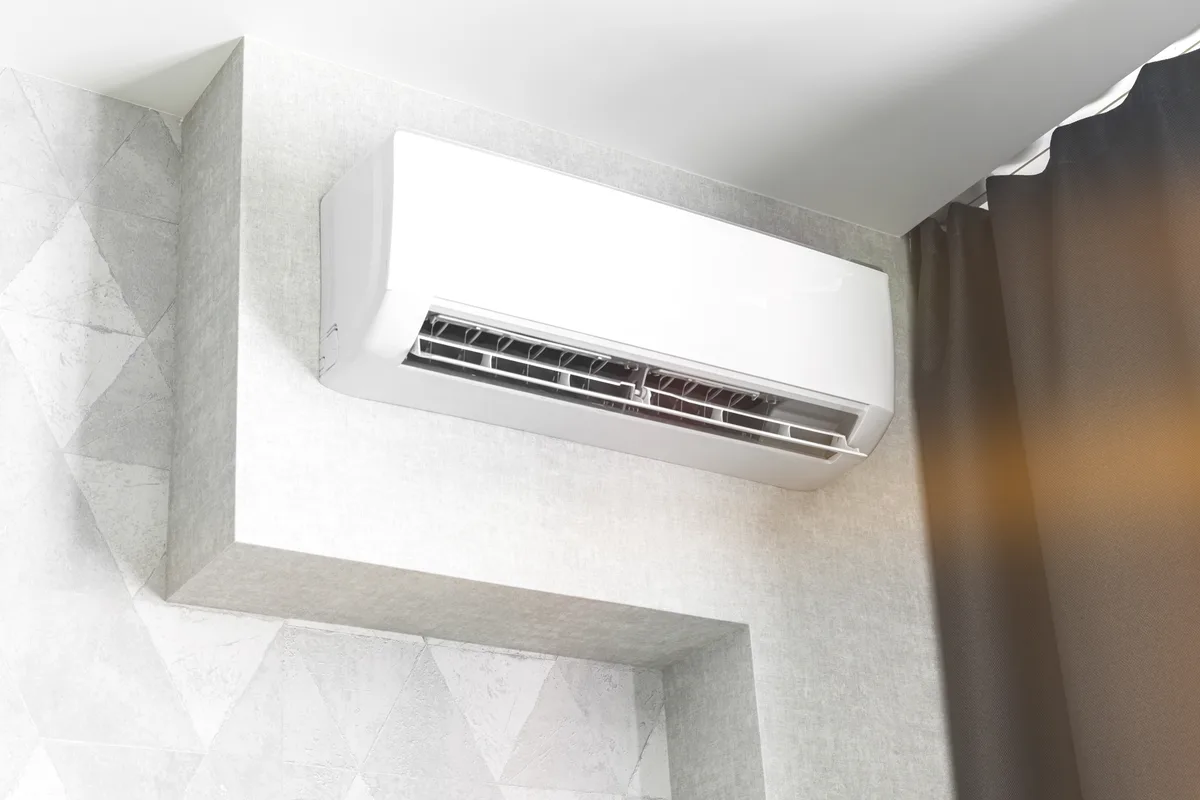
In Mississauga's 1970s townhouses, replacing electric heat usually means cold-climate ductless heat pumps where the unit has baseboards, or a central heat pump on the existing ducts where it has an electric furnace. Either way the electric heat stays in place as backup, the home qualifies for $1,250 per ton up to $7,500 under the Home Renovation Savings Program, and the first step is the condominium corporation's written approval, not a deposit. Natural gas is rarely an option, because many of these complexes were built all-electric with no gas service to the units.
Why So Many 1970s Mississauga Townhouses Have Electric Heat
Townhouse complexes went up quickly across Mississauga in the 1970s, in areas such as Meadowvale, Erin Mills and Clarkson, at a time when electric heat was cheap to build: no furnace room, no chimney, no gas piping. Many were finished with electric baseboards in every room, and others with an electric furnace and a simple duct system. Fifty years later the heat still works, and the bill is the problem.
Not every complex is the same, so confirm before planning. Look for a gas meter bank on the end of each block, check whether neighbours have gas furnaces or water heaters, and read the declaration for what the corporation allows. Where gas was never piped to the units, bringing it in means a new service and new piping across common elements, which is a corporation-level project and not a unit owner's.
Baseboards or Electric Furnace: Which Retrofit Fits
- Baseboards in every room, no ducts: ductless cold-climate heat pumps. One wall-mounted head per main zone, with the baseboards left in place for bedrooms and the coldest nights.
- Electric furnace with ducts in good shape: a central cold-climate heat pump with its coil on the existing furnace. The furnace becomes the air handler and the backup, the walls stay clear, and every room the ducts already reach is heated.
- Electric furnace with undersized ducts: common in this era. A heat pump needs more airflow than the old furnace did, so we measure static pressure first; a ductless head on the top floor can fill the gap where the ducts fall short.
The full scope of the baseboard route is on our baseboard to heat pump conversion page.
Condo Corporation Approval Comes Before the Quote Is Signed
In a townhouse condominium the exterior walls, the roof and usually the yard are common elements, even when the yard is for your exclusive use. An outdoor unit, a wall penetration and a line-set cover all alter them. Under Ontario's Condominium Act, an owner's change to the common elements needs the board's approval and normally an agreement registered on title, often called a section 98 agreement.
Boards typically ask for:
- A drawing showing where the outdoor unit sits and how high it is mounted.
- The route of the line set, the size of the wall penetration and how it will be sealed.
- Line-set cover colour and material, matched to the siding or brick.
- The unit's sound rating, and where the condensate and defrost water drain.
- The contractor's insurance certificate and licence details.
- Confirmation of who maintains and insures the equipment afterwards.
Some corporations already have a standard specification because a neighbour went first, so ask the property manager before paying for drawings. We prepare the submission package as part of the quote. The process is described in do I need condo board approval to replace my AC or heat pump.
A freehold townhouse skips the board but not the City. Mississauga's zoning by-law keeps outdoor heating and cooling equipment out of the front yard and at least 0.61 m from any lot line, which on a narrow row lot leaves the rear yard as the only practical spot.
A Typical Layout for a Two-Storey Townhouse
Free quotes, written pricing.
Most of these units are two storeys over a basement with the bedrooms upstairs. The layout that works:
- Main floor: one head in the living and dining area, which carries the largest share of the heating load.
- Second floor: one head in the hallway or the primary bedroom. Bedrooms with closed doors keep their baseboards on a low setpoint as backup.
- Basement: a third head if it is finished and used daily; otherwise the existing baseboard stays.
- Outdoors: one multi-zone unit or two single-zone units on a wall bracket or stand at the rear, above snow level, with the line sets run in a single cover.
One multi-zone outdoor unit takes less wall space, which boards like. Separate single-zone systems run more efficiently at low load and give redundancy: if one fails, the other still heats. The trade-off is laid out in single-zone vs multi-zone mini-splits.
What the Conversion Costs and What the Rebate Covers
- One zone with a single indoor head: $4,000–$7,000 installed.
- Two zones: $7,500–$11,000 installed.
- Three to four zones: $10,000–$16,000+ installed.
- Cold-climate models: roughly $500–$1,500 more per zone.
- Central ducted cold-climate heat pump on an electric furnace: roughly $6,000–$16,000 installed before rebates.
An electrically heated townhouse sits in the top tier of the Home Renovation Savings Program: $1,250 per ton of cold-climate heat pump capacity, up to $7,500. Row houses and townhomes are eligible housing types; apartment-style condo units are not. A 2-ton system returns $2,500 and a 3-ton system $3,750, the indoor and outdoor units must go in together as a complete new system, and approval comes before installation. Details are on rebates for electrically heated homes.
Panel Capacity, ESA and the Alectra Rate Plan Afterwards
A 1970s townhouse built for baseboards has an electrical service sized for a large heating load, so capacity is usually there, but the panel itself may be original. Each outdoor unit needs its own circuit and disconnect, filed with ESA by a licensed electrical contractor. If the house has aluminum branch wiring from that era, the electrician will want to see it before adding anything.
After the conversion, look at your Alectra Utilities rate plan. Alectra customers can choose Time-of-Use, Tiered or Ultra-Low Overnight pricing. A heat pump spreads its use across the whole day and works hardest on cold evenings, which is when the Ultra-Low Overnight plan charges its highest rate, so that plan only pays off if you also shift a large load, such as an electric vehicle, to the overnight hours.
For most converted townhouses without an electric vehicle, Time-of-Use or Tiered is the safer choice. Compare a full winter month on each plan using the usage data in your Alectra account before switching.
Verdict: The Retrofit We Recommend
- Baseboard unit: two or three cold-climate ductless zones, with every baseboard left on the wall as backup.
- Electric furnace unit with sound ducts: a central cold-climate heat pump on the existing furnace.
- Electric furnace unit with weak ducts: the central heat pump plus one ductless head upstairs.
- In every case: get the board's approval in writing first, apply for the rebate before installation, and do not buy a standard heat pump that is not rated for cold-climate operation.
We survey the unit, size each zone from a heat-loss calculation, and put the board package, the ESA filing and the rebate application in the written quote. See ductless mini-split installation for how the install runs, or contact us with your complex's address and a photo of the electrical panel.
Frequently asked questions
Can I switch my Mississauga townhouse to natural gas instead?
Only if gas already reaches the units. In a complex built all-electric, bringing gas in means a new service, meters and piping across common elements, which the condominium corporation would have to approve and organise for the whole block. For a single owner, a cold-climate heat pump is the practical route, and it is the upgrade the current rebate program pays for.
Will a heat pump heat the whole townhouse without the baseboards?
On most winter days, yes, if each zone is sized from a heat-loss calculation and the heads are placed where air can circulate. Closed bedrooms and the coldest nights are where baseboards still earn their place. Leaving them wired and set a few degrees below the heat pump's setpoint costs nothing until they are needed.
How long does condo board approval take for a heat pump?
It depends on the board's meeting schedule and on whether the corporation has approved one before. A complex with a standard specification can turn a complete package around at its next meeting; a first request can involve the corporation's lawyer and an agreement registered on title. Submit early, and do not order equipment until the approval is in writing.
Do I still qualify for the rebate if I keep my baseboards?
Yes. The Home Renovation Savings Program allows an electrically heated home to keep its existing electric backup, so the baseboards can stay on the wall. The conditions that matter are that the heat pump is an eligible cold-climate model, the indoor and outdoor units are installed together as a new system, and the application is approved before the work is done.