
Quick answer
You need condo board approval to replace an AC or heat pump whenever the work touches common elements: an outdoor unit on a roof, balcony or exterior wall, or new holes for refrigerant lines. Section 98 of Ontario's Condominium Act, 1998 requires board approval and a written agreement registered on title. A like-for-like swap inside your suite usually needs management's sign-off and contractor paperwork instead.
Whether you need condo board approval to replace your AC or heat pump comes down to where the equipment sits and who owns it. Your declaration draws the line between your unit and the common elements, and that line is not always where owners expect. A townhouse yard, a balcony slab and the outside face of a wall are usually common elements, even when only you use them. Read the declaration and the rules first, then call management before you call a contractor.
What section 98 of the Condominium Act requires
Section 98 of the Condominium Act, 1998 covers an owner's addition, alteration or improvement to the common elements. The board has to approve the change by resolution, and the owner and the corporation sign an agreement setting out who pays, who owns the equipment and who maintains, repairs and insures it. That agreement is registered against the title to your unit, so it binds the next owner too. For HVAC work the triggers are physical:
- A new or relocated outdoor unit on a roof, balcony, terrace, exterior wall or shared yard.
- New penetrations through an exterior wall, a floor slab or a fire-rated wall for a line set, drain or wiring.
- A change of system type, such as adding a ductless heat pump where the building was designed for fan coils.
- Tying into building services: the condenser water loop, a shared electrical riser or a common drain stack.
Replacing an existing outdoor unit in the same spot with one of the same size is often covered by an agreement already on file or by the corporation's rules, but often is not always. Ask management for the answer in writing.
Condo townhouses versus high-rise suites
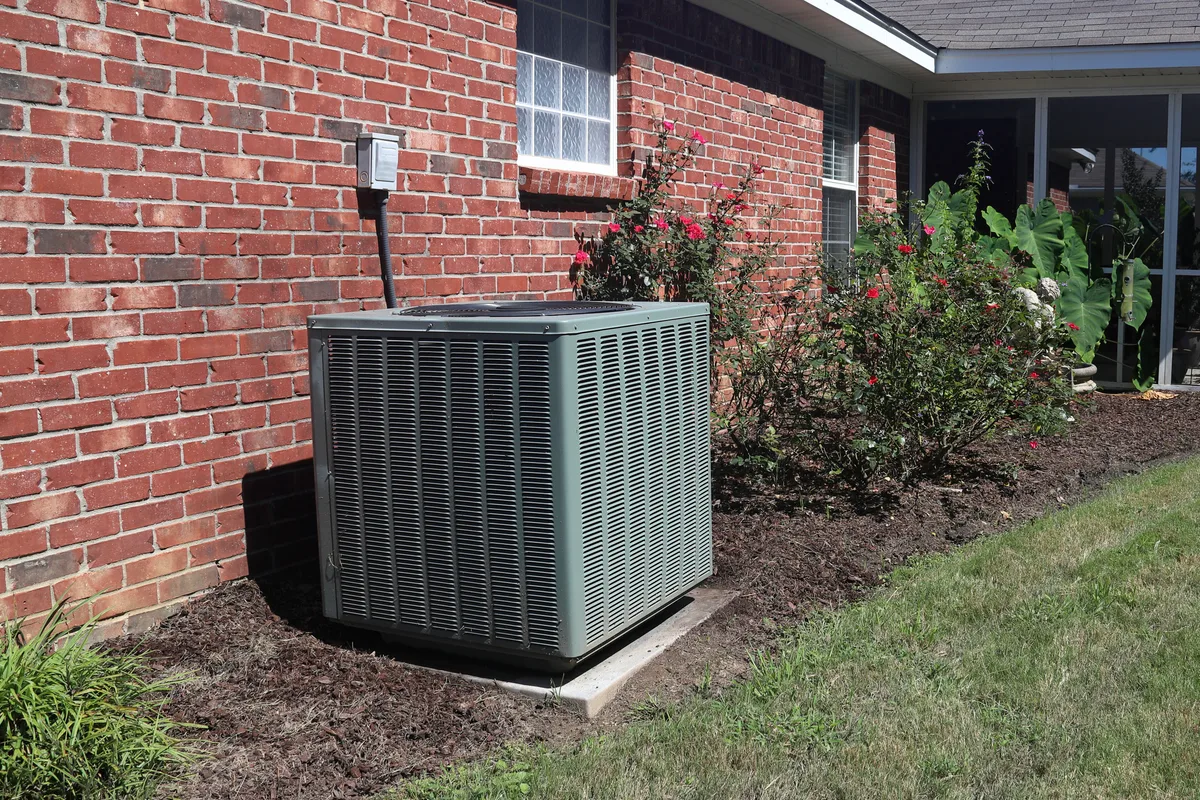
Condo townhouses usually have a conventional furnace and a split air conditioner or heat pump, with the condenser in an exclusive-use yard or on a pad beside the unit. The equipment tends to be the owner's; the ground it sits on and the wall the lines pass through belong to the corporation. Boards in townhouse complexes care about location, sound, the look of the line-set cover and whether a larger heat pump cabinet still fits the pad.
High-rise suites are different machines. Many have a fan coil fed by the building's chilled and hot water, or a water-source heat pump in a closet connected to the building's condenser loop. Nothing sits outdoors, so section 98 is less often the issue, but the work touches building risers and needs a booked water shut-down if the isolation valves do not hold. Who is responsible for a condo fan coil unit covers the ownership split, and the fan coil replacement guide covers the retrofit itself.
What condo boards and property managers ask for
- The equipment specification sheet: model, capacity, dimensions, electrical draw and refrigerant type.
- The sound rating in decibels for any outdoor unit, and its exact location on a drawing or a marked-up photo.
- The contractor's licensing: TSSA registration for gas work and ODP certification for refrigerant work.
- A certificate of liability insurance, often naming the condominium corporation, and proof of WSIB coverage.
- For high-rises: elevator booking, corridor protection, working hours, and a request for riser or loop shut-down with the notice the building requires.
- How penetrations will be sealed and fire-stopped, and who repairs the exterior finish.
- Confirmation of the ESA notification where new electrical work is involved.
What a condo AC or heat pump replacement costs, and how long approval takes
Approval time depends on the board's meeting schedule, and many boards meet only once a month, so apply before the season you need the equipment for. A failed air conditioner in July with no approval on file is the expensive version of this job. Installed prices from our published bands:
- Central air conditioner on existing ducts, the typical condo townhouse job: $3,500–$7,500 installed.
- Single-zone ductless heat pump: $4,000–$7,000 installed.
- In-suite fan coil or water-source heat pump: priced by written quote, because cabinet size, riser valves and building rules vary by tower.
The legal cost of preparing and registering a section 98 agreement is set by the corporation's lawyer and is commonly passed to the owner. Ask management what it is before you apply.
ZK Mechanical prepares the package a board asks for: specification sheets, sound data, licence and insurance documents, and a scope that states how the building is protected. We take condo work across our service area, from Burlington and Oakville through Mississauga to Etobicoke. Start with the condo HVAC page, or call (647) 801-1252 or send your building's requirements with the model of the unit you have now.