
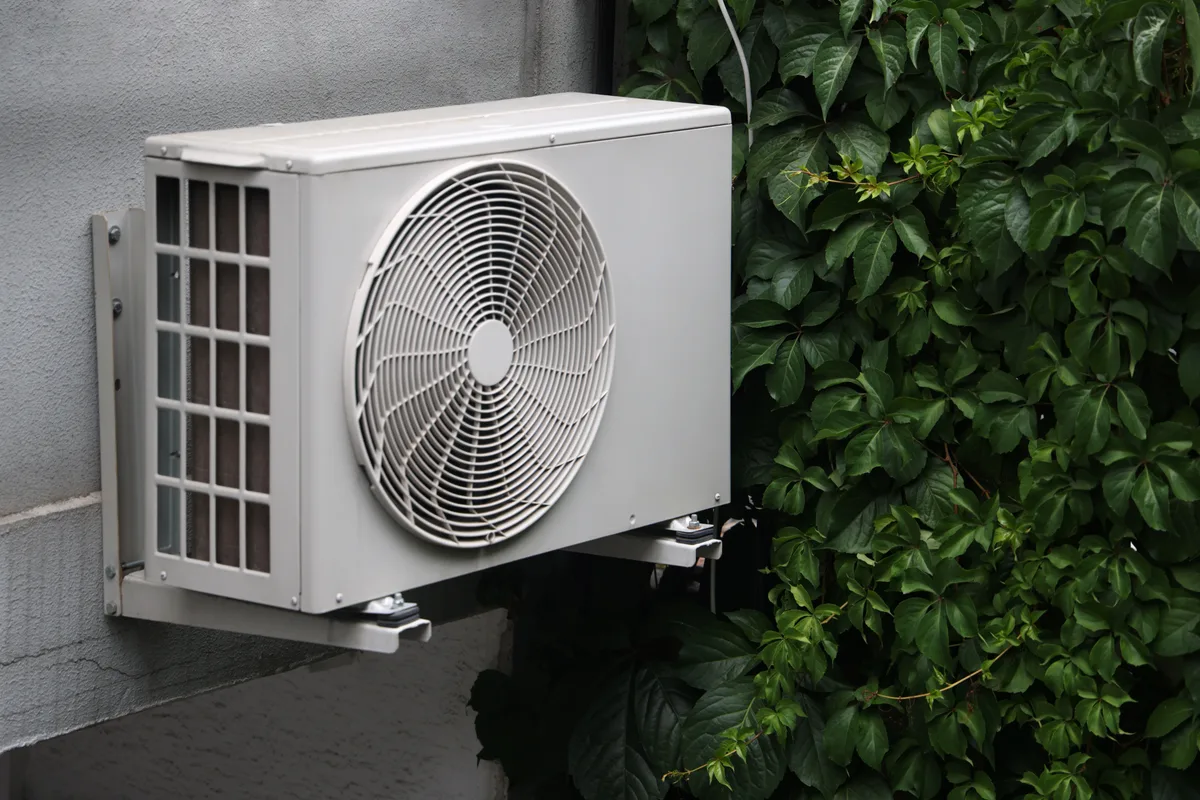
Electric furnace vs heat pump is a question of how much heat you get from each kilowatt-hour: an electric furnace returns exactly one unit of heat per unit of electricity, and a cold-climate heat pump returns roughly 2 to 3.5 depending on the outdoor temperature. For a ducted Ontario house you plan to keep, the heat pump wins on running cost and adds central cooling, and the electric elements stay in the system as backup. The electric furnace wins only on purchase price and simplicity.
How Much Heat Each One Makes From a Kilowatt-Hour
An electric furnace has a coefficient of performance of 1 in every weather. Its resistance elements turn all the electricity they draw into heat, which sounds efficient until you compare it with a machine that moves heat instead of making it. A cold-climate heat pump delivers about 3.5 units of heat per unit of electricity on a mild day near 8 °C, about 2 around -15 °C, and less than that in deep cold.
Over a southern Ontario winter that averages out to two to three times the heat for the same electricity. Take a house that needs 18,000 kWh of heat in a season: the electric furnace buys all 18,000 kWh, and a heat pump averaging 2.5 buys about 7,200. What that is worth in dollars depends on your rate plan with Burlington Hydro, Alectra, Hydro One or whichever utility bills you, so we work it out from your own bills rather than quote an average. The COP glossary entry explains how the rating is measured.
What an Electric Furnace Does to Your Electrical Panel
A residential electric furnace draws 15 to 25 kW at full output, which is roughly 60 to 105 amps at 240 volts. It is usually the largest load in the house and is fed by two or more large breakers. A heat pump outdoor unit draws a fraction of that on a single two-pole breaker sized from its nameplate.
That matters in two ways. First, a house built around an electric furnace normally has the service capacity for a heat pump already, because the furnace circuits are in place. Second, the backup heat behind a heat pump can often be smaller than the old furnace and staged on only when needed, which frees capacity for an EV charger or an induction range. The electrician confirms it with a load calculation and the work goes under an ESA permit; our guide to panel upgrades for heat pumps covers when a service change is and is not needed.
The Retrofit Path: What Changes and What Stays
The ducts stay. A heat pump retrofit adds an outdoor unit, a refrigerant line set and an indoor coil to the same supply and return ductwork, and keeps electric elements as backup heat. There are two ways to build it, and which one applies depends on the age of the furnace and on what the heat pump manufacturer allows.
- Add a coil to the existing electric furnace. This works when the furnace is in good shape, its blower can move the airflow the heat pump needs, and the match is approved by the manufacturer. If the coil sits after the elements in the airstream, the controls must stop the compressor and the elements running together, so the elements act as a changeover backup only.
- Replace the electric furnace with a matched air handler. The coil sits ahead of a built-in electric heat kit, so the heat pump and the backup can run together during defrost and on the coldest nights. Most cold-climate inverter systems are designed around this arrangement, and the variable-speed blower is quieter than an older furnace fan.
- Either way, the thermostat changes. It has to stage the backup heat, lock it out above a set outdoor temperature, and bring it on during defrost so the supply air stays warm.
Our rule at the quote: if the electric furnace is under about 15 years old and passes an element and blower check, we price both paths. If it is older, we price the matched air handler, because a new outdoor unit tied to a tired blower is a repair call waiting to happen.
Comfort: How the Two Feel in January
An electric furnace heats in short, hot bursts. A heat pump runs longer at a lower supply temperature, so rooms hold steadier and the system is rarely off for long. The air at the register feels warm rather than hot, which surprises people for the first week and is then forgotten.
Free quotes, written pricing.
Two things are different outdoors. The heat pump has a fan and compressor outside the house, and in freezing, damp weather it reverses briefly to melt frost off its coil, which shows up as a puff of steam. A cold-climate model keeps heating well below -20 °C at reduced capacity, with the elements filling the gap; a standard model leans on backup far sooner, which is the subject of our cold-climate vs standard heat pump comparison.
The other comfort difference arrives in July. A heat pump is a central air conditioner in summer, so an electrically heated house with no cooling, or with an ageing separate AC, gets both jobs done by one machine.
What Each Costs to Install and What the Rebate Covers
- Electric furnace, like for like: the lowest installed cost of any central heating appliance, quoted in writing after we see the wiring and plenum. No Ontario program pays a rebate on it.
- Ducted cold-climate heat pump: $6,000–$16,000 installed before rebates, depending on capacity, brand tier and the electrical work.
- Home Renovation Savings Program, electrically heated home: $1,250 per ton of heat pump capacity, up to $7,500. A 3-ton system works out to $3,750.
- Same program, gas-heated home: $500 per ton, up to $2,000, which is why the electric-heat tier is called the larger incentive.
The program lets an electrically heated home keep its existing electric backup, so the furnace does not have to leave for the rebate to apply. The installer has to be on the program's participating-contractor list and approval comes before the install, not after. Current amounts and the income-tested alternative are on our page for rebates for electrically heated homes.
When an Electric Furnace Is Still the Right Call
An electric furnace on its own makes sense when the heating load is small, the timeline is short, or the house is about to change hands. It is also a sound stopgap that does not close the door on a heat pump later.
- The furnace died in a cold snap and the house needs heat this week. A like-for-like electric furnace goes in quickly, the home is still electrically heated afterward, and a heat pump can be added to it under the rebate rules later.
- The space is small and well insulated, such as a secondary suite on its own ducts, where the heating hours are too few for a heat pump to pay back.
- You expect to sell within a couple of years and the next owner will make the long-term decision.
Electric furnaces in this area sit mostly in two kinds of property: 1970s townhouses and semis that were built all-electric, and rural lots in Kilbride, Campbellville, rural Caledon and rural Flamborough where the gas main does not reach and Hydro One sends the bill. Both are exactly where a heat pump saves the most, because every kilowatt-hour it avoids was being bought at resistance-heat efficiency.
Verdict: Heat Pump for the House You Are Keeping
Choose the heat pump with electric backup. It cuts heating electricity by more than half over a season, it cools the house in summer, and the largest heating rebate in the province applies to exactly this conversion.
- Choose a heat pump with electric backup if you will own the house for five years or more, the ducts are in fair condition, and you want air conditioning.
- Choose a like-for-like electric furnace if the load is small, the sale is near, or you need heat immediately and will add the heat pump in a planned season.
- In both cases, insist on a heat-loss calculation, a cold-climate model sized to it, and a written plan for which backup stays and how the thermostat stages it.
We size, install and commission ducted heat pumps across Burlington, Oakville, Milton, Hamilton and Mississauga, and we handle the rebate paperwork. See what is involved on our heat pump installation page, or request a written quote and send us a recent winter hydro bill so the comparison uses your numbers.
Frequently asked questions
Can I keep my electric furnace as the backup when I add a heat pump?
Often, yes. If the furnace is sound, its blower can deliver the airflow the heat pump needs, and the manufacturer approves the pairing, the elements stay as backup heat. On older furnaces, or with inverter heat pumps that require their own air handler, replacing the furnace with a matched air handler and a smaller electric heat kit is the cleaner job.
Will a heat pump heat my house in an Ontario cold snap without backup?
A correctly sized cold-climate heat pump carries most of the winter by itself, but a ducted system should still have backup heat. Capacity falls as the temperature drops, defrost cycles interrupt heating for a few minutes, and any machine can fail in January. Electric elements cover all three cases and cost little to include.
Is there a rebate for replacing an electric furnace with a new electric furnace?
No. A replacement electric furnace is not a rebated measure in any current Ontario program, and neither are baseboard heaters. The incentive attaches to the heat pump. The house stays classed as electrically heated after a like-for-like furnace swap, so the heat pump rebate remains available if you add one later and no heat pump is already installed.
Do I need a 200-amp panel to switch from an electric furnace to a heat pump?
Not necessarily. The heat pump itself draws far less than the furnace it supplements, and the backup heat can be staged or downsized. What decides it is a load calculation that adds up the heat pump, the backup kit and everything else in the house. An electrician does that calculation before the quote is final.