
Quick answer
A gas meter that hisses for a second or two as an appliance fires is usually the regulator beside it adjusting, which is normal. A hiss that does not stop, or any rotten-egg smell, is a leak: move away, then call the Enbridge Gas emergency line at 1-866-763-5427 or 911 from a safe distance. The meter and regulator belong to Enbridge, not to you.
Your gas meter is hissing for one of three reasons: the pressure regulator beside it is doing its job, ice has sealed the regulator's vent, or gas is escaping. The first is harmless and lasts a moment. The other two are calls to Enbridge, and the way to tell them apart is duration and smell: a continuous hiss or any rotten-egg odour means you step back and phone from somewhere else.
The sound a gas regulator makes when nothing is wrong
The round, saucer-shaped device on the pipe beside the meter is the pressure regulator. It drops the pressure in the street main to the low pressure your appliances use, and it has a small screened vent, usually pointing down, that lets its diaphragm breathe. When the furnace and water heater fire together you may hear a soft hiss or hum of gas moving through it, and a short puff at the vent as the diaphragm shifts.
Normal sounds are brief, quiet and tied to an appliance starting or stopping. They come with no smell. If you have to stand beside the meter to hear it and it stops when the furnace does, leave it alone.
Signs the hiss at the meter is a gas leak
- The hiss is steady and carries on with every appliance off.
- You smell rotten eggs or sulphur. Natural gas has no odour of its own; the distributor adds that smell on purpose.
- You can hear it from several steps away, or it is getting louder.
- Dirt, snow or water is being blown around at a fitting, or a puddle near the riser is bubbling.
- A patch of dead grass or shrubs beside the meter in an otherwise healthy bed.
With any one of those, do not investigate. Walk away upwind, and do not start a car, use a lighter or ring a doorbell near the meter. Call Enbridge Gas at 1-866-763-5427 or 911 once you are well clear, and keep neighbours back until the crew arrives. If the smell is indoors as well, the evacuation steps are in what to do if you smell gas.
Ice or snow on the regulator after freezing rain
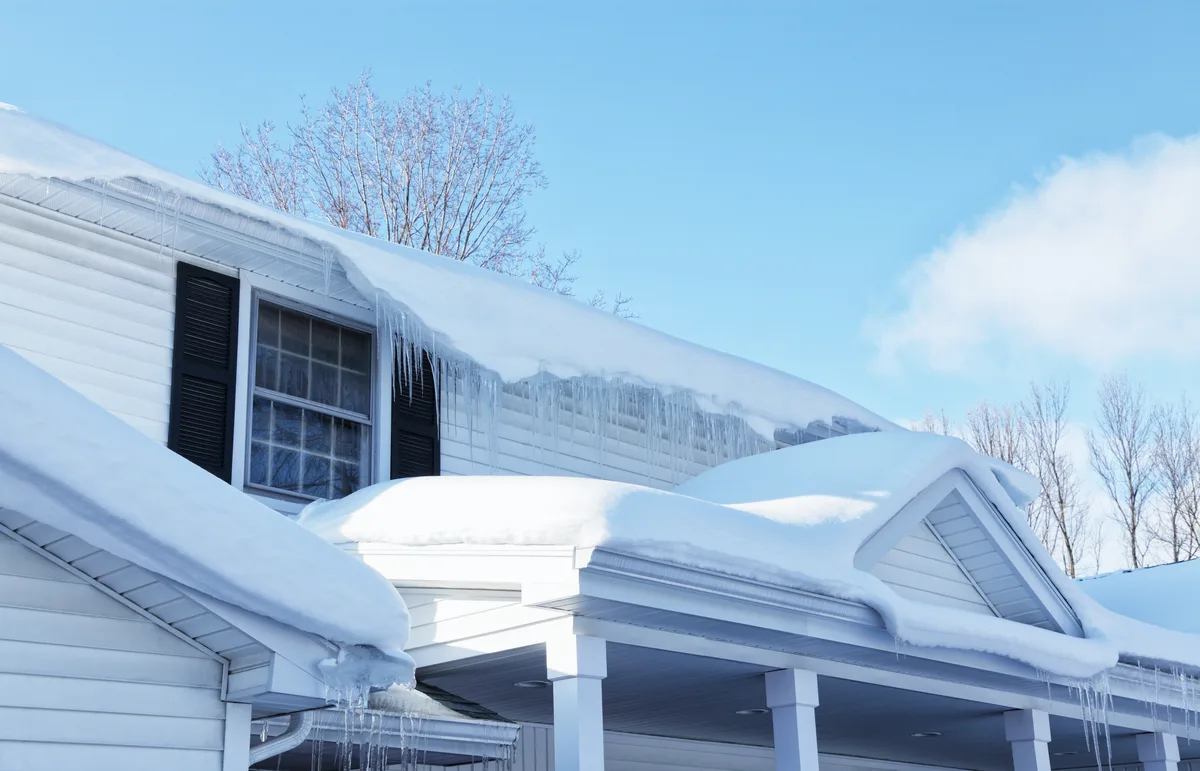
An iced-over regulator vent is the winter version of this call. Freezing rain, meltwater dripping from the eaves, or snow thrown by a shovel or blower can seal the vent opening, and a regulator that cannot breathe cannot control pressure properly. Appliances may flutter or shut down, and in the worst case they see more pressure than they are built for.
- Brush snow off the meter, regulator and piping gently by hand, with a broom or with a car brush.
- Never chip at ice, kick the meter, or use a shovel, hammer or ice pick on it.
- Never pour hot water over it. The water refreezes in the vent and across the dial, and the next layer is thicker.
- If the regulator is encased in ice that will not come away gently, call Enbridge and let its crew clear it.
Prevention is a downspout and a shovel habit. Fix the dripping eavestrough above the meter, keep a path open to it through the winter, and pile snow away from the wall where it sits. The furnace intake and exhaust pipes need the same clear space, and they are often on the same wall.
Who fixes what: Enbridge versus a gas contractor
The meter, the regulator and the pipe feeding them belong to Enbridge, and only Enbridge works on them. A homeowner or a contractor who loosens a meter fitting is tampering with utility equipment. A noise or leak at the meter set is therefore always a utility call first.
A licensed gas contractor works on everything downstream of the meter: the house piping, the shut-off valves, appliance connectors, and the furnace, water heater, fireplace and range themselves. If Enbridge traces the leak to your side, it shuts off and tags that section, and the repair is yours to arrange. The route from tag to relight is laid out in how to get your gas turned back on.
A hiss indoors is a different question. At a furnace or water heater, a faint hiss while the burner is lit is gas flowing through the valve. A hiss with the burner off, or with a smell, is a leak on your piping and a job for gas leak repair after the utility has made it safe.
What a repair on your side of the meter costs
- Diagnostic visit by a licensed gas technician: $90–$150, applied to the repair when you approve it.
- Furnace gas valve replacement, when the leak is traced to the valve: $500–$1,000.
- Re-sealing or replacing a section of house piping: quoted in writing on site, since length, pipe size and access decide the price, and always followed by a pressure test.
ZK Mechanical's TSSA-licensed gas technicians handle the house side of the meter across Burlington, Oakville, Milton, Hamilton, Mississauga and Brampton. Once Enbridge has attended, call the 24/7 emergency service line at (647) 801-1252 or request a gas piping repair. The emergency answers hub collects the other gas and no-heat questions.