
Quick answer
A carbon monoxide detector chirping once every 30 to 60 seconds is reporting a low battery or the end of its 7-to-10-year life, not carbon monoxide. Four loud beeps, a pause, then four more means CO has been detected: get everyone outside and call 911. Check the date on the back; an expired alarm has to be replaced, not silenced.
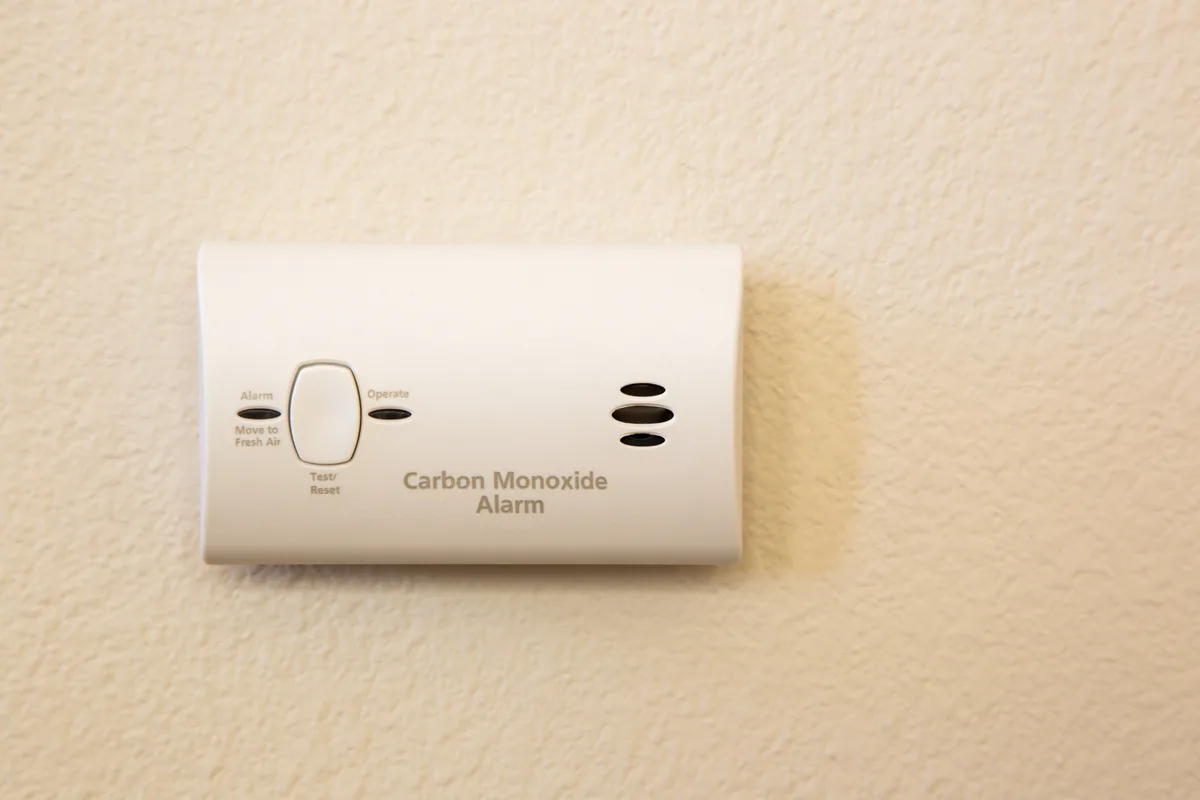
If your carbon monoxide detector is chirping, count the sounds before you do anything else. The pattern tells you which of two very different things is happening, and the legend printed on the back of the alarm confirms it. One pattern is a maintenance reminder. The other means leave the house.
One chirp every 30 to 60 seconds: low battery or end of life
A single short chirp, repeated about once a minute, is the alarm reporting on itself. On a battery or battery-backup model it most often means the battery is low. Chirping tends to start in the middle of the night, because a weak battery sags further as the house cools.
If a new battery does not stop it, the alarm has reached the end of its life. The sensor inside a CO alarm wears out, and manufacturers build in a timer that starts the chirp after 7 to 10 years, depending on the model. Some units show END or ERR on the display instead, and the exact pattern varies by brand, so the label on the alarm is the authority. The hush button quiets an end-of-life chirp only for a short while, and no battery will reset it.
Look for the date on the back or side: either a manufacture date or a "replace by" date. An alarm past that date should be replaced even if it has never made a sound. A hardwired alarm chirps for the same two reasons plus one more, a loose connector or a tripped breaker that leaves it running on its backup battery until that runs down.
Four beeps and a pause, repeating: carbon monoxide detected
Four loud beeps, a pause of a few seconds, then four more is the CO alarm signal. Treat it as real every time. Carbon monoxide has no smell and no colour, and the early symptoms, headache, nausea and dizziness, feel like the flu.
- Get everyone, pets included, outside to fresh air. Do not stop to open windows or hunt for the source.
- Call 911 from outside. The fire department measures the air and tells you when it is safe to go back in.
- Tell the dispatcher if anyone has a headache, is dizzy or has been sick.
- Leave the furnace, water heater, fireplace and every other fuel-burning appliance off until a licensed gas technician has found the cause.
What happens after the fire department leaves is covered in what to do if a carbon monoxide alarm goes off.
Ontario requires working CO alarms, so replace an expired one the same day
The Ontario Fire Code requires working CO alarms in any home with a fuel-burning appliance, a fireplace or an attached garage, a rule that came out of the Hawkins-Gignac Act. Alarms must be installed outside each sleeping area, and since January 1, 2026, on every storey of the home, including storeys with no bedrooms. An alarm chirping at end of life is not a working alarm.
That makes replacement a same-day errand, not a job for the weekend. Pulling the battery to stop the noise leaves the house unprotected and out of compliance. In a rental, the landlord is responsible for supplying and replacing the alarms, so a tenant should report a chirping unit in writing and keep it in place. The full requirements are in Ontario's carbon monoxide alarm law.
Battery, plug-in, hardwired or interconnected: choosing the replacement
- Battery-only: goes anywhere with no wiring. Models with a sealed 10-year battery remove the low-battery chirp for the life of the alarm.
- Plug-in with battery backup: simple to install, but it sits at outlet height where furniture can block it and a child can unplug it.
- Hardwired with battery backup: fed from a house circuit and standard in newer homes. Replace like for like, and stay with the same brand if the existing connector is being reused.
- Interconnected: when one sounds, they all sound, linked by wire or by radio. In a two-storey house this is what wakes someone upstairs when the problem is in the basement.
- Combination smoke and CO: one device on the ceiling with a distinct pattern or voice for each hazard. The whole unit expires on one date, which can be sooner than a smoke-only alarm.
Whichever type you buy, look for a Canadian certification mark on the package, write the install date on the alarm with a marker and press the test button once a month.
When the display, not the chirp, points to an appliance problem
A chirp is never caused by carbon monoxide, but a number on the display is another matter. If a digital alarm shows a reading above zero, or its peak-level memory holds one, something in the house has been producing CO even though it was not enough to trigger the alarm. Book an inspection before the next cold night; what level of carbon monoxide is dangerous explains the numbers.
ZK Mechanical supplies and installs carbon monoxide detectors, including hardwired and interconnected replacements, and tests furnaces, boilers, water heaters and fireplaces for CO with a combustion analyzer. For a home in Burlington, Oakville, Hamilton or Mississauga, call (647) 801-1252 or request a visit.