
Quick answer
A basement is humid in summer because warm, moist outdoor air cools against foundation walls and a slab that stay near ground temperature, and cooler air holds less water, so relative humidity jumps. Aim for 30–50% and act above 60%, where mould starts. Close the windows, turn the HRV down, and add a dehumidifier if a hygrometer still reads over 60%.
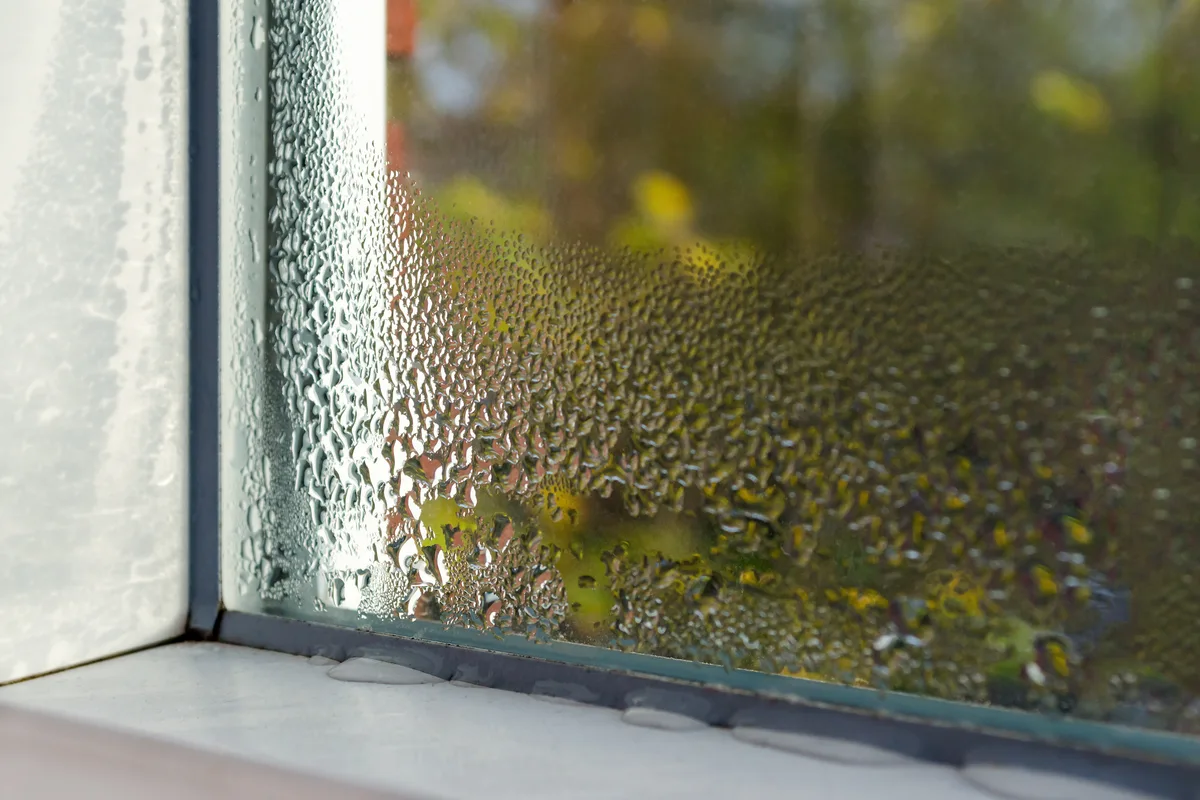
Your basement is so humid in summer because it is the coldest part of the house at the wettest time of year. Outdoor air at 28 °C and 70% relative humidity has a dew point near 22 °C. Foundation walls and the slab sit several degrees cooler than that for most of the season, because the soil behind them is cool, so that air leaves water on the concrete the way it does on a cold glass. In most houses the moisture arrives in the air, not through the wall.
What humidity level is too high for a basement?
Anything above 60% relative humidity for more than a few days is too high. The healthy range is 30 to 50%, and 60% is the point where mould can start on drywall paper, cardboard boxes, carpet backing and the dust on the joists. A hardware-store hygrometer gives you the number.
To tell air moisture from wall moisture, tape a square of clear plastic sheet tightly to the concrete and leave it for two days. Droplets on the room side mean humid air is condensing on a cold wall. Damp under the plastic means water is coming through the concrete, which is a drainage problem that no dehumidifier setting will cure.
Why the basement stays damp even with the air conditioner running
- Open basement windows. On a muggy day the outdoor air you let in carries more water than the basement air it replaces. Keep them shut from June to September.
- An HRV running on high. A heat recovery ventilator swaps indoor air for outdoor air and recovers heat, not moisture. If its dehumidistat is still on a winter number it runs flat out trying to dry the house with wet air; the settings are in how to run an HRV in summer.
- An oversized air conditioner that short cycles. Water only leaves the house once the coil has been cold long enough for it to run down into the drain pan, which takes several minutes of steady running. A unit that satisfies the thermostat in six or seven minutes cools the air and leaves the water in it.
- Too few registers downstairs. Many basements have two or three supply outlets and no return grille, so the dry air the system makes never mixes with basement air, and the thermostat upstairs cannot sense it.
- Moisture made indoors. A dryer vented into the room, laundry on a rack, a basement shower with no exhaust fan and an open sump pit each add water faster than a cool room can shed it.
The house itself sets the baseline. Along the Lake Ontario shore, from Stoney Creek through Burlington and Oakville, summer air is humid day and night, so opening windows after sunset does not dry a basement. A 1950s or 60s bungalow has bare, uninsulated concrete walls and few basement outlets. A new subdivision house in Milton or north Oakville is airtight, and its foundation gives off construction moisture as the concrete cures over the first year or two.
Seven checks to do yourself before you call anyone
- Close every basement window and keep them closed for a week while you watch the hygrometer.
- Set the HRV to low or intermittent and turn its dehumidistat dial to OFF for the summer.
- Set the thermostat fan to Auto, not On. A blower that runs between cooling cycles evaporates water off the wet coil and sends it back into the house.
- Open every basement supply register and change the furnace filter; a plugged filter cuts the airflow that carries moisture to the coil.
- Confirm the dryer hose is attached at both ends.
- Fit a sealed, gasketed lid on the sump pit. An open pit is a bucket of water evaporating into the room all day.
- Walk the outside after a rain. Downspouts should discharge a couple of metres from the wall, and the soil should slope away from the foundation, not toward it.
Signs a humid basement needs a technician or a drainage contractor
- The hygrometer stays above 60% after a week with the windows shut and the air conditioner running: the house needs dedicated dehumidification.
- Water is beading or dripping on the supply ducts. That is the same problem showing up on metal, covered in why ducts sweat.
- The air conditioner starts and stops in under ten minutes on a hot afternoon, which points to sizing or airflow rather than settings.
- You see mould on drywall, baseboards or stored items, or the musty smell returns a day after cleaning.
- There is standing water, a tide line at the base of a wall after rain, or damp under the plastic test. Call a foundation or drainage contractor first.
Portable dehumidifier or a ducted whole-home unit?
A portable unit is the right first step for one damp room; a ducted whole-home dehumidifier is the fix when the whole basement, or the whole house, sits above 60%.
- Portable dehumidifier: plugs into a wall outlet and treats the room it sits in. The bucket fills in a day or less unless you run a hose to the floor drain, and the unit adds noise and heat.
- Ducted whole-home dehumidifier: $1,500–$3,000 installed. It connects to the ductwork beside the furnace, pulls air from every floor, and drains by gravity to the floor drain or through a small condensate pump, so there is no bucket to forget. The target number and sizing are in what to set a basement dehumidifier to.
ZK Mechanical measures humidity on each floor, times the air conditioner's cycles and checks basement airflow, then tells you whether the answer is a settings change, added registers or a whole-home dehumidifier. The price is in writing before any work starts. Call (647) 801-1252 or request a visit, and browse the other air quality and duct answers for related problems.