
Quick answer
A furnace that stopped working after you changed the filter usually has a blower door that is not fully seated, which leaves the door safety switch open and cuts power to the control board. Next most likely: the service switch was left off, the new filter is too restrictive or backwards, or a small tube was knocked loose. Reseat the door first.
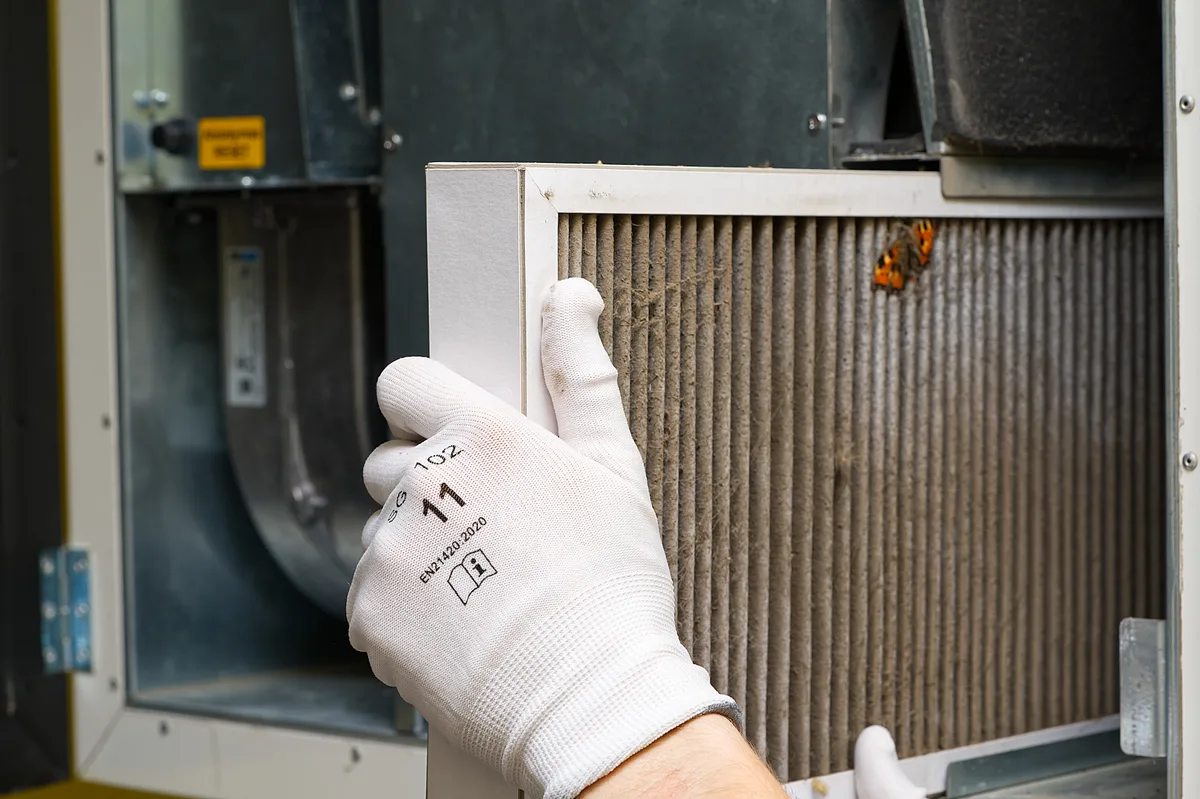
If your furnace stopped working after you changed the filter, the filter is rarely to blame and the furnace is rarely broken. Something was moved, switched or left open during the two minutes the job took. Retrace those two minutes in the order below, and most furnaces are running again before the house has cooled.
A blower door that is not seated cuts all power to the furnace
The door safety switch is the first thing to check. It is a spring-loaded plunger at the edge of the blower compartment, held in by the lower door. When the door comes off, the switch cuts power to the control board so the blower cannot start with the compartment open. If the door goes back on crooked, hooked on one tab or a few millimetres proud, the switch stays open.
The sign is a furnace that is completely dead: no board light in the sight glass, no inducer sound, and often a blank thermostat, because many thermostats take their power from the furnace. Lift the door off, set its tabs into the slots and press it flat until it sits flush and you feel the switch click. On furnaces with two doors, check that the upper one is seated as well, since it often holds the lower door in place.
The service switch, the plastic wrap and the old filter
- The furnace service switch. Turning it off before a filter change is good practice. It looks like a light switch on or beside the furnace, and it is easy to leave off or to bump with an elbow on the way out.
- Plastic wrap left on the new filter. Pleated filters are often sold shrink-wrapped, and a wrapped filter blocks the return air completely.
- Two filters in the system. If the old one was pushed back in behind the new one, or a second filter sits in a return grille upstairs, the furnace is breathing through both.
- The thermostat. If the door switch dropped power to a thermostat with no batteries, it may have restarted in Off or lost its schedule.
The wrong filter: backwards, the wrong size or too restrictive
A filter problem lets the furnace start and then stops it a few minutes later. The burners light, the air at the vents is hot and weak, and the burners cut out while the blower keeps running. That is the high-limit switch opening because too little air is crossing the heat exchanger.
- A 1-inch MERV 13 filter. Dense pleats in a 1-inch frame have little surface area and a high pressure drop, and many residential blowers cannot pull enough air through them. A MERV 8 to 11 suits most 1-inch slots; whether a furnace filter can be too restrictive explains the limits.
- Installed backwards. The arrow on the frame points toward the furnace, in the direction of airflow. The wire or cardboard backing belongs on the downstream side; reversed, the pleats bow and can collapse.
- The wrong size. A filter that is too small leaves a gap, and a thin one can be pulled out of its track into the blower wheel, where it jams or shreds. The filter sizes guide shows how to read the dimensions printed on the old frame.
After several limit trips in a row, many control boards lock the furnace out. Once the right filter is in, turn the service switch off for 30 seconds and back on to clear the lockout, and do that only once.
A condensate hose or pressure-switch tube knocked loose
On a high-efficiency furnace the filter slot can sit close to the condensate trap, the drain hose and the thin rubber tube that runs to the pressure switch. A sleeve or a filter corner can pull one off. A loose pressure-switch tube means the inducer fan runs and the burners never light. A loose drain hose means water on the floor a few hours later.
Look with a flashlight before touching anything. If a hose has clearly slipped off a fitting right beside it, pushing it back on is reasonable. If you are not certain where a tube belongs, leave it and take a photo: a pressure-switch tube on the wrong port defeats a safety device.
Call for furnace service if
- The furnace is still dead with the door seated, the switch on and the breaker on.
- The burners keep cutting out with a correct, clean filter in place. The limit switch may have been weakened by months of running against the old clogged filter.
- You hear scraping or thumping from the blower, which suggests a filter or debris in the wheel. Switch the furnace off.
- Water is collecting under the furnace, or a tube is loose and you cannot tell where it goes.
A diagnostic visit is $90–$150 and is folded into the repair when you go ahead. A pressure switch runs $250–$500, and most other furnace repairs fall between $150 and $800.
If the filter slot is awkward enough that this happens every time, a filter cabinet with a 4- or 5-inch media filter fixes the access and allows a higher MERV rating without choking the blower. Ask for a check of filter fit and airflow during a furnace repair visit from ZK Mechanical: call (647) 801-1252 or send a message, and browse the heating answers for related faults.